Last updated: November 27, 2026
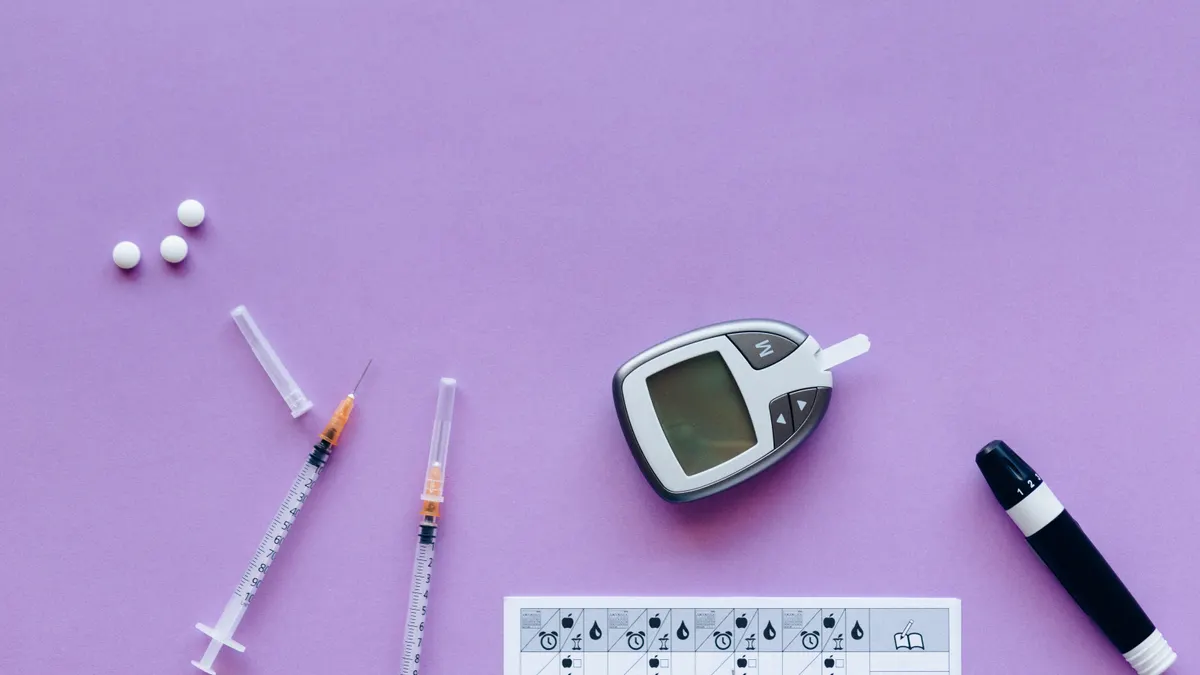
Quick answer: you usually need 4 basics — an insulin delivery device, the right needles or syringes, alcohol swabs, and a sharps container. If insulin has been recommended for gestational diabetes, speak with a qualified clinician or diabetes educator about your own setup before you buy anything, because the exact supplies depend on the insulin prescribed and the device you are taught to use.
Key takeaways
- Most people need four basics: insulin pen or insulin syringe, compatible needle, alcohol swab, and a sharps container.
- Pens and syringes are not the same. The choice changes what else you need in the bag or drawer.
- A setup that matches the insulin device, the prescribed product, and the teaching you were given is the safest practical option.
- Storage matters, but this page only covers the practical basics, not full storage instructions.
- This topic is actively studied: 353 PubMed records matched this query for 2016–2026, and the 100 most relevant were read on 2026-11-27 using the method noted below; 22 trials are registered on ClinicalTrials.gov for this term, also checked on 2026-11-27.
This page sits under the medication options for gestational diabetes hub and focuses only on the supplies side of insulin use, not the injection steps themselves. The topic here is insulin injections for gestational diabetes: what supplies are needed.
Who needs these supplies?
These supplies are for a person who has been told to use insulin during pregnancy and needs to set up the materials at home or for work. The usual starting kit is 4 items: one insulin delivery method, the matching needle or syringe, alcohol swabs, and a safe place for used sharps.
This is not for someone who is still deciding whether insulin is the right medication. That decision belongs with a clinician, because gestational diabetes care changes with blood sugar patterns, pregnancy stage, and the insulin product chosen. The evidence base is broad but uneven: among the 100 most relevant PubMed records read here, 28 were tagged Review, 12 Systematic Review, 6 Meta-Analysis, and 6 Randomized Controlled Trial, all as recorded by the NLM on 2026-11-27.
The setup also depends on the device. An insulin pen uses pen needles; an insulin syringe is a different tool and is paired with a vial. A beginner who buys one when the other was prescribed can end up with a drawer full of the wrong items and a visit back to the pharmacy. For general pregnancy medication guidance, see the NHS gestational diabetes page.
What supplies do I need?
You need the delivery device, the matching needle or syringe, alcohol swabs, and a sharps container, with storage supplies added only if your pharmacy or label says so. The real question is not “what is every possible supply?” but “what matches the insulin and the way it was prescribed?”
For a pen, the key item is the insulin pen itself plus pen needles. For a vial-and-syringe setup, the key item is an insulin syringe plus the vial and the right syringe type. If you are handed a box at the pharmacy and the names do not match what you were taught, stop and ask for a check before you use it.
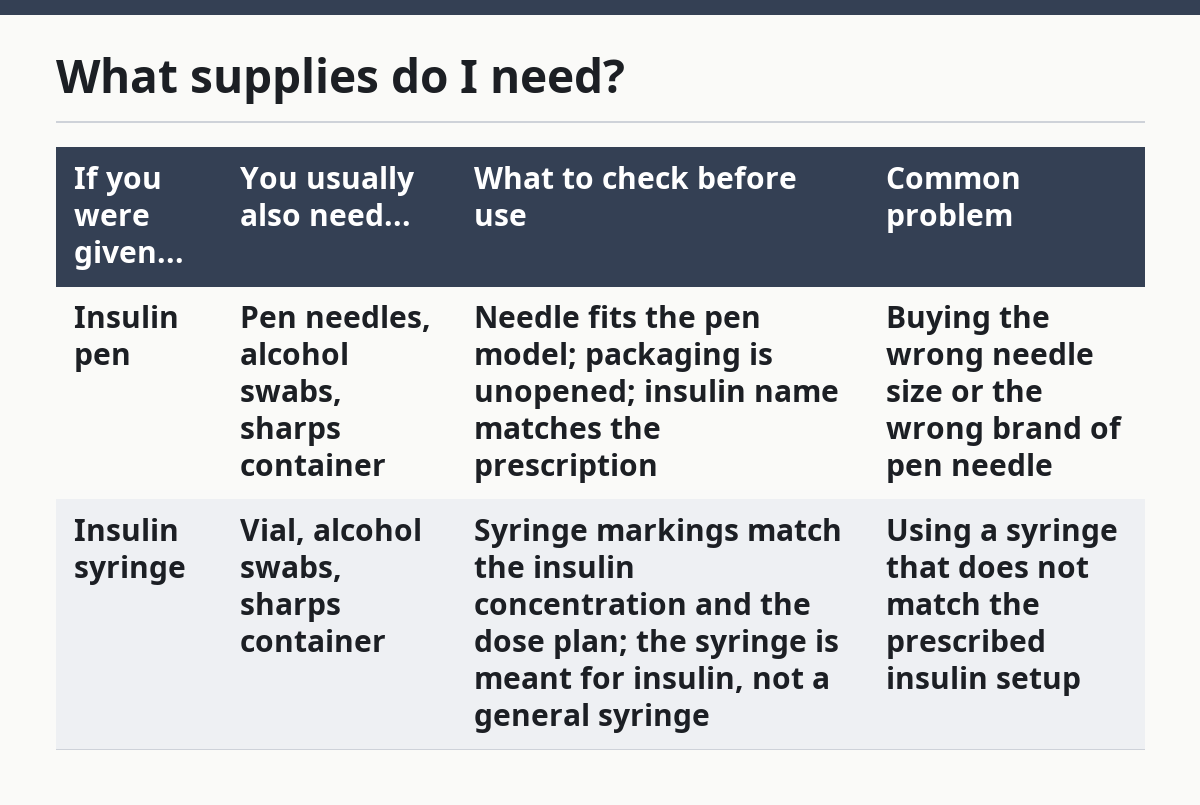
The table below shows the most common difference in plain terms.
| If you were given… | You usually also need… | What to check before use | Common problem |
|---|---|---|---|
| Insulin pen | Pen needles, alcohol swabs, sharps container | Needle fits the pen model; packaging is unopened; insulin name matches the prescription | Buying the wrong needle size or the wrong brand of pen needle |
| Insulin syringe | Vial, alcohol swabs, sharps container | Syringe markings match the insulin concentration and the dose plan; the syringe is meant for insulin, not a general syringe | Using a syringe that does not match the prescribed insulin setup |
Clinical trials on this topic are not abundant in one neat block: 22 trials were registered on ClinicalTrials.gov for this term as of 2026-11-27, and the median planned enrolment across 21 trials was 200 participants. That does not tell a reader which supply to buy, but it does show that medication use in gestational diabetes is still an active area of study rather than a settled, one-size-fits-all kit. For medication safety basics, the FDA insulin safety information is a useful reference.
Pen or syringe?
A pen is often simpler to carry, while a syringe is a more traditional vial-based setup. The right choice depends on what was prescribed, what the pharmacy dispensed, and what the person was taught to use.
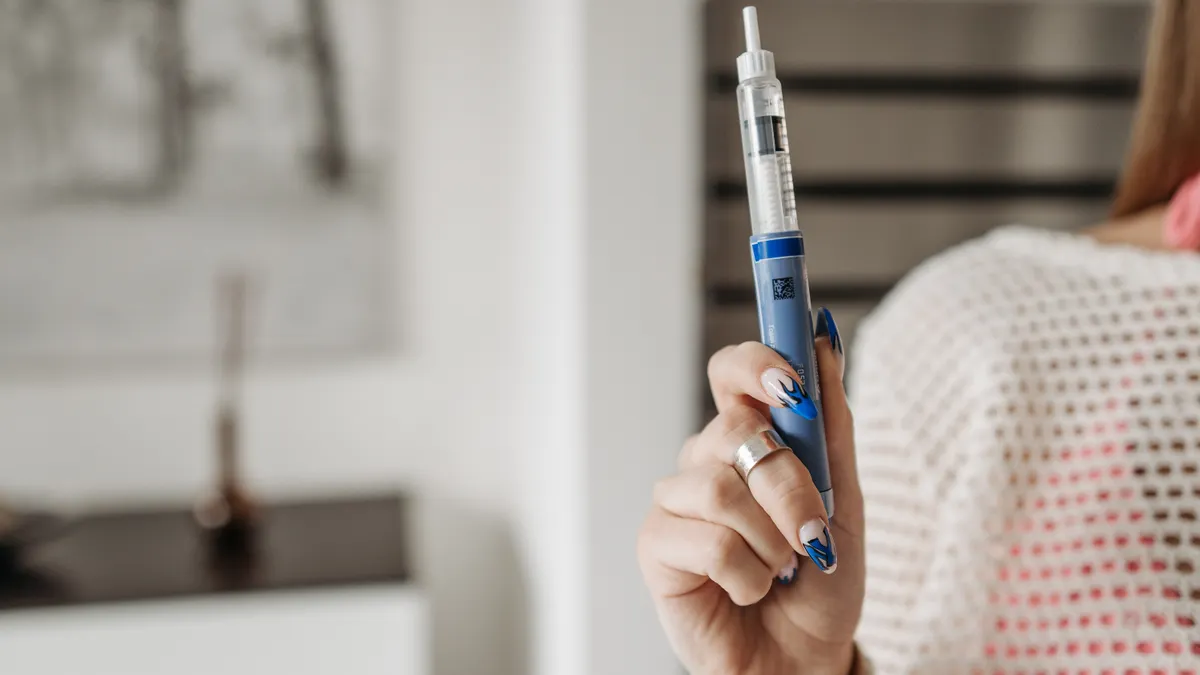
Pens usually mean less handling of liquid insulin at the moment of injection. They also depend on compatible pen needles, so there is one more compatibility check to make. Syringes are a separate tool, and they may suit people who were specifically given a vial-and-syringe plan, but they require careful matching of syringe markings and the insulin concentration.
A quick comparison helps:
| Feature | Insulin pen | Insulin syringe |
|---|---|---|
| Main parts | Pen plus pen needle | Vial plus insulin syringe |
| Carrying | Smaller, more compact | Bulker because it involves a vial |
| Compatibility risk | Wrong needle for the pen | Wrong syringe for the insulin or dose setup |
| Best fit | People taught to use a pen | People taught to draw insulin from a vial |
Pen needles are not universal in practice, even when packaging looks similar. Syringes are not a workaround for missing pen needles, and a pen is not a substitute for a vial-and-syringe instruction. If the product label, the teaching, and the packaging do not line up, the safe move is to ask a pharmacist or diabetes educator before the next dose time.
Which needles and swabs matter?
The needle and swab matter because they are the small parts most people forget until the last minute. A pen setup needs pen needles; a syringe setup needs insulin syringes; both often use alcohol swabs to clean the skin and the top of a vial when that is part of the teaching.
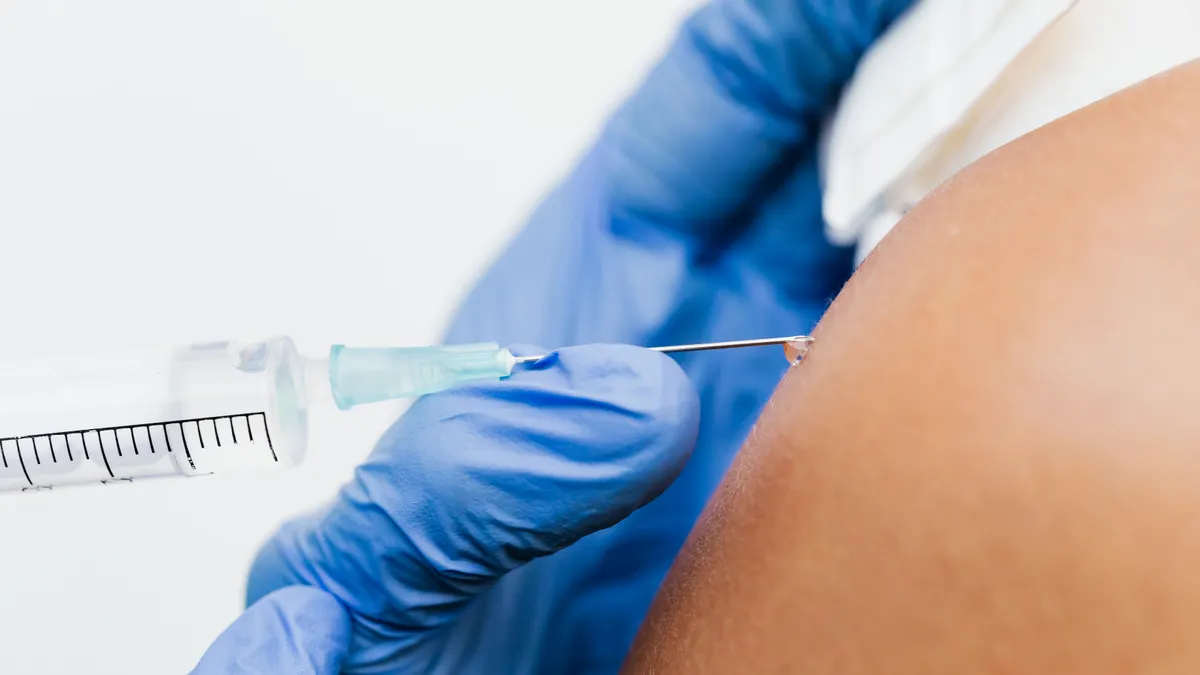
Needles should be the type that matches the device. A “needle” in this context is not just any sharp metal piece; it is a device made to fit the pen or syringe system you have been given. If the needle does not fit smoothly or the packaging does not match the device model, that is a supply problem, not something to improvise around.
Alcohol swabs are a simple item, but they are not the main event. They are used for skin prep in many teaching plans, yet the exact routine can vary by clinic and device. If you were shown a different clean-up step in person, follow that teaching instead of guessing from a box label.
Needle length and brand details are not one-size-fits-all, and that is why this page does not give a universal number. A person who buys the first needle on the shelf can still end up with the wrong fit, even if the box says “for insulin.”
What should I check before I start?
You should check the product name, the device type, the matching needle or syringe, and the expiry date before the first use. A safe home setup begins with the label, not with the injection itself.
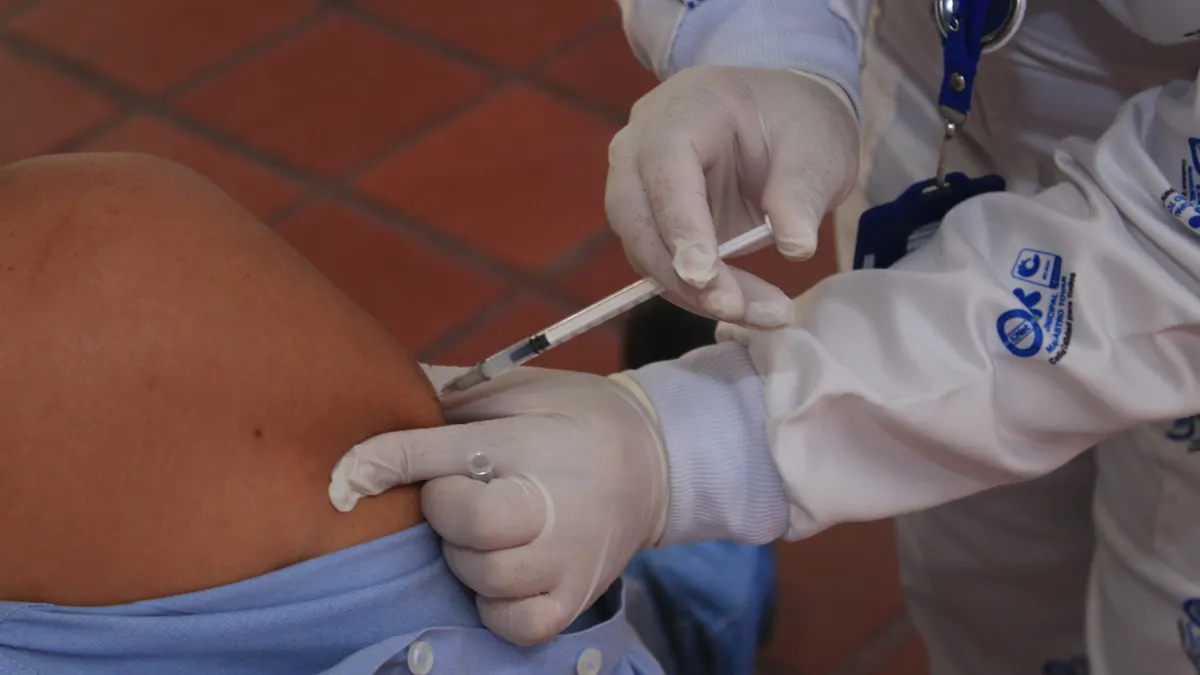
Use this as a short pre-check:
- Confirm the insulin name on the label matches the prescription exactly.
- Confirm the device is a pen or a vial, because that decides the next supply.
- Confirm the needle type matches the pen, or the syringe type matches the insulin setup.
- Check the expiry date on the box and the device.
- Make sure an alcohol swab packet is unopened if that is how it is sold.
- Put a sharps container within reach before you begin.
- If any item looks different from what you were taught, stop and confirm with the pharmacy.
The problem to watch for is mismatch. A pen with no pen needles, a vial with the wrong syringe, or a box that does not match the insulin name can all slow care down and create confusion. That matters more in pregnancy, when treatment plans may change and supplies need to stay organized; if that happens, check with a clinician or pharmacist before the next dose. For pregnancy-specific medication changes, the NHS diabetes and pregnancy guidance is a practical starting point.
When should I stop and ask for help?
You should stop and get qualified help any time the supplies do not match the prescription, the insulin label is unclear, or the teaching you received does not fit the box in front of you. That is a cautious approach when pregnancy care is involved.
The insulin name on the box does not match the prescription: This can mean the wrong product was dispensed or picked up — do not use it until a pharmacist or clinician confirms it.
The needle or syringe does not fit the device: This means the setup is incompatible — do not force it, because a wrong fit can damage the device or make the dose uncertain.
The package is damaged, open, or expired: This raises a supply integrity problem — replace it rather than trying to make it work.
You were taught to use a pen but have a vial, or the reverse: This means the wrong supply type may be in hand — get the setup checked before the next dose time.
You do not have a sharps container: This means there is no safe disposal plan — get one before starting, because loose needles or syringes are unsafe around children and pets.
You are unsure which items are for one-time use: This is a sign the kit was not explained clearly — ask for a simple item-by-item review from a pharmacist or diabetes educator.
This is one of the few areas where “make do” is the wrong answer. In a household kitchen or office drawer, a missing item is inconvenient. With insulin supplies in pregnancy, a missing or mismatched item can mean a dose is delayed, skipped, or done with the wrong tool.
What mistakes happen most often?
The most common mistakes are buying the wrong matching parts, mixing up one-time-use items, and waiting until dose time to look for supplies. Each one creates avoidable stress and can interrupt a routine that already has to fit around pregnancy, meals, and appointments.
One common error is buying pen needles for a syringe setup, or syringes for a pen setup. The consequence is simple: the device will not be ready when needed. The correct alternative is to check the device name first, then buy the matching parts.
Another mistake is assuming all needles are the same. They are not. A box that says “insulin” does not automatically mean it fits your exact pen model, so the better choice is to match brand and device before purchase.
A third error is skipping a sharps container because “I’ll deal with it later.” That usually means loose sharps in a trash bin or on a counter. The safer alternative is to have a container ready from day one.
A fourth mistake is keeping supplies scattered across bags, counters, and drawers. The consequence is missed doses or a last-minute search. A fixed spot at home is better, and a small travel kit can help if you leave the house often.
The last common problem is not asking when the label and the teaching do not agree. A ten-minute phone call to a pharmacist can prevent a full day of uncertainty.
How should I think about storage basics?
You should follow the product label and pharmacy instructions for storage, and you should not guess based on what worked for another medicine. Storage is part of the supply plan because insulin is sensitive to temperature and handling, but the exact instructions vary by product and by whether it is opened or unopened.
A simple storage setup usually needs one clear home spot, one travel spot if needed, and a way to keep the device protected from heat and damage. That is why the supply list is not just about the pen or syringe; it also includes a place to keep it organized. The details on temperature, timing, and open-vs-unopened handling belong with the specific insulin page, not this supply page.
If you are unsure, ask the dispensing pharmacy to point out the storage instructions on the box before you leave. That takes less time than replacing a spoiled product, and it avoids the common mistake of storing everything the same way for 30 days or more without checking the label.
What is the bottom line?
The practical supply list is short: insulin pen or insulin syringe, the matching needle, alcohol swabs, and a sharps container. The exact version depends on the insulin setup you were prescribed, so the next step is a quick check with a qualified professional before you buy or use anything.
The broader research picture is active but not simple. On 2026-11-27, 353 PubMed records matched this topic for 2016–2026, and 22 ClinicalTrials.gov records were registered for it. That tells a reader there is plenty of medical attention on gestational diabetes medication, but the home supply decision still comes down to the specific device in hand.
What supplies do I need for insulin injections?
You usually need the insulin device, the matching needle or syringe, alcohol swabs, and a sharps container. If the product was prescribed as a pen, you need pen needles; if it was prescribed as a vial-and-syringe setup, you need insulin syringes. A pharmacist or diabetes educator can confirm the exact match before you start.
Do I need a sharps container at home?
A sharps container is the recommended place for used needles and syringes at home. A rigid, purpose-made container reduces the risk of cuts and accidental contact, which matters when there are children or pets around. If you do not have one yet, get that sorted before you begin using insulin supplies.
Are insulin pens easier than syringes in pregnancy?
They are often simpler to carry and use, but “easier” depends on the person and the prescribed insulin setup. A pen still needs the right pen needles, while a syringe needs the right vial-and-syringe match. The better choice is the one the care team taught and the pharmacy dispensed correctly.
Drafted with AI; not yet reviewed by a person.