Last updated: November 27, 2026
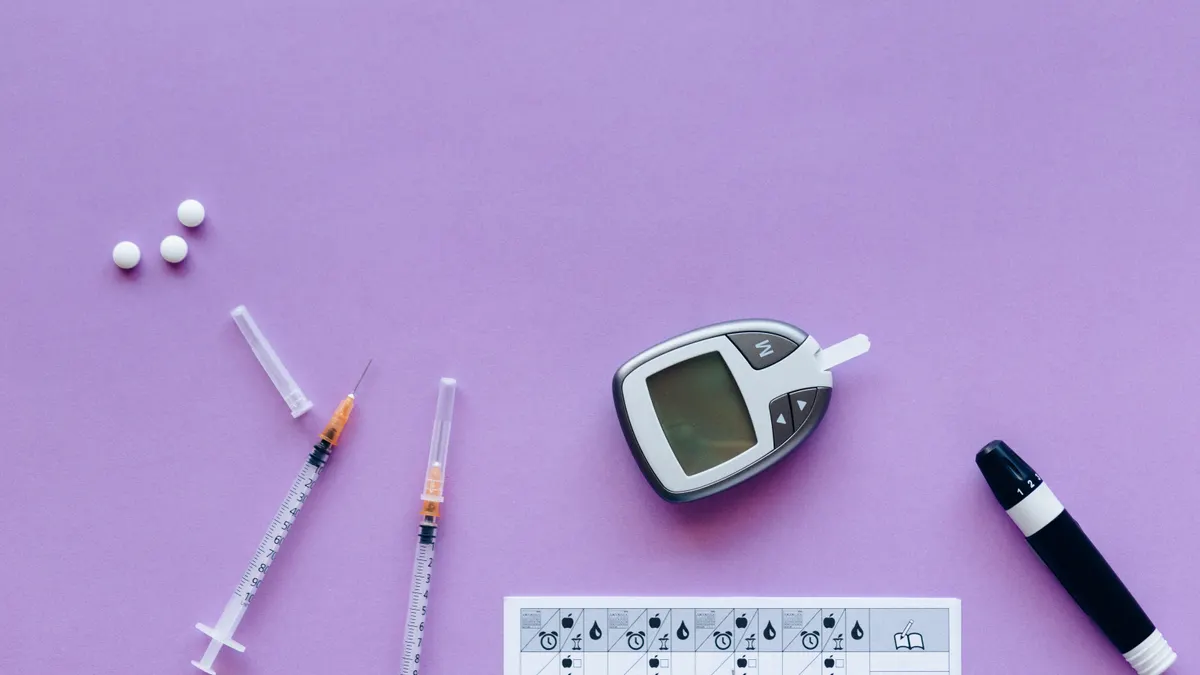
Gestational diabetes medication doses are adjusted by looking at blood glucose readings, especially fasting and after-meal patterns, and by changing insulin or metformin only when the pattern shows the current amount is not holding steady. The dose changes with the pattern, not the calendar. If this is your situation, speak with a qualified care team about your own numbers before changing anything yourself.
Key takeaways
- Dose changes usually follow repeated glucose patterns, not one off results.
- Fasting readings and post-meal readings can point to different adjustment needs.
- Insulin and metformin are watched in different ways, but both depend on glucose logs.
- A single outlier matters less than several similar readings.
- If the pattern changes fast, or numbers stay high, the care team may review the plan sooner.
What counts as a dose change?
A dose change means the care team adjusts the amount or timing of a gestational diabetes medicine after checking blood glucose readings. That adjustment is usually based on fasting values, post-meal values, and the overall trend across several days, not on one bad meal or one missed reading.
This question matters because gestational diabetes may not cause symptoms, so testing between 24 and 28 weeks is important according to the CDC. A test is needed to know for sure whether you have gestational diabetes, and that is what opens the door to treatment planning for you and your baby’s health. The adjustment process usually starts after the diagnosis is clear, not before.
For this topic, the evidence base is real but not huge. A PubMed search for medication, gestational, and diabetes in humans found 353 records for 2016–2026; the 100 most relevant were read, and the figures below come from that sample, computed on 2026-11-27. ClinicalTrials.gov listed 22 registered trials for this term, and the first 22 were read with the same date stamp. That matters because the literature mostly asks how dosing is managed in practice, not how to guess a dose from a single reading.
The broader hub on medication options for gestational diabetes fits next to this guide, but this page stays with the logic of dose adjustment. It does not explain injection technique, starting medication, or the decision to use one drug instead of another.
Why do fasting and after-meal readings matter?
Fasting and after-meal readings matter because they point to different glucose problems and therefore different kinds of medication adjustment. Fasting blood glucose often reflects overnight control, while post-meal readings show how the body handles a meal load after eating.

A care team usually looks for patterns across several readings, not one number in isolation. If fasting readings stay high while after-meal values are closer to target, the problem is different from the reverse pattern. That difference is why dose changes are guided by logs, meal timing, and the specific medicine in use.
In the PubMed sample, 28 of the 100 most relevant records were tagged Review, 12 were tagged Systematic Review, 6 were tagged Meta-Analysis, 6 were tagged Randomized Controlled Trial, and 4 were tagged Observational Study. The median publication year was 2022. Those figures suggest that the topic is still being studied through a mix of reviews and trials, which fits a field where the right change depends on the pattern in front of the care team.
A single high number after a large meal does not usually tell the full story. Repeated highs after breakfast, for example, can point to a different adjustment need than repeated highs after dinner. That is why meal timing, carbs, and the exact reading time all matter when medication doses are reviewed.
How does a care team adjust the dose?
A care team adjusts the dose by checking a log, looking for a repeated pattern, and changing one part of the plan at a time so the effect can be seen clearly. The point is to separate a medicine problem from a meal problem, a timing problem, or a monitoring problem.
-
Review the blood glucose log over several days. The care team checks fasting and post-meal readings rather than a single value. What to verify: the readings are written down with times and meals. What signals a problem: scattered or missing entries that hide the pattern.
-
Separate fasting from post-meal numbers. Fasting means the reading before eating in the morning; post-meal means a reading taken after a meal at the interval the care team uses. What to verify: each number is labeled by time and meal. What signals a problem: one unlabeled list of values that cannot be matched to a meal.
-
Look for repetition. Repeated highs or lows matter more than a one-off spike. What to verify: the same pattern appears on more than one day. What signals a problem: one abnormal reading after a very different meal or day.
-
Match the pattern to the medicine. Insulin and metformin are handled differently, and the adjustment follows the medicine’s role in the day. What to verify: the care team knows which medicine is being used and when it is taken. What signals a problem: a pattern that does not line up with the timing of the medication.
-
Change one variable at a time. The dose, timing, or schedule may be adjusted before other parts are changed. What to verify: the plan is clear enough to judge the next set of readings. What signals a problem: several changes at once, which makes the result hard to interpret.
-
Check the next set of readings soon enough to see the effect. The care team uses follow-up readings to see whether the pattern improved. What to verify: the log continues after the change. What signals a problem: no follow-up numbers after the adjustment.
-
Escalate if the pattern stays off target. If the same pattern keeps showing up, the plan may need another adjustment. What to verify: the same issue is present over multiple days or meals. What signals a problem: no change in the pattern even after an earlier review.
-
Reassess if the pattern flips. Some people move from high readings to low readings after a change. What to verify: there are new lows, not just fewer highs. What signals a problem: shaky, low, or inconsistent readings after the change.
This is a pattern-management process, not a one-time fix. On ClinicalTrials.gov, 8 of the 22 trials were completed, 5 were not yet recruiting, 5 were recruiting, and 3 were active not recruiting, which shows that the field still studies timing, response, and adjustment rather than a single universal schedule.
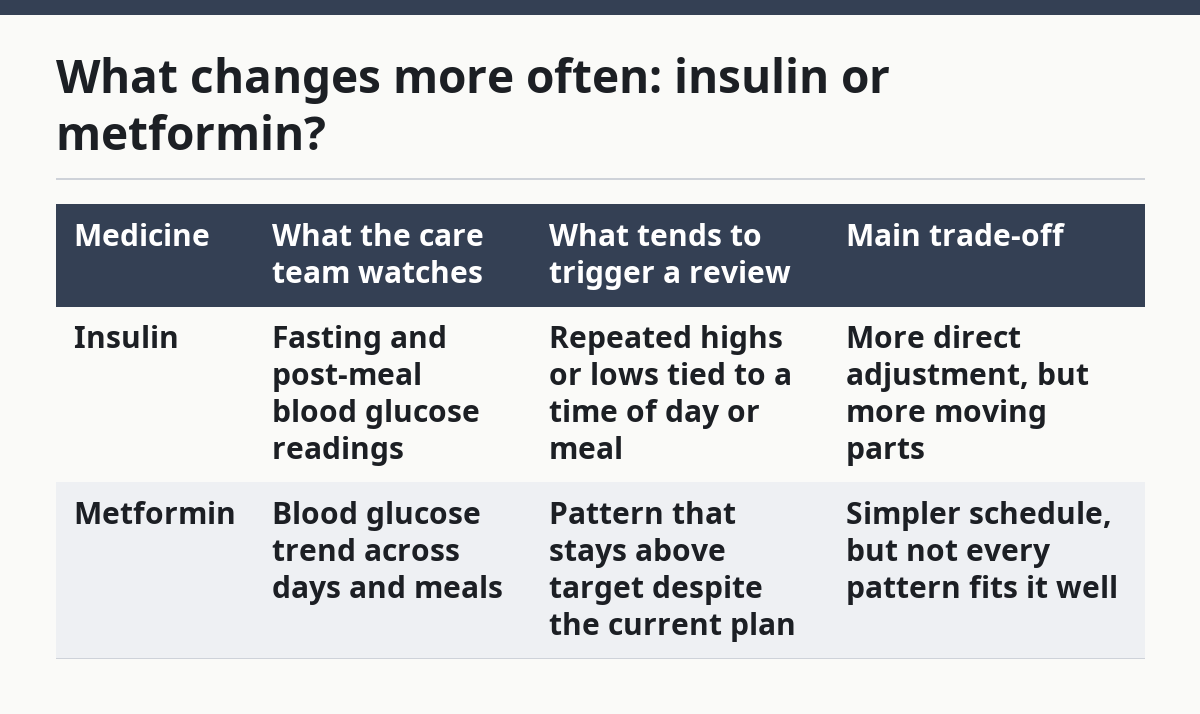
What changes more often: insulin or metformin?
Insulin usually has more room for fine-tuning, while metformin is often reviewed through the pattern of readings and how well the whole plan is holding. That is the practical difference, even though both depend on the same blood glucose data.
| Medicine | What the care team watches | What tends to trigger a review | Main trade-off |
|---|---|---|---|
| Insulin | Fasting and post-meal blood glucose readings | Repeated highs or lows tied to a time of day or meal | More direct adjustment, but more moving parts |
| Metformin | Blood glucose trend across days and meals | Pattern that stays above target despite the current plan | Simpler schedule, but not every pattern fits it well |
The median planned enrolment across the 21 trials with usable counts was 200 participants, and 19 of the 22 trials listed no phase, while 1 was Phase 3 and 1 was Phase 4. That mix suggests the adjustment question is still practical and active, not settled into one neat protocol.
The important point is that the medicine itself shapes the adjustment. Insulin changes are often tied closely to the readings that are out of range. Metformin changes are discussed in the same way, but the response may be slower or less direct from the outside, so the care team watches the log rather than chasing a single number.
This is also why a generic article can mislead. A dose that looks “too low” on paper may be fine if the fasting readings and post-meal readings are steady. A dose that looks “high” may still be the right one if the readings are only calm because the current plan is doing its job.
When should you report a pattern?
You should report a pattern when the same fasting or post-meal problem keeps showing up over several readings, when the readings swing low after a change, or when the log no longer matches how you feel. A pattern is the point at which the care team can use the data to make a safe adjustment.

Repeated fasting highs: This can mean the overnight part of the plan is not holding steady — contact the care team with the fasting log rather than waiting for a one-off correction.
Repeated post-meal highs after the same meal: This can point to a meal-timing issue, a medicine-timing issue, or both — bring the meal details and the readings together for review.
Low readings after an adjustment: This can mean the current amount is now too much for the pattern — report it promptly so the plan can be rechecked.
Readings that become hard to match to meals: This can mean the log is missing times or labels — clean up the record before the next review so the pattern is readable.
Sudden change after illness or a major schedule shift: This can change glucose needs quickly — let the care team know, because the old pattern may no longer apply.
A common mistake is waiting for a perfect week of data before speaking up. In practice, a clear run of repeated highs or lows is often enough to justify a review. Another mistake is sending only the numbers with no meal context, which can hide whether the problem is fasting, breakfast, dinner, or timing.
When does the usual adjustment approach not fit?
The usual adjustment approach does not fit when the pattern is changing too fast, the readings are inconsistent, or the numbers do not match the story the log is telling. In those cases, the care team may need more detail before changing the dose again.
One edge case is a reader with very uneven meal timing. If breakfast moves by several hours from day to day, fasting and post-meal readings are harder to compare, and the usual pattern rules may blur. Another is a reader who has several very similar highs, then a long gap with no logs; the missing days make the next dose review less reliable.
A third edge case is a plan that changes both food and medicine at the same time. That can make it hard to tell whether the medicine helped or the meal pattern did. A fourth is a new reading pattern after a major shift in activity, sleep, or illness. In that setting, the old numbers may no longer predict the next week.
This is also where a generic “wait and see” approach fails. Gestational diabetes is tracked during pregnancy because the readings matter now, not months later. CDC guidance says pregnant people will probably be tested between 24 and 28 weeks, and after delivery people with gestational diabetes should be tested for diabetes every 2 to 3 years, except for the special six-week test according to healthmatch.io. Those timelines show that glucose management is a moving target, not a one-time event.
What mistakes delay a useful dose adjustment?
The most common mistakes are incomplete logs, focusing on a single reading, and changing too many parts of the plan at once. Each one makes it harder for the care team to see whether the current dose is working.
First, some people write down only the number and not the time. That hides whether the problem is fasting, after breakfast, after dinner, or a missed meal. The better alternative is a dated log with meal timing attached.
Second, some people react to one high reading as if it proves the dose is wrong. One result may reflect a very different meal, stress, or a timing issue. The better alternative is to watch for repeated highs or lows across several days.
Third, some people change food, activity, and medicine together. That makes it hard to know what caused the new pattern. The better alternative is to keep the adjustment review focused so the care team can read the effect.
Fourth, some people stay quiet when the numbers drift low. Low readings matter because they can signal that the current plan has moved too far. The better alternative is to report the lows in the same way you would report highs.
Fifth, some people compare their plan with someone else’s. That is risky because medication response varies by individual. The better alternative is to treat the log as personal data, not a benchmark against another pregnancy.
FAQ
Why do gestational diabetes medication doses change?
They change because blood glucose readings change over pregnancy. The care team adjusts the dose when fasting or post-meal patterns show that the current amount is not matching the body’s needs, which can shift as pregnancy goes on.
How often are doses adjusted in pregnancy?
There is no single schedule that fits everyone. Dose changes happen when the readings show a repeated pattern, and the timing depends on the medicine, the log, and how quickly the pattern shifts.
What glucose patterns make doctors change the dose?
Repeated fasting highs, repeated post-meal highs, or new lows after a change are the main patterns that prompt review. A single outlier usually matters less than a pattern across several readings, especially when the times and meals are clearly recorded.
Sources
- CDC, Gestational Diabetes – Diabetes – CDC (checked 27 Nov 2026)
- healthmatch.io, is replaced by server-side rendered head tags –> Gestational Diabetes Medication And Trea (checked 27 Nov 2026)
Drafted with AI; not yet reviewed by a person.