Last updated: November 27, 2026
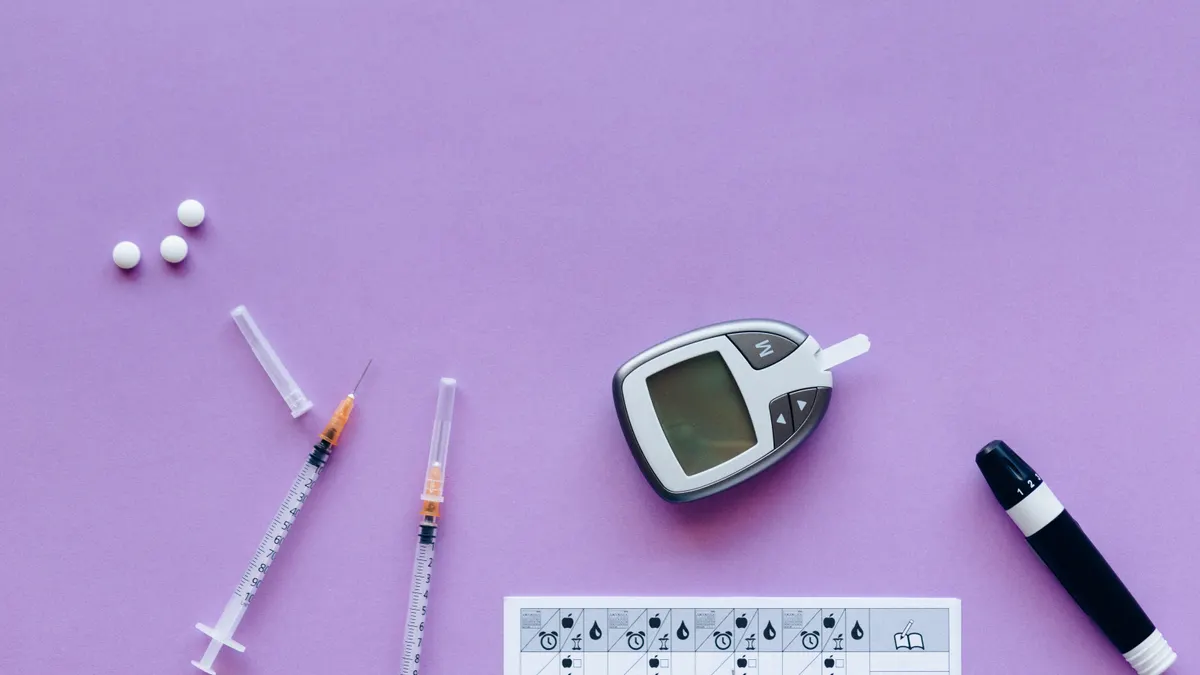
Usually, gestational diabetes medication can be stopped after delivery, but not always, and the decision should be reviewed with a qualified professional after birth. The first 24 hours after delivery are the key transition point, because blood sugar often changes quickly once the placenta is gone. Speak with an obstetrician or other clinician about your own plan, especially if insulin or metformin was used during pregnancy.
Key takeaways
- Many people do not need the same diabetes medicine after birth that they needed during pregnancy.
- The first day after delivery is when medication is usually reviewed, because blood sugar can fall fast.
- Postpartum glucose testing matters even if numbers look normal in the hospital.
- Insulin and metformin are managed differently after pregnancy, so do not assume one plan fits every case.
- If blood sugar stays high after birth, the question is no longer just gestational diabetes care.
What usually happens right after birth?
Medication is often reassessed within the first 24 hours after delivery because the placenta, which drives much of the insulin resistance in pregnancy, is no longer there. That change is why many people can stop gestational diabetes medication after delivery, but the exact timing depends on glucose readings and the medication used.
A PubMed search for medication[Title/Abstract] AND gestational[Title/Abstract] AND diabetes[Title/Abstract] AND humans[MeSH Terms] found 353 human records for 2016–2026; the 100 most relevant were read, and the overall pattern shows that postpartum medication decisions are common but varied. ClinicalTrials.gov listed 22 registered trials for the term, and the first 22 were read the same way.
In practical terms, the postpartum care team usually looks at whether blood sugar is still raised after birth, whether insulin was used near delivery, and whether there is a reason to continue medication while the body settles into the postpartum state. Postpartum care is not a copy of pregnancy care. It is a short transition period with different targets, different risks, and different reasons to test.
Research on this topic is active but still uneven. Among the 100 most relevant PubMed records, 28 were tagged Review, 12 Systematic Review, 6 Meta-Analysis, 6 Randomized Controlled Trial, and 4 Observational Study. That mix suggests a field with plenty of synthesis and comparatively fewer direct trials, so individual care plans still vary.
Do you stop gestational diabetes medication after birth?
Often, yes, but only after postpartum glucose testing and clinical review. Many people who needed insulin or metformin during pregnancy do not need the same medicine once delivery is over, because the pregnancy-related hormone load drops quickly.
That said, “stop” does not mean “ignore.” The question after birth is whether glucose levels have returned to a non-pregnant range or whether raised values point to ongoing diabetes risk. The most honest answer is that the medication plan is reviewed, not assumed.
The published literature reflects that uncertainty. The research sample shows wide variation in how studies report dosing and follow-up, which makes it hard to turn published abstracts into a single rule for every patient. Those numbers are not recommended doses or timelines; they just show how variable the research reporting is.
The simplest rule is this: if the care team has not confirmed a postpartum plan, do not keep taking pregnancy medicine on autopilot and do not stop it blindly without asking. The right next step is a glucose check, not guesswork.
How is postpartum glucose checked?
Postpartum glucose is checked with a follow-up test, often after the immediate birth hospitalization and again later in postpartum care, because one normal reading is not the full story. The goal is to see whether blood sugar has normalized or whether the person needs ongoing diabetes evaluation.
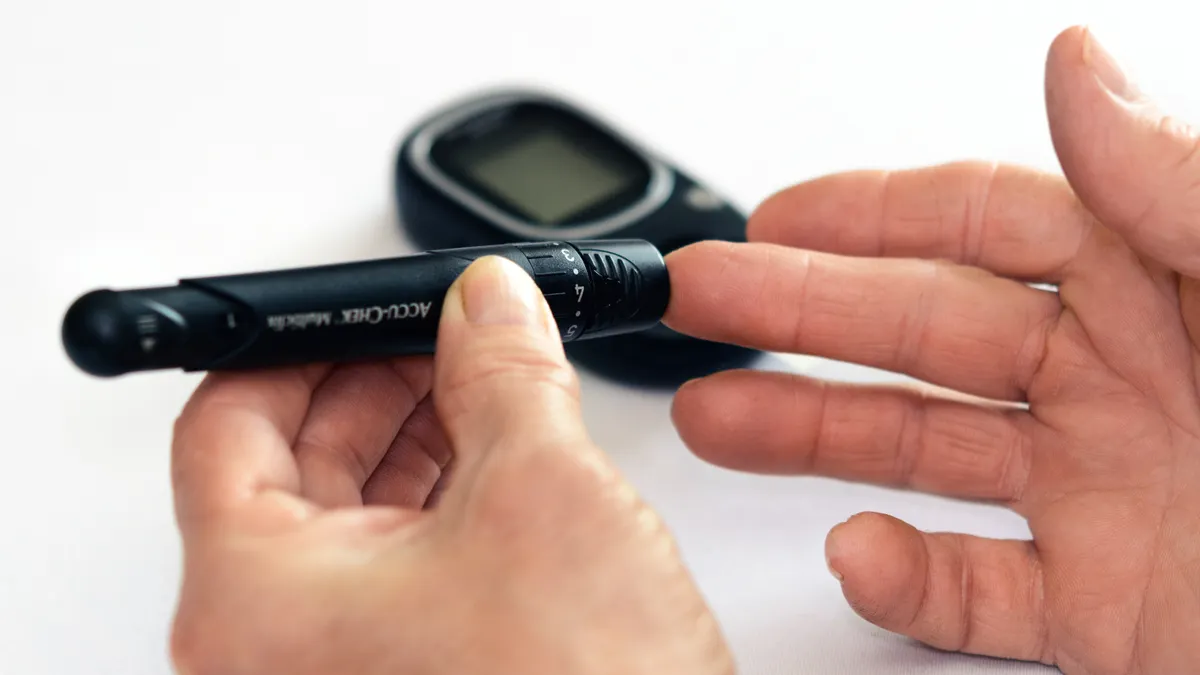
A glucose test after delivery matters because gestational diabetes can fade fast, stay raised, or reveal a pattern that was already present before pregnancy. The test type and timing vary by clinician and setting, but the purpose is the same: confirm the postpartum state rather than infer it from symptoms.
The core value of testing is that it catches the group who feel well but still have abnormal numbers. That matters because glucose can look calm in a short hospital stay and still be out of range later. It also matters because postpartum care is easy to skip once the baby is home and the focus shifts away from the mother.
The most useful habit is to treat postpartum testing as part of the delivery plan, not as an optional extra; if you are unsure, ask your obstetrician, endocrinologist, or midwife to confirm the follow-up test. For general background, see the NIDDK gestational diabetes page and the CDC guidance on gestational diabetes.
What should be reviewed before medication is changed?
Medication should be reviewed against blood sugar readings, the medicine used in pregnancy, and the postpartum plan for follow-up. That review usually happens with the obstetrician or another qualified clinician who knows the delivery course and the pregnancy history.
The biggest distinction is between a temporary pregnancy need and an ongoing glucose problem. Insulin is often the first medicine to be reconsidered because it acts directly and can no longer be needed once pregnancy ends. Metformin is also reviewed, but not in the same way for every patient, because the reasons it was used in pregnancy may differ.
A small but important point: a normal-looking postpartum day does not prove everything is resolved. The care team usually wants to know whether glucose was stable before delivery, whether there were any high readings after birth, and whether a formal glucose test has been arranged.
What if the numbers are still high after delivery?
If glucose stays high after delivery, the situation may no longer be simple gestational diabetes follow-up. That means the focus shifts from “stop the pregnancy medicine” to “figure out whether ongoing diabetes care is needed.”
This is the point where postpartum glucose testing matters most. High readings after birth can mean the body is not yet back to baseline, or that the pregnancy uncovered a pre-existing tendency toward diabetes. Either way, the medication decision changes from temporary to longer term.
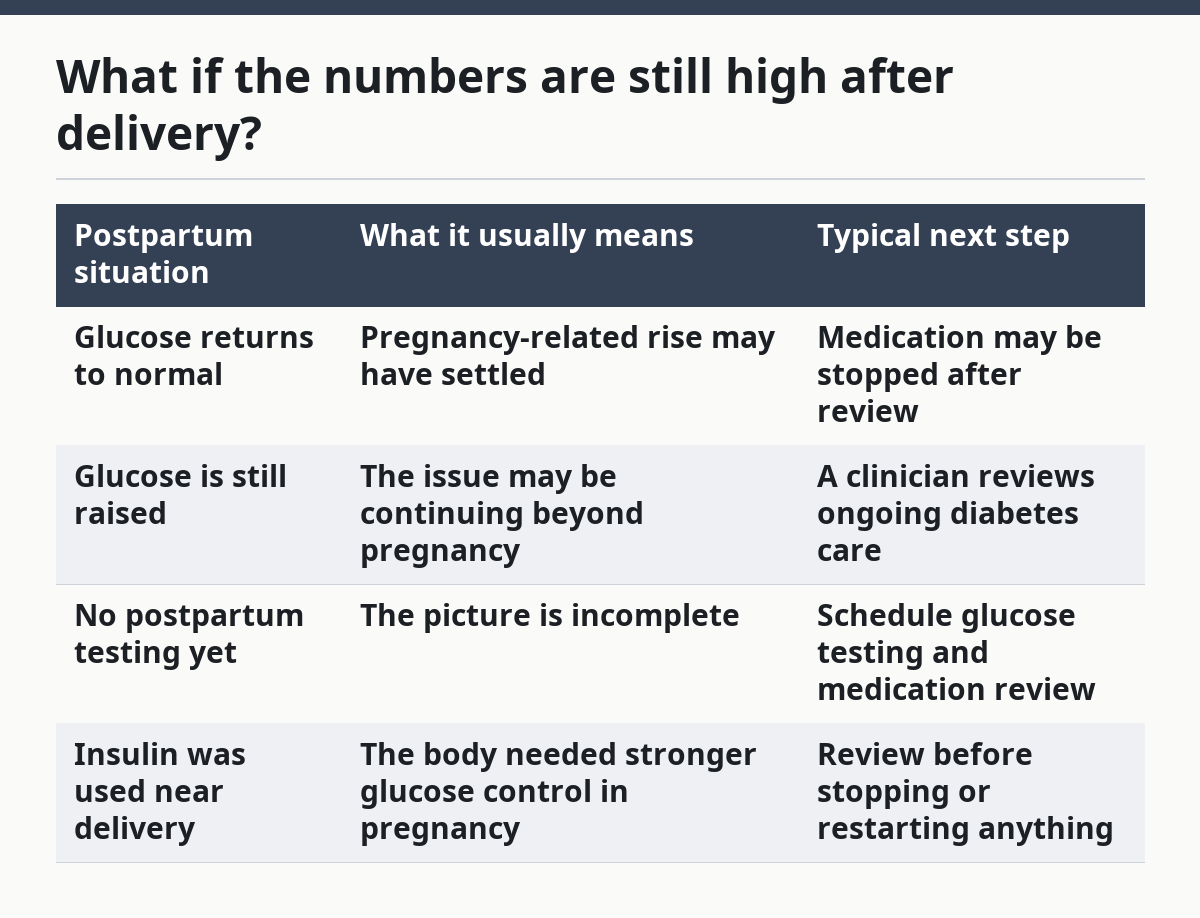
Here is a practical comparison of the common paths:
| Postpartum situation | What it usually means | Typical next step |
|---|---|---|
| Glucose returns to normal | Pregnancy-related rise may have settled | Medication may be stopped after review |
| Glucose is still raised | The issue may be continuing beyond pregnancy | A clinician reviews ongoing diabetes care |
| No postpartum testing yet | The picture is incomplete | Schedule glucose testing and medication review |
| Insulin was used near delivery | The body needed stronger glucose control in pregnancy | Review before stopping or restarting anything |
This is the part many generic articles miss: the question is not only “can it be stopped?” It is also “what does the postpartum glucose result say about the next month, the next year, and future pregnancies?”
When should medication not be stopped on your own?
Medication should not be stopped on your own if any of these apply:
Blood sugar is still above target after delivery: That suggests the glucose problem may still be active — the medicine plan needs clinical review, not a quick stop.
A postpartum glucose test has not been done yet: That means the situation is unconfirmed — wait for testing and follow-up rather than guessing.
There were high readings right after birth: Early postpartum highs can sometimes point to an ongoing need, so a clinician should decide whether to continue, change, or stop treatment.
There is confusion about insulin versus metformin: These medicines are not interchangeable — the postpartum plan should be clarified before any change.
There is a history of diabetes outside pregnancy: That changes the diagnosis — gestational diabetes care may no longer be the right frame.
This is also why a one-size-fits-all answer is wrong for high-stakes care. The safe move is not “keep everything the same forever” and not “stop the day the baby is born.” The safe move is to review glucose testing and the delivery course with a qualified professional. For more on postpartum follow-up, see the ACOG patient FAQ on gestational diabetes and the CDC gestational diabetes page.
What happens to metformin after pregnancy?
Metformin is often reviewed after birth and may be stopped, but the decision depends on why it was used and what postpartum glucose testing shows. The pregnancy-specific reason for taking it may disappear after delivery, yet the medication may still be relevant if glucose remains high.
The main trade-off is simple: stopping metformin may be reasonable if postpartum glucose normalizes, but stopping too early can leave an ongoing problem unaddressed. Keeping it without a clear reason can also muddy the picture, especially if the next glucose check is supposed to show baseline levels.
The literature on this subject includes a median planned enrolment of 200 participants across the 21 ClinicalTrials.gov trials read, with 8 completed, 5 not yet recruiting, 5 recruiting, and 3 active not recruiting. That tells you the field is still building better answers, not handing out one universal postpartum rule.
What the research can and cannot tell you
The research suggests that postpartum medication decisions are common, varied, and still being studied, but it does not support a single blanket rule for every person. The sample of PubMed records shows a literature base dominated by reviews and small trials rather than one decisive standard.
ClinicalTrials.gov had 19 of 22 read trials listed at phase “N/A,” 1 at Phase 3, and 1 at Phase 4. That pattern fits a topic where care is clinically familiar but still being refined by study design and follow-up work.
For a reader trying to decide what to do, the honest takeaway is modest and useful: postpartum medication is commonly reassessed, not automatically continued, and not automatically stopped. The right source for the final decision is the postpartum care team, especially the obstetrician who knows the pregnancy course and the glucose pattern.
Where to read more from trusted sources
For broader background, the U.S. National Institute of Diabetes and Digestive and Kidney Diseases has a patient page on gestational diabetes, and the Centers for Disease Control and Prevention also provides public guidance on gestational diabetes and follow-up. Those sources are useful for the general postpartum picture, but they do not replace an individual medication plan.
FAQ
Do you stop gestational diabetes medication after birth?
Often, yes, but not automatically. Medication is usually reviewed after delivery, and many people no longer need the pregnancy dose or the pregnancy medicine at all. The final decision depends on postpartum glucose testing and the clinician’s review of the delivery course.
Will I need insulin after delivery?
Many people do not need insulin after delivery. The need for insulin often drops once the placenta is delivered, but that is not universal. If blood sugar remains high, a clinician may reassess whether any diabetes medicine is still needed.
What happens to metformin after pregnancy?
Metformin is often reviewed and may be stopped after birth. The decision depends on why it was prescribed, how glucose looks postpartum, and whether ongoing diabetes care is needed. A postpartum glucose check helps show whether metformin is still relevant.
Sources
PubMed (NCBI): gestational diabetes medication records, 2016–2026 human studies.
ClinicalTrials.gov: registered trials for gestational diabetes medication.
CDC: Gestational Diabetes.
NIDDK: Gestational Diabetes.
Drafted with AI; not yet reviewed by a person.