Last updated: November 27, 2026
Quick answer: store gestational diabetes medication exactly as the label says, keep insulin within its labeled temperature range, and protect it from heat, freezing, and direct sun. If the pharmacy label conflicts with a leaflet, follow the label and ask a pharmacist or other qualified clinician to check your specific product.
How to store gestational diabetes medication safely at home and on the go depends on the exact medicine, not just the diagnosis. The safest rule is the one on the package insert and pharmacy label, and the FDA notes that insulin products have product-specific storage instructions.
Key takeaways
- Insulin is the medication that most often needs refrigeration; many products can be kept at room temperature for a limited time after opening, but the exact window depends on the brand.
- A refrigerator is helpful only if it stays above freezing; a back shelf is safer than the door, where temperature swings are common.
- A cool pack can protect medicine during travel, but it should not press medication directly against ice or frozen gel.
- The pharmacy label is the first thing to trust when it conflicts with memory, internet advice, or an old box.
- If the medicine looks cloudy, frozen, cracked, discolored, or warm for too long, it should not be used until a pharmacist or prescriber checks it.
Who is this for?
This is for a person with gestational diabetes who already has a prescribed medicine in hand and wants to store it safely at home, in a work bag, or while traveling for a few hours or a day. It assumes the reader has the prescription label, knows the medicine name, and can tell insulin from tablets such as metformin.
Therefore, it is not for someone trying to choose a dose, start treatment, or figure out injection technique; those steps need direct guidance from a qualified professional, and storage advice alone is not enough. The same advice does not fit every insulin pen, vial, or tablet bottle, so the label matters first.
How should gestational diabetes medication be stored?
Use the medicine’s own storage instructions, keep insulin in the right temperature range, and treat heat and freezing as the main risks. According to the FDA and the American Diabetes Association, the practical rule is simple: refrigerator for unopened insulin when the label says so, room temperature only when the label allows it, and never in a hot car, next to a freezer vent, or in direct sunlight.
- Read the pharmacy label first: Check the exact product name, the storage line, and any “keep refrigerated” or “do not freeze” instruction before moving the medicine; verify the name matches the box or pen, and watch for a mismatch between the label and the leaflet.
- Place the refrigerator stock on a middle shelf: Put unopened insulin on a shelf, not in the door or against the back wall, where temperature changes or freezing are more likely; verify the refrigerator stays cold but not icy, and look for frost, hardening, or a pen that feels frozen.
- Keep insulin in its carton: Leave the pen or vial in its outer box when possible, because that helps block light; verify the carton is dry and intact, and replace it if the medicine has been exposed to spills or crushed packaging.
- Separate medication from food and freezer packs: Keep insulin away from items that could freeze it, such as a freezer compartment wall or an ice block; verify there is space around it and no direct contact with frozen items, because freezing can damage the medicine even if it later thaws.
- Track room-temperature time: If the label allows unrefrigerated storage after first use, note the date and time the pen or vial came out of the refrigerator; verify you can still read the date, and treat missing dates as a problem because no one can safely guess how long it has been warm.
- Pack a cool pack for travel: Put the medicine beside a cool pack, not directly on it, during trips longer than a short ride; verify the medicine stays cool, not cold enough to freeze, and avoid leaving it in a parked car, where interior temperatures can rise fast.
- Inspect the medicine before each use: Look for clumps, cracks, leaks, cloudiness when the label says it should be clear, or any change in color or particles; verify the pen or vial looks the same as it did when first opened, and treat a change as a sign to ask a pharmacist before using it.
Metformin is usually less temperature-sensitive than insulin, but the pharmacy label still wins if it gives specific storage directions. For the broader treatment picture, see the medication options for gestational diabetes, since storage and choice of medicine are connected but not the same question.
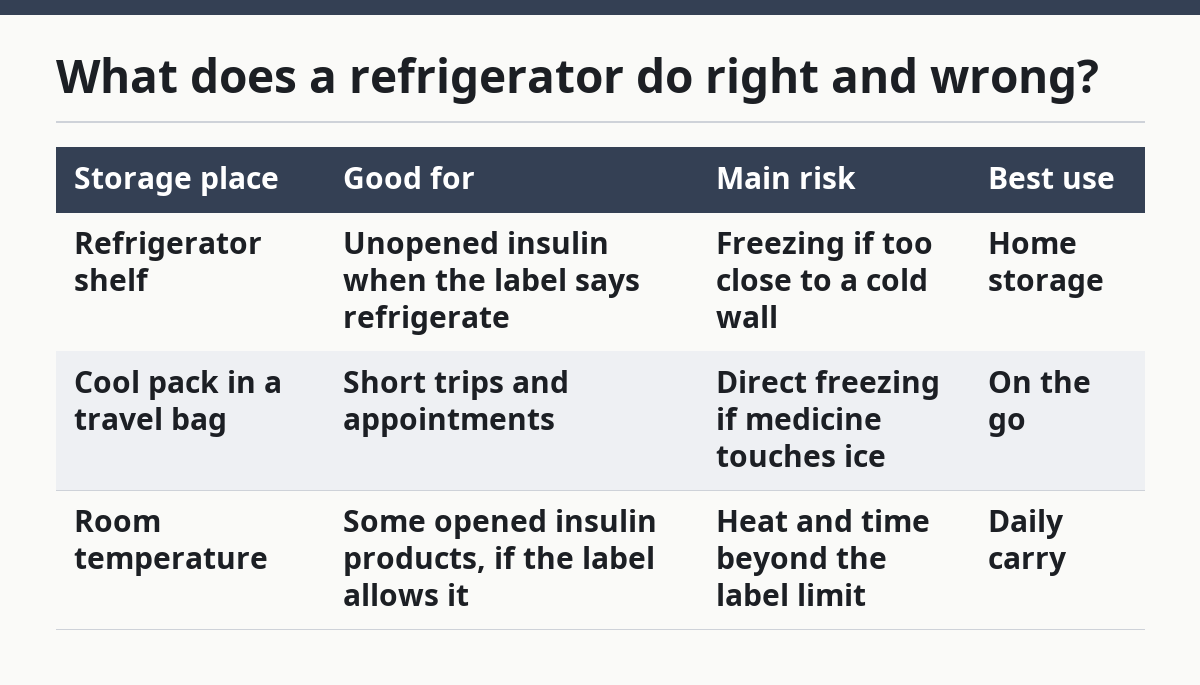
What does a refrigerator do right and wrong?
A refrigerator protects some gestational diabetes medicine from heat, but only if it stays above freezing and the medicine is not packed into a cold spot. The useful range is the one on the label, not whatever feels “cold enough” in the kitchen.
A back shelf is usually safer than the door because the door warms up each time it opens. A freezer compartment, a vent, or the back wall can be too cold. If insulin freezes, even once, the safer move is to ask a pharmacist whether it should be replaced rather than guessing.
| Storage place | Good for | Main risk | Best use |
|---|---|---|---|
| Refrigerator shelf | Unopened insulin when the label says refrigerate | Freezing if too close to a cold wall | Home storage |
| Cool pack in a travel bag | Short trips and appointments | Direct freezing if medicine touches ice | On the go |
| Room temperature | Some opened insulin products, if the label allows it | Heat and time beyond the label limit | Daily carry |
This is one of the few health tasks where the container matters as much as the medicine. A refrigerator that is too cold can cause the same kind of damage as a hot car, just by a different path.
Can gestational diabetes medicine stay in a bag for travel?
Yes, some gestational diabetes medicine can stay in a bag for travel if the bag keeps it within the label’s storage range and protects it from heat, sun, and crushing. For insulin, that usually means a cool pack for transport, not loose storage in a purse or glove box.
For travel, the safest setup is usually the original container plus the pharmacy label in an insulated bag rather than an ordinary tote. The cool pack should not sit directly against the medicine if that could freeze it. This matters more on longer trips, during warm weather, or when the bag may sit in a car for even a short time.
A bag is not a refrigerator. If the trip involves several hours, plane travel, or a delay, the medicine should be checked more carefully before use. A warped pen, a leaked vial, or a very warm bottle is a reason to stop and ask for advice rather than “seeing if it still works.”
When should the medicine be replaced?
Replace or check the medicine when freezing, heat, damage, or time outside the label limits makes its condition uncertain. For a pregnancy-related medication, that uncertainty is not worth pushing through.

Frozen insulin: This can change the medicine’s structure and make it unreliable — do not use it until a pharmacist or prescriber says what to do.
Medicine left in a hot car: Heat can spoil insulin faster than room temperature can — do not assume it is still fine just because the pen looks normal.
Cloudy or clumped clear insulin: Clear insulin should not suddenly look changed — set it aside and ask for a replacement decision.
Cracked pen, bent needle area, or leaking vial: Damage can mean loss of sterility or dose accuracy — stop using it and contact the pharmacy or prescribing clinician.
Missing storage history: If no one knows how long the medicine has been warm or whether it froze, safety cannot be confirmed — treat that as a problem, not a detail to ignore.
Some older advice says to “use it unless it obviously looks bad.” That is too loose for a condition managed during pregnancy. If the label says the medicine should stay refrigerated for a certain period, that instruction beats guesswork.
What mistakes cause the most trouble?
The most common mistakes are simple, and they usually happen during ordinary life rather than in a crisis. The fix is usually one small habit, not a complicated system.
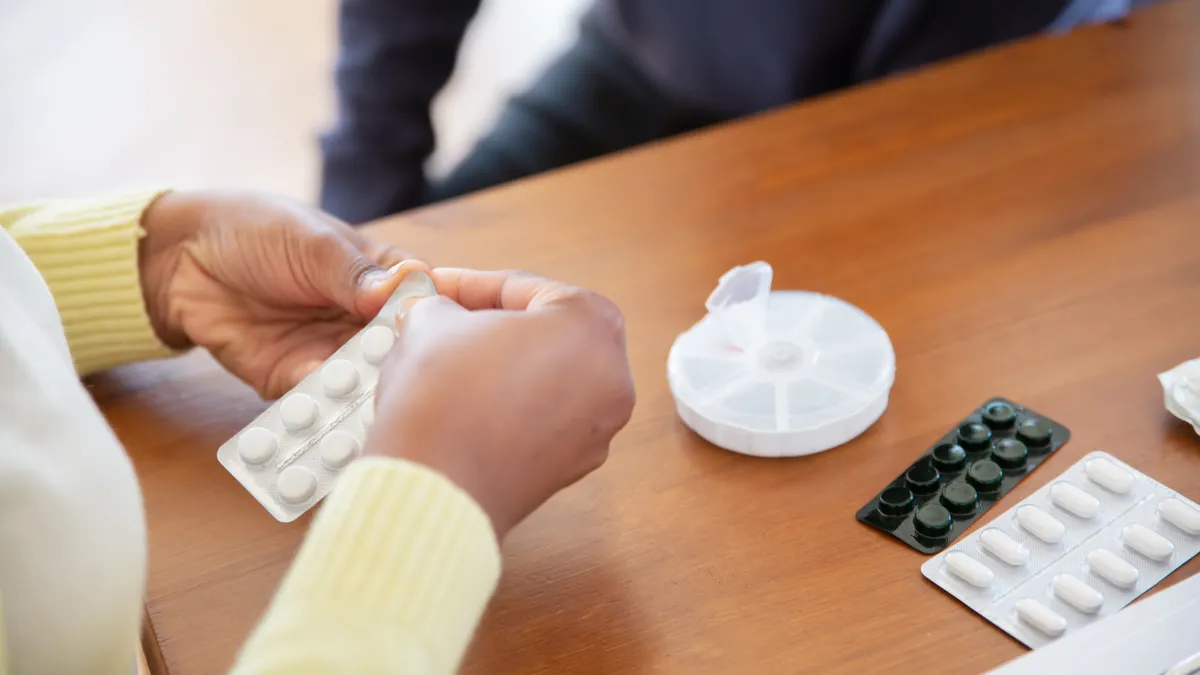
First, people store insulin in the refrigerator door, where temperature swings are common. The better alternative is a middle shelf or another stable spot. Second, people put a pen directly on an ice pack, which can freeze it; the safer move is to add a layer of cloth or keep some distance.
Third, people leave medicine in a car during errands. A parked car is a poor place for any temperature-sensitive medicine, even for a short stop. Fourth, people mix up old and new pens, which makes timing impossible to track; the answer is to mark the first-use date on the pen box or on a note kept with the label.
Fifth, people trust appearance alone. Insulin can look normal and still be damaged by heat or freezing, so appearance is only one check, not the whole test. Sixth, people ignore the pharmacy label because a friend used a different brand with different rules. That shortcut is risky because storage instructions vary by product.
When does standard storage advice change?
Standard storage advice changes when the medicine label, the travel plan, or the weather makes the usual setup unsafe. This is where the person should slow down, not improvise.
If the label gives a different temperature range, follow that label. If the medicine is being taken across a long trip, a bag that worked for a 20-minute drive may not be enough for a day away from home. If the room is very warm, a bedside table may be a bad storage place even when it is fine in winter.
Metformin tablets are often easier to keep than insulin, but they still belong in a dry place and away from excess heat and moisture. If the bottle says something specific, that line wins. If the reader is unsure whether a medicine is insulin, a tablet, or a mixed product, the safest step is to check the label before doing anything else.
Where should the person get the final storage rule?
The final storage rule should come from the pharmacy label and the dispensing pharmacist, with the prescribing clinician as backup when the label is unclear. That is the right level of caution for medicine used during pregnancy.
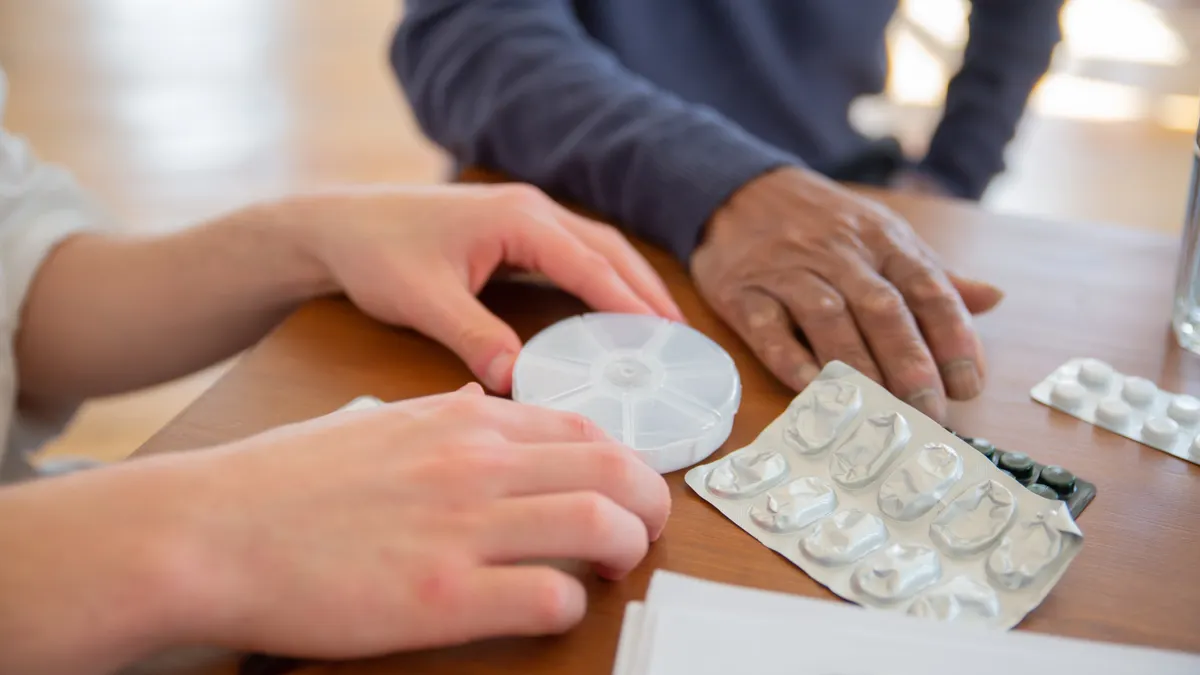
The label is the fastest source because it names the exact product in the exact package. The pharmacist can confirm whether the medicine is a pen, a vial, a tablet, or another form, and whether it has special handling limits. For general reading, official sources such as the U.S. Food and Drug Administration and professional diabetes organizations are better than social media, but they still do not replace the label for one person’s specific prescription.
FAQ
How should insulin be stored during pregnancy?
Insulin should be stored according to the pharmacy label, usually refrigerated when unopened and protected from freezing or heat. Pregnancy does not change the basic storage principle, but it does raise the stakes for getting the details right. If the pen or vial has been frozen, overheated, or left in doubt, a pharmacist should check it before use.
Can gestational diabetes medicine stay in a bag for travel?
Yes, if the bag keeps it within the label’s temperature range and the medicine is protected from direct heat, freezing, and crushing. A cool pack can help, but the medicine should not touch frozen gel directly. A parked car, a hot window seat, or a long delay without temperature control is a warning sign.
Do I need to refrigerate metformin?
Not usually, but the bottle or pharmacy label should be checked because the specific package matters. Metformin tablets are generally handled differently from insulin, and they are less sensitive to cold storage. If the label says something specific about room temperature, moisture, or heat, that instruction should be followed exactly.
Drafted with AI; not yet reviewed by a person.