Last updated: November 19, 2026
Quick answer: For gestational diabetes, alternate finger sites are not always safe for a check when you need the most current number; use the fingertip if the reading will guide an immediate decision, if symptoms do not match the meter, or if your meter manual does not clearly allow the site. Alternate sites can be reasonable in some stable situations, but the Gestational Diabetes Alternate Finger Sites: When You Should Not Use Them question always comes back to timing, symptoms, and the device instructions. If your results need to guide an immediate decision, ask a qualified clinician about your own situation first.
This page settles when alternate test site use is reasonable, when it is a bad idea, and what to check in the meter instructions before you try it. For background on home glucose monitoring in pregnancy, see the gestational diabetes blood sugar testing page, the gestational diabetes blood sugar targets page, and the blood sugar testing meter guide page.
The short answer: alternate sites are not always safe for a gestational diabetes check
The short answer is that alternate sites are not always the best choice for a gestational diabetes check when you need a current reading. Picture this: you need a glucose meter reading now, and the lancet hurts less on the side of your hand or forearm than on your fingertip. That softer spot can tempt you to switch sites, but alternate test site readings can lag behind fingertip blood when glucose is changing quickly.
That lag matters in pregnancy. Gestational diabetes testing is often used to track day-to-day patterns, so a number from a cooler, slower-flowing site can miss a rise or a fall. The exact limits depend on the meter’s instructions, and those instructions matter more than habit.
The basic rule is simple:
- Fingertips are the safer default when you need the most up-to-date reading.
- Alternate sites are a limited option only when your meter manual allows them for that exact meter and strip.
- Fast changes, symptoms, or uncertainty are reasons to avoid alternate sites.
Here’s the catch: a meter that allows alternate sites does not mean every situation is fair game. Some meters and strips are approved for multiple sites only under specific conditions, and pregnancy is a setting where timing matters. The device manual and your prenatal care team are the best references for your situation.
What an alternate site really is
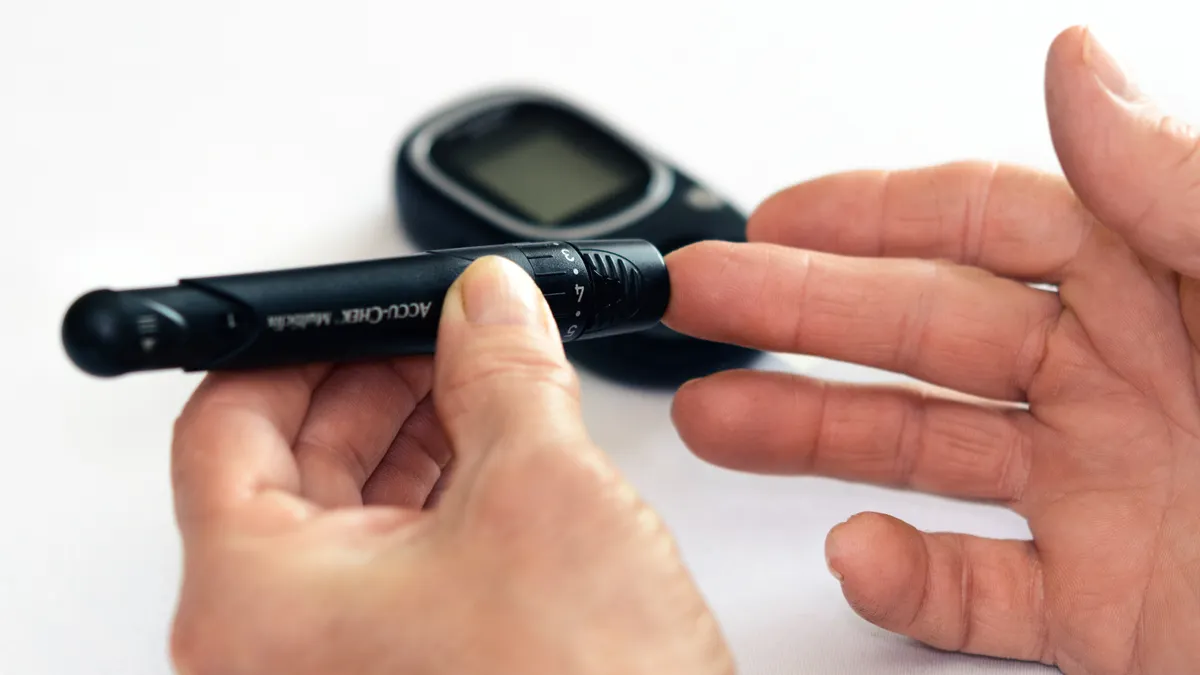
An alternate site is any approved spot other than the fingertip, such as the palm, forearm, upper arm, thigh, or calf, depending on the meter. Picture this: you have a glucose meter, a lancet, and test strips on the counter, and you are deciding whether the fingertip has to be the only option. This is the core of Gestational Diabetes Alternate Finger Sites: When You Should Not Use Them.
Most readers mean AST, or alternate site testing, when they say “alternate finger sites,” but the phrase is a little misleading. The issue is not just where you poke. It is how well blood from that site reflects what is happening in your bloodstream right now.
A fingertip sample usually shows blood sugar changes sooner than a site with slower circulation. That is why many meter guides treat the fingertip as the standard site and alternate locations as a backup. The exact approval language varies by meter model and strip, so the manual is not optional reading, and if you are unsure, a qualified clinician can help you interpret it.
Use the device-specific instructions, not memory. A meter can have one approved site list, while the lancet device itself has nothing to do with site accuracy.
Key Takeaways
- Alternate sites can be useful, but they are not the default for every reading.
- Fingertip blood usually tracks change faster than blood from slower-flowing sites.
- The meter manual decides whether a site is approved at all.
- Pregnancy is not the time to guess at a “close enough” reading.
- If the number will guide an immediate action, the fingertip is usually the safer choice.
- The American Diabetes Association recommends home glucose monitoring as part of diabetes care, and meter-specific instructions matter for how you do it. See the ADA Standards of Care and your prenatal care team.
When should you not use an alternate site?
You should not use an alternate site when you need the freshest number you can get. Picture this: you are trying to decide whether to skip a snack, call your clinic, or simply keep going, and your body feels off. In that moment, do not use an alternate site if you need the most current reading.
The first reason is speed. Blood from the fingertip tends to reflect rapid glucose shifts sooner than the forearm or upper arm. That matters after meals, after activity, or if you feel shaky, sweaty, weak, or unusually hungry. Those are not times to rely on a delayed sample.
The second reason is pain or poor flow at the site. A cold arm, dry skin, a poorly warmed hand, or a site that barely bleeds can give you a poor-quality drop. A weak sample can lead to strip errors, smears, or repeated pokes.
The third reason is mismatch with the meter guide. If the manual says alternate sites are not allowed for that meter, or not allowed in certain situations, that ends the question. The printed instructions beat forum advice every time.
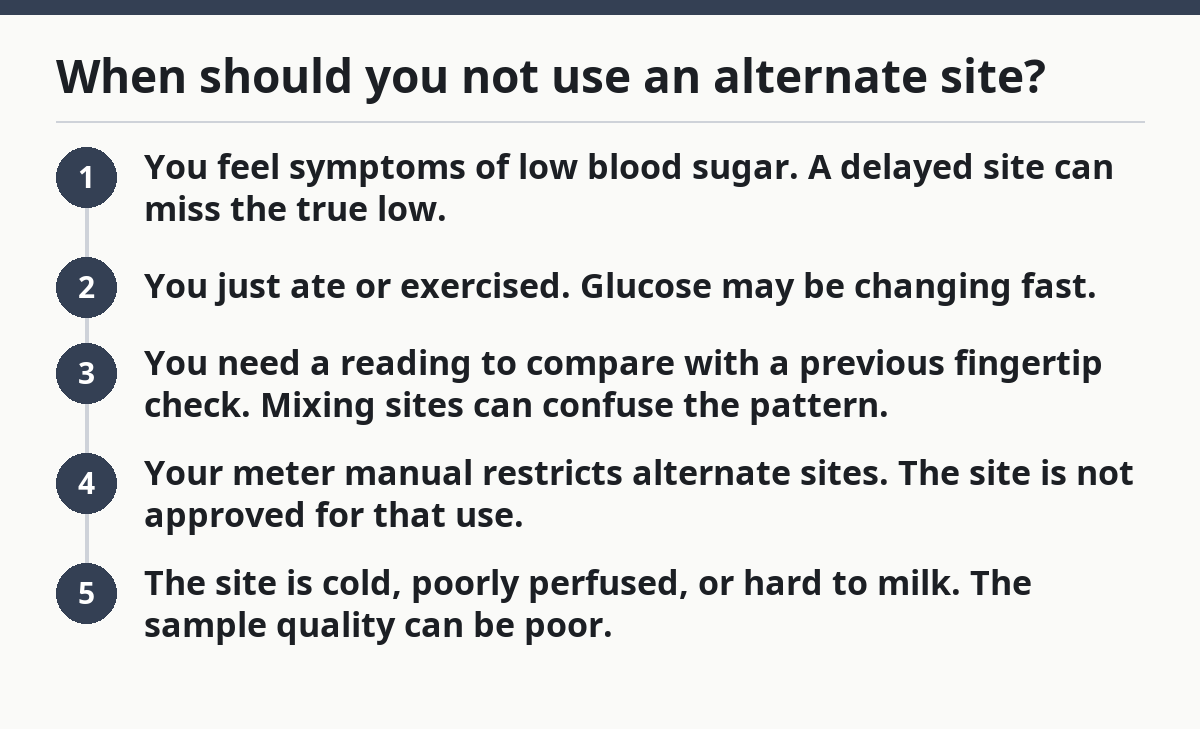
Use the fingertip instead if any of these apply:
- You feel symptoms of low blood sugar. A delayed site can miss the true low.
- You just ate or exercised. Glucose may be changing fast.
- You need a reading to compare with a previous fingertip check. Mixing sites can confuse the pattern.
- Your meter manual restricts alternate sites. The site is not approved for that use.
- The site is cold, poorly perfused, or hard to milk. The sample quality can be poor.
On the flip side, an approved alternate site can be reasonable when you are stable, the meter allows it, and you are not trying to catch a sudden change. That is a narrow lane, not a free pass. In practical terms, that means stable checks are different from symptom checks, and the difference matters.
How to use an alternate site correctly if your meter allows it
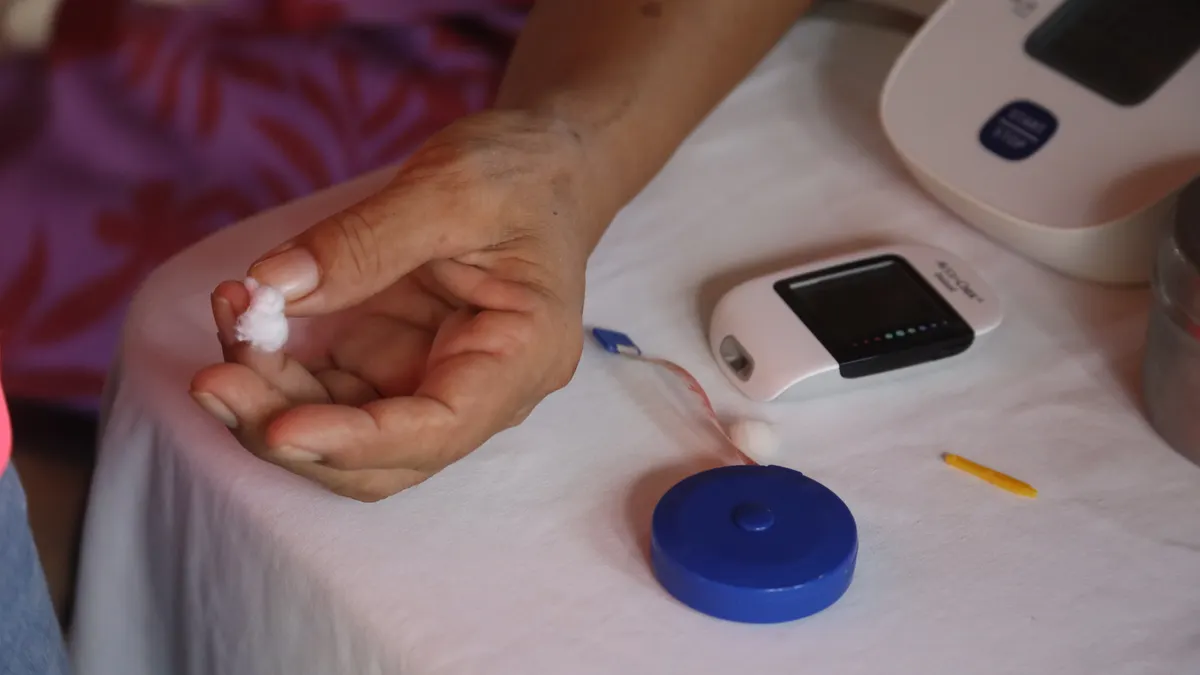
If your meter manual allows alternate site testing, use the site exactly as directed. Picture this: your meter manual allows alternate site testing, your hands are sore, and you want to avoid another fingertip stick. The process is only worth doing if you follow the meter’s site rules exactly, because the strip and meter are designed around that workflow.
Start by reading the site section in the meter instructions. Some devices allow the palm but not the forearm; some have different advice for capillary blood collection; some say not to use alternate sites when glucose may be changing quickly. That instruction sheet is part of the test, not a spare pamphlet.
A careful routine looks like this:
- Wash and dry the site. Use soap and water, then dry fully. Verify the skin is clean and not damp; wet skin can dilute the sample. If the site is not clean, stop and wash again.
- Warm the area for several minutes. Warm hands or the chosen site until blood flow improves. Verify the skin feels warm, not cold. If the site stays cool, do not force the test.
- Use the site the manual approves. Follow the exact location named in the meter guide, such as palm or forearm. Verify you are not using a prohibited spot. If you are unsure, use a fingertip.
- Use the right lancet depth. Set the lancet device so it draws blood without excessive digging. Verify you get a round drop, not a smear. If you need repeated deep sticks, the site may be a poor choice.
- Do not squeeze hard. Gentle pressure is fine; aggressive milking can contaminate the sample with tissue fluid. Verify the drop forms naturally. If the drop is thin or streaked, start over.
- Apply the strip as directed. Insert the test strip exactly as the meter manual shows. Verify the meter recognizes the strip and begins the test. If you get an error, use a fresh strip.
- Watch for timing warnings. If you have just eaten, walked, or felt symptoms, choose the fingertip instead. Verify the reading matches the clinical situation you are trying to check. If the number does not fit how you feel, repeat with a fingertip.
A good result is one clean drop, one accepted strip, and one reading that fits the moment. A bad result is repeated errors, a sore site, or a number you cannot trust.
The mistakes people make with alternate sites
The common mistakes are usually about timing, site choice, and sample quality. Picture this: the poke hurts less, so the alternate site starts to feel like the easy option. That is where people get into trouble, because less pain can hide less accuracy.
The most common mistake is using an alternate site during rapid glucose change. After food, during exercise, or during a shaky spell, a delayed sample can look fine while the fingertip would not. The consequence is a false sense of security. The fix is simple: use the fingertip when timing matters.
Another mistake is ignoring the meter manual. Some readers assume every glucose meter works the same way, but site approval is model-specific. The consequence is an invalid reading or an unapproved method. The fix is to follow the manual for that exact meter and strip.
A third mistake is squeezing the site hard to get enough blood. That can mix tissue fluid into the drop and distort the result. The consequence is a number that may not reflect capillary blood well. The fix is to warm the area, choose a better site, or switch to the fingertip.
A fourth mistake is repeating alternate-site testing when the site is cold or dry. That wastes strips and can still fail. The consequence is frustration and uncertainty. The fix is to wash, dry, warm, and try again only if the site is appropriate.
A fifth mistake is using alternate sites because the fingertip is simply sore, even though the reading is being used to judge a symptom. Pain is real, but accuracy still comes first. The better alternative is to ask the care team about spacing out checks or using the approved fingertip technique more carefully.
What if your readings do not match how you feel?
If the meter says one thing but your body says another, treat the number as questionable until you confirm it. Picture this: the meter says one thing, but your body says another. That mismatch is the clearest sign that alternate site testing may not be the right tool at that moment.
If you feel low, shaky, sweaty, lightheaded, or confused, the fingertip is the better check because it is more likely to reflect the current blood glucose level. If an alternate-site reading looks normal but your symptoms suggest otherwise, treat the number as questionable until a fingertip confirms it and a clinician has weighed in if needed.
Blood flow is the hidden issue. A forearm or upper-arm reading may trail behind a fingertip reading when glucose is changing. Cold skin, poor circulation, or a site that is not well perfused can make that lag worse.
Use a fingertip instead when:
- you have symptoms that do not match the reading,
- you are checking soon after a meal or snack,
- you just exercised,
- you feel unwell and need the most current number,
- the alternate-site drop was hard to obtain or looked weak.
If the meter keeps giving numbers that do not fit the situation, stop relying on that site. The problem may be the site, the strip, or the timing—not just the number on the screen. If you are unsure what to do next, contact your prenatal care team or another qualified clinician.
Where alternate sites fit in gestational diabetes care
Alternate sites fit in gestational diabetes care only as a backup when the meter allows them and the moment is stable. Picture this: you are trying to make blood sugar checks less painful without losing the value of the result. Alternate sites can fit into a routine, but only as a backup when the meter allows it and the moment is stable.
The hub page on gestational diabetes blood sugar testing covers the bigger home-testing picture. This page is narrower on purpose: it exists to help you decide when alternate sites are not the right call.
Use alternate sites only for the readings that do not need instant precision. A stable, fasting-style check may be less sensitive to a short delay than a post-meal check or a symptom check. Even then, the meter guide is the final word on whether that site is approved.
The trade-off is plain. Alternate sites can reduce fingertip soreness, but they can also give you a less current answer. That is a fine trade only when the timing of the number does not matter much. In gestational diabetes, timing often does matter.
If you are unsure how your meter handles alternate site testing, return to the fingertip and ask your prenatal care team how they want you to handle your home readings. For device-specific guidance, the Mayo Clinic gestational diabetes overview and your meter manual can help you line up the home plan.
When to stop and use a fingertip instead
When a site feels wrong, stop and switch to the fingertip. Picture this: you have already started the test, but something feels off—your skin is cold, the drop is tiny, or the reading seems out of step with the moment. That is the time to stop and switch to the fingertip.
Symptoms of low blood sugar: A delayed site can miss a fast drop — use a fingertip and contact a qualified clinician if the symptoms are concerning.
Right after eating or exercise: Glucose may still be moving quickly — use a fingertip because alternate sites can lag.
Cold or poorly perfused skin: Blood flow is too slow for a dependable sample — warm the area or use a fingertip.
Meter manual does not approve the site: The site is not valid for that device — do not use it.
Repeated strip or sample errors: The sample quality is poor — stop, reset, and use the fingertip if you need a reliable number.
If any of those apply, the problem is not your patience. It is the test site. The CDC also notes that home glucose monitoring should follow the care plan set by your health team; see the CDC diabetes testing guidance.
Are fingersticks more accurate than alternate sites?
Yes, fingertip readings are usually the better choice when you need the most current glucose number. Alternate sites can be acceptable in some stable situations, but studies and meter guidance generally point to a timing lag at non-fingertip sites, especially when glucose is changing.
That does not mean alternate sites are “bad.” It means they are context-limited. In gestational diabetes, context is the whole game because meals, activity, and symptoms can change a reading quickly.
Can I use an alternate site for gestational diabetes testing?
Sometimes, yes — if your glucose meter manual allows that exact site and the situation is stable. The fingertip is still the safer choice when you need a reading that reflects a fast change, have symptoms, or are unsure about the site.
If the meter guide does not clearly approve the site, do not assume it is okay. Ask a qualified clinician or follow the fingertip option.
When should I avoid alternate site testing?
Avoid alternate site testing when you have low blood sugar symptoms, when glucose may be changing fast, or when the site is cold or poorly perfused. You should also avoid it if your meter manual does not approve that site for your device.
If the reading is going to guide an immediate decision, the fingertip is the better choice.
Drafted with AI; not yet reviewed by a person.