Last updated: November 28, 2026
A missed dose of gestational diabetes medication usually means you should not guess, double up, or improvise; the next step depends on the medicine, the timing, and your blood glucose reading. If you are pregnant and this happened, speak with your care team about your own situation, especially if you use insulin, metformin, or glyburide.
Key takeaways
- A single missed dose does not always mean harm, but it can make glucose numbers rise for that day.
- The right next move depends on which medicine you take and how close you are to the next planned dose.
- A blood glucose meter helps show whether the missed dose is changing your numbers.
- Doubling up can create a bigger problem than the missed dose itself, especially with medicines that lower glucose.
- If you are unsure, your care team is the right place to ask, not guesswork from a general rule.
Who is this for?
This is for someone with gestational diabetes who missed a dose of insulin, metformin, or glyburide and wants to know what usually happens next. It assumes you already have a prescribed medicine plan, a blood glucose meter, and a care team that follows your pregnancy.
It is not for changing your dose on your own, and it is not the place to decide whether you should start, stop, or increase treatment. The guidance here is about the missed-dose problem only. For broader treatment context, the CDC and MedlinePlus both have plain-language background on gestational diabetes and pregnancy care: CDC and MedlinePlus.
The evidence base around this topic is broad but uneven. On PubMed, 266 human records matched the query for 2016–2026; this count and the figures below come from the 100 most relevant records read for this piece, computed on 2026-11-28 using a PubMed search for gestational diabetes treatments. ClinicalTrials.gov listed 741 registered trials for the term, and the first 100 were read there as well.
What happens after a missed dose?
A missed dose most often means your glucose may run higher than usual until the medicine catches up or the day passes. That does not automatically mean danger, but in pregnancy the pattern matters more than a one-off number, because the goal is steady control rather than swinging highs and lows.
The medicine matters. Insulin tends to act on a tighter timetable than metformin or glyburide, so the practical effect of a missed dose can differ. Insulin is usually the most time-sensitive of the three; metformin and glyburide are taken by mouth, but they still work best when taken as prescribed rather than in a catch-up pattern.
A blood glucose meter helps show whether the missed dose changed your numbers enough to matter. If your reading is higher than your usual range, that is useful information for your care team, not a reason to make up a dose by instinct. The problem with missed doses is often not the single event but the uncertainty it creates for the rest of the day.
Studies suggest there is no one-size-fits-all answer because gestational diabetes care is individualized. In a sample of 100 relevant PubMed records, 57 were tagged Review, 10 were tagged Systematic Review, 5 were tagged Meta-Analysis, 1 was tagged Observational Study, and 1 was tagged Randomized Controlled Trial. That mix shows why general guidance stays general: the literature is mostly summaries, not direct missed-dose instructions.
What should you do next?
The next step is to check your medicine, check your timing, check your glucose, and contact your care team if the situation is unclear. A practical missed-dose response is about the order of those checks, not about memorizing a single rule.
-
Look at the medicine label or plan first. Confirm whether the missed medicine is insulin, metformin, or glyburide, and check whether it is usually taken once daily, before meals, or on another schedule. Verify the name and timing on the label; if the bottle or pen does not match your plan, that is a problem that needs clarification.
-
Check how much time has passed. Compare the current time with the scheduled dose time. If the gap is short, the question is different from a dose missed many hours earlier. If you cannot tell whether “short” or “late” applies to your plan, that uncertainty itself is a reason to ask the care team.
-
Use your blood glucose meter now, if your plan calls for a check. A meter reading gives a real data point before you decide anything else. Verify whether the number is near your usual range or clearly above it; if it is very different from your normal pattern, that is a problem worth reporting.
-
Do not assume the same rule applies to every medication. Insulin, metformin, and glyburide are not interchangeable. What feels harmless with one medicine may be the wrong move with another. If you are unsure which medicine you missed, stop and identify it before taking anything else.
-
Check whether food timing changes the picture. Some medicines are tied to meals, and skipping a meal after a missed dose can change your glucose reading in either direction. Verify whether you already ate, are about to eat, or have a meal delayed. A missed dose plus a missed meal is a different situation from a missed dose with normal eating.
-
Write down the details. Note the medicine name, the time you noticed the miss, the blood glucose reading, and any symptoms. That makes the call to your care team more precise. A rough memory of “I forgot earlier” is less useful than a short log with times and numbers.
-
Ask before changing the next dose. If you are close to the next scheduled time, if you are not sure whether to take it now, or if the medicine is insulin, call the care team for advice. The safest next move is the one matched to your exact plan, not a generic internet rule.
This kind of stepwise check is especially useful because many gestational diabetes studies are not direct instruction studies. In the 100 PubMed records read here, the median publication year was 2022, the median abstract dose figure was 30 mg across five figures stated in abstracts, and the median study duration figure was 34 weeks across 15 figures stated in abstracts. Those numbers do not tell you what to do after a missed dose, but they do show how varied the research base is.
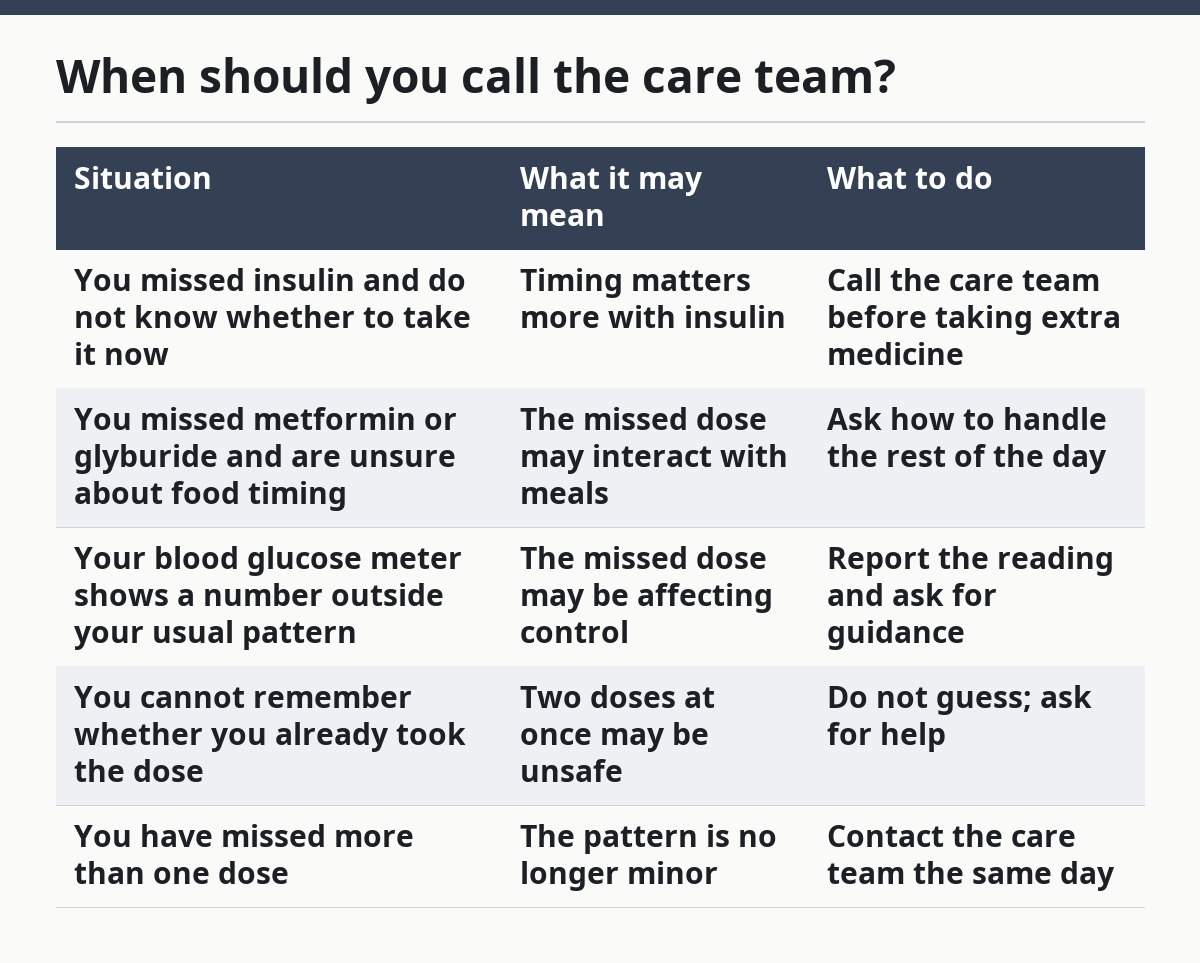
When should you call the care team?
You should call the care team when the missed dose is not a simple one-off or when your glucose reading is clearly off your usual pattern. That call is not an overreaction; it is part of safe pregnancy care.
| Situation | What it may mean | What to do |
|---|---|---|
| You missed insulin and do not know whether to take it now | Timing matters more with insulin | Call the care team before taking extra medicine |
| You missed metformin or glyburide and are unsure about food timing | The missed dose may interact with meals | Ask how to handle the rest of the day |
| Your blood glucose meter shows a number outside your usual pattern | The missed dose may be affecting control | Report the reading and ask for guidance |
| You cannot remember whether you already took the dose | Two doses at once may be unsafe | Do not guess; ask for help |
| You have missed more than one dose | The pattern is no longer minor | Contact the care team the same day |
A missed dose is also worth reporting if you are early in treatment or if your plan has changed recently. ClinicalTrials.gov shows 741 registered trials for this term; of the first 100 read, 49 were completed, 15 were unknown, 10 were recruiting, and 8 were terminated. In that kind of mixed evidence landscape, the care team’s instructions matter more than general trial descriptions.
When should you not double up?
You should not double up when you are unsure, when the medicine is insulin and the timing is unclear, or when the next scheduled dose is already close. Doubling up can create a low blood glucose problem, which is often harder to correct than a single missed dose.
The safer comparison is simple:
| Option | Typical risk | Better fit |
|---|---|---|
| Take two doses at once | More medicine than intended; higher risk of low glucose | Rarely appropriate without direct instruction |
| Skip the missed dose and wait | One day of imperfect control | Sometimes the safer choice, depending on timing |
| Call the care team first | No guessing, but may take time | Best when the schedule is unclear |
| Check glucose and follow the plan | Uses real numbers, not memory | Good when your plan already includes checks |
This is why “just make up for it” is the wrong advice for gestational diabetes medication. A missed-dose response page is not the same as a routine dose-adjustment page, and that distinction matters here. If you were already told how to handle a forgotten dose, follow that instruction; if not, the care team is the source that can fit the advice to your exact medicine and schedule.
How do missed doses affect glucose checks?
A missed dose can make a glucose check look higher than expected, but one reading should be read in context rather than treated as the whole story. The meter number, the time since the missed dose, and whether you ate are all part of the same picture.
If the reading is higher than usual, do not assume the meter is wrong. Check the strip, confirm the time, and think about what happened before the reading. If the reading is lower than expected, that does not cancel the missed dose; it just means the day is not following a simple pattern.
This is the point where records matter. A blood glucose meter reading taken before food, after food, or at the time your medicine is usually due gives your care team more useful information than a vague report. If you bring the reading, the time, and the missed medicine name, the advice can be much more specific.
The research mix also explains why missed-dose advice is usually individualized. In the 100 ClinicalTrials.gov records read for this term, the median planned enrolment was 140 participants across 97 trials with enrollment figures, and the phase data were mixed: 55 were phase not assigned, 8 were Phase 3, and 4 were Phase 4. That is a reminder that gestational diabetes treatment is studied in many formats, not as one clean rulebook.
What mistakes do people make?
The most common mistake is treating every missed dose the same. That can lead to either overcorrecting or underreacting, and both can throw off glucose control. The correct alternative is to identify the medicine first and use the plan tied to that medicine.
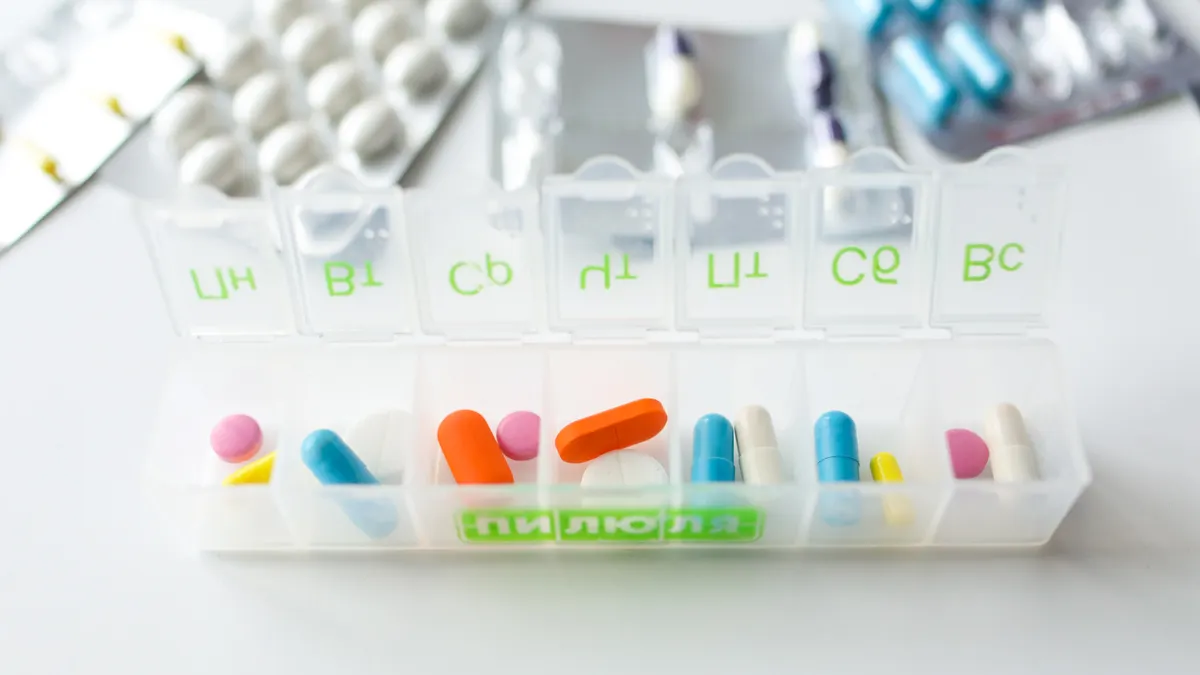
Another mistake is waiting too long to check a glucose reading after a missed dose. That leaves you with less information and makes it harder to tell whether the day is drifting off course. The better move is to use the meter as soon as the miss is noticed, if that fits your care plan.
A third mistake is taking the next dose early to “catch up.” That can stack medicine too close together, which may be a problem with insulin and with oral medicines alike. The safer choice is to confirm timing before changing the schedule.
A fourth mistake is assuming symptoms will tell the whole story. Some people feel fine even when the glucose number is off, and some symptoms are too vague to guide action. The correct alternative is to rely on the meter and the care team, not sensation alone.
A fifth mistake is trying to self-correct with food alone when the dose was significantly off schedule. Food can change glucose, but it does not replace the medication plan. If the number stays outside your usual range, the missed dose needs follow-up rather than improvisation.
FAQ
Should I take the dose as soon as I remember?
Not always. The right answer depends on the medicine, how late it is, and how close you are to the next dose. If you are unsure, the care team should guide the decision rather than a blanket rule.
Can I take two doses at once?
Usually not without direct instruction. Doubling up can create a low blood glucose problem or make the schedule harder to track. If you cannot remember whether you already took it, do not guess.
When is a missed dose an emergency?
A missed dose becomes urgent when your glucose reading is far from your usual pattern, you have missed more than one dose, or you do not know what medicine you took. In those situations, contact the care team right away and follow their instructions.
What should you remember if this happens again?
A missed dose is usually a problem to manage, not a reason to panic, but it deserves attention the same day. The safest pattern is simple: identify the medicine, check the time, use the blood glucose meter, and contact the care team when the answer is not obvious.
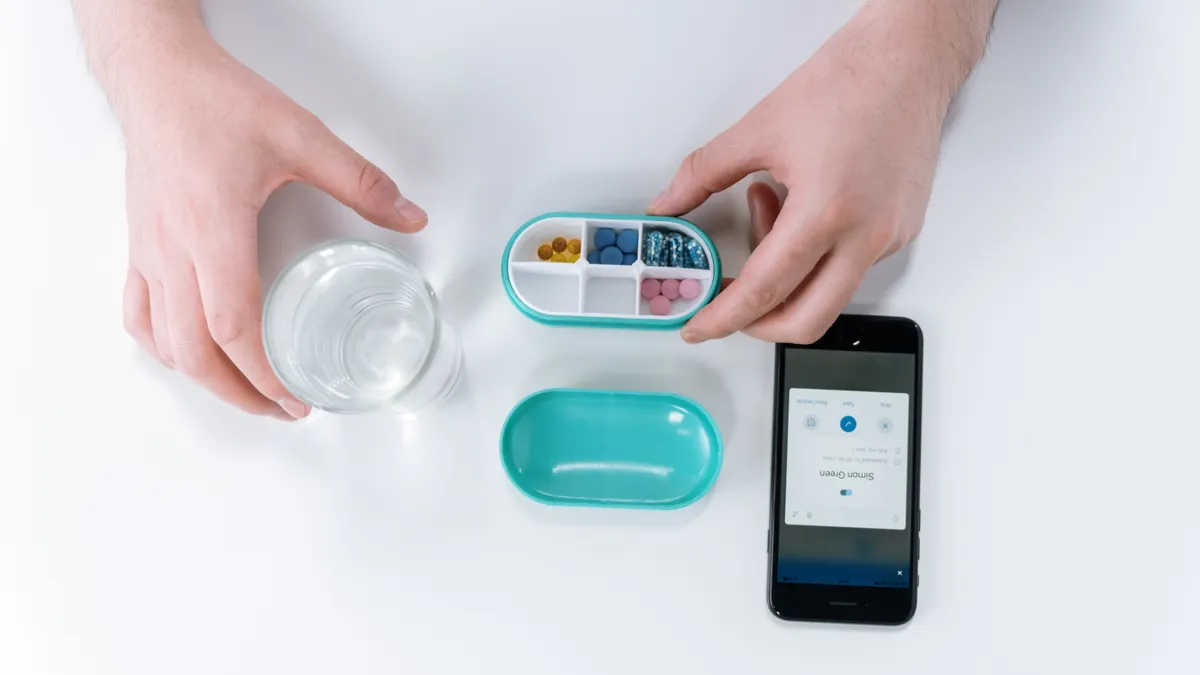
That approach is more reliable than any one-size-fits-all rule. In gestational diabetes, the details of insulin, metformin, and glyburide matter, and so does the person making the call. If the plan is unclear, the right next step is to get it clarified before the next dose is due.
Drafted with AI; not yet reviewed by a person.