
Last updated: October 11, 2026
Key Takeaways
- Earlier action matters because a prior diagnosis changes your risk before symptoms appear.
- Tell your pregnancy clinician right away and ask whether early screening is needed.
- Food changes, activity, and home glucose checks work best as a combined plan.
- The best option depends on access, consistency, and whether glucose keeps rising.
Gestational diabetes in Managing Gestational Diabetes in Subsequent Pregnancies is not something you can “manage better” by willpower alone. It is a pattern that calls for earlier screening, tighter follow-up, and a plan built with a qualified obstetric clinician, diabetes team, or maternal-fetal medicine specialist. Had gestational diabetes before? Say so as soon as pregnancy is confirmed, then ask what monitoring schedule makes sense for you. The American Diabetes Association recommends early, individualized review when there is prior gestational diabetes history, and ACOG advises screening based on risk and clinical judgment.
I write about maternal health with a focus on turning medical guidance into plain decisions. Honestly, the right move is usually not “do everything perfectly”; it is “start sooner than last time and watch the numbers that matter.”
For context, ClinicalTrials.gov lists 1,326 trials for the term “Gestational Diabetes Complications.” In the first 100 results reviewed here, 51 were completed, 17 had unknown status, 8 were active not recruiting, and 8 were recruiting. The median planned enrolment was 174 participants, with a range from 1 to 22,000 across 97 trials. That mix hints at a broad evidence base; still, the study designs are not always directly comparable.
What changes in a later pregnancy, and why earlier action matters

Earlier action wins here. A prior diagnosis changes your risk profile before symptoms ever show up. Gestational diabetes in one pregnancy makes it more likely that glucose problems will appear again, though the exact chance varies by weight, age, family history, and how severe the earlier episode was. So a later pregnancy should not wait for the usual “middle of pregnancy” checkpoint if your clinician thinks you need an earlier look. Studies and guidelines from the ADA and ACOG support risk-based screening rather than a one-size-fits-all delay.
The big mistake in generic advice is treating gestational diabetes like a one-time event. A later pregnancy often needs a different timeline: an earlier conversation, possibly earlier glucose testing, and a clearer plan for nutrition, activity, and follow-up if readings begin to rise. That does not mean you are doomed to repeat the last pregnancy. It means the first month after a positive pregnancy test matters more than people think. Time slips fast here.
This is also where the threshold for “good enough” gets higher. Diet-controlled gestational diabetes before does not guarantee the same path now. Needed medication before? That history deserves special attention. The exact course depends on your current blood glucose values, gestational age, and any other pregnancy complications. The American Diabetes Association and the American College of Obstetricians and Gynecologists both publish patient-facing and clinician-facing guidance on screening and pregnancy diabetes care; those are worth reading alongside your clinician’s advice.
What should I do first if I’ve had gestational diabetes before?
Tell your pregnancy clinician immediately and ask about early screening; the first appointment is where the plan becomes easier to shape. I would treat “I had gestational diabetes before” as a headline item, not a footnote, though you should still confirm next steps with a qualified clinician. That history can change whether testing happens early, how often it repeats, and whether you are referred to a diabetes educator or maternal-fetal medicine specialist.
First, make the record explicit. Past gestational diabetes, any need for medication, any delivery complications, and any postpartum glucose testing results should be part of the conversation. Don’t know those details? Say so. Uncertainty still helps because it shows the clinician where to be cautious.
Then ask what early testing looks like in your case. Some clinicians start with an early glucose assessment in the first trimester or early second trimester when the history is significant. I am not giving a prescription here, because that decision depends on your individual situation, but I am saying that waiting passively for the routine 24- to 28-week window is often not the right move when there is a known prior history.
Strengths of this approach: it can catch rising glucose before it becomes harder to manage, and it gives you more time to adjust food choices, movement, and monitoring habits. Weaknesses: it can add appointments and anxiety, and an earlier test does not eliminate the need for repeat testing later. That repetition is not a failure; it is part of the process. A planned review at 24 to 28 weeks still matters even after early testing.
How do diet, movement, and monitoring fit together?
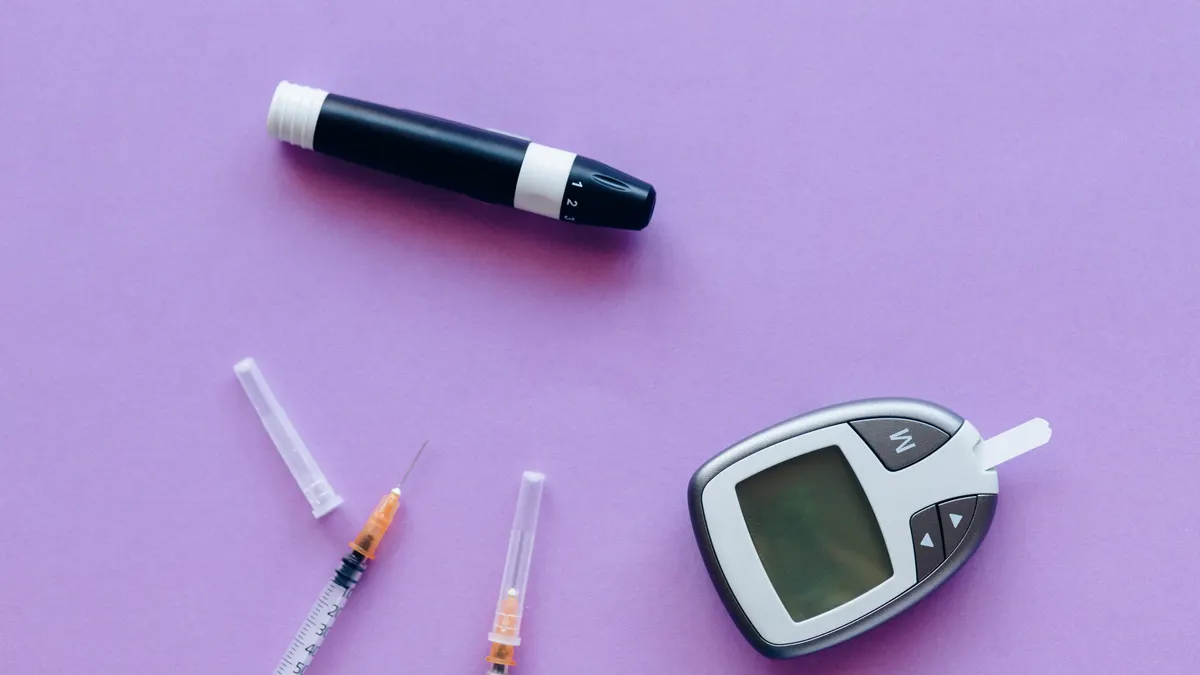
They work as a three-part routine, and none of the three is enough on its own. Diet helps flatten glucose spikes, activity can improve insulin sensitivity, and home monitoring shows whether the plan is actually working. In later pregnancies, the goal is usually not perfection; it is pattern control.
Food changes are often oversimplified. The useful version is not “cut carbs” and stop there. It is usually about carbohydrate quality, meal timing, and portion balance, all adjusted to what your pregnancy clinician or registered dietitian says is appropriate. Some people do well with smaller, more frequent meals; others need a different structure. The common thread is that large, fast-digesting carbohydrate loads tend to cause bigger glucose rises than meals built around fiber, protein, and fat.
Movement matters too, but this is not the place for heroic exercise plans. A walk after meals, if your clinician says it is safe, is often the kind of ordinary habit that helps glucose patterns more than dramatic bursts of activity done once a week. Pregnancy comfort, pelvic pain, bleeding risk, placenta issues, and prior obstetric history all affect what is reasonable, so this needs individual clearance. A little walk can beat a grand plan that never sticks.
Monitoring is the part many people resist, then later wish they had taken seriously. If home glucose monitoring is recommended, the value is in the pattern, not a single number. Readings before and after meals can show which meals cause trouble and whether changes are actually helping. If numbers are repeatedly outside the target range your clinician gave you, that is not a moral failure. It is the point where the plan needs revision.
One honest limitation: this whole strategy depends on follow-through, and pregnancy fatigue is real. So the plan should be small enough to repeat on an ordinary Tuesday, not just on a motivated Sunday.
The honest side-by-side: what tends to help, and what each option misses
The right choice here depends on whether your main problem is access, consistency, or rising glucose despite lifestyle changes. For someone with a prior gestational diabetes history, a structured plan with monitoring usually wins over vague self-management, because it gives you feedback fast enough to respond.
| Criteria | Early clinical follow-up | Watch-and-wait until routine screening | Winner for this condition |
|---|---|---|---|
| Speed of detection | Can catch glucose problems earlier in pregnancy | May miss early rise until routine testing | Early clinical follow-up |
| Clarity of next step | Usually leads to a defined plan for testing and review | Often feels vague until numbers appear | Early clinical follow-up |
| Stress load | More appointments and more reminders | Feels lighter at first | Watch-and-wait if anxiety is the main issue |
| Chance of missing a problem | Lower, especially with prior history | Higher if glucose rises before routine screening | Early clinical follow-up |
| Need for self-monitoring | More likely to include home glucose checks | May postpone monitoring | Early clinical follow-up |
| Fit for a prior GDM history | Better matched to the risk profile | Less responsive to known history | Early clinical follow-up |
| Use when access is limited | Can be hard if appointments are scarce | Easier to start, but less protective | Watch-and-wait if access is the limiting factor |
| Ability to adapt if numbers worsen | Faster | Slower | Early clinical follow-up |
I would choose early clinical follow-up for anyone with a real prior diagnosis, especially if medication was needed last time, but you should confirm that with your pregnancy clinician. I would only accept watch-and-wait when a clinician has explicitly said your current risk is low and has still given you a clear trigger for stepping up care.
The weakness of early follow-up is obvious: it can feel medicalized. The weakness of watch-and-wait is less obvious and more dangerous: it can let a treatable pattern sit unnoticed long enough to complicate the pregnancy. For this subject, that trade-off usually favors the first option, though a clinician should decide the final plan.
When does medication enter the picture?
Medication enters the picture when lifestyle steps are not enough to keep glucose within the targets your clinician set. That is the honest line, and it matters because many readers assume medication means “I failed.” It does not. It means pregnancy hormones are creating a glucose load that non-drug measures are not fully covering.
I am not naming a dose or telling you to start a specific medicine, because that belongs to your clinician. What matters is the decision point: if home readings remain elevated despite diet and activity changes, the care team may discuss medication. The choice depends on glucose patterns, gestational age, other health issues, and the clinician’s approach.
The strength of medication is straightforward: it can reduce persistent glucose elevation when non-drug strategies are not enough. The drawback is also real: it adds complexity, follow-up, and sometimes more frequent monitoring. Some people are comfortable with that; others are not. The wrong choice is assuming medication is always the next step or never the next step. It is conditional.
This is one place where the comparison with a first pregnancy is often misleading. A later pregnancy can move faster. If your numbers start drifting high, the window for trying only one plan and hoping for the best may be short. That is why a clear review schedule is part of good care, not bureaucracy. When medication is being discussed, the next step is usually straightforward: review the glucose log, agree on a target, and set a follow-up date.
Which pregnancy situations flip the decision?
The overall recommendation flips in a few specific cases, and this is where generic advice fails readers.
First, if your prior gestational diabetes was mild, was controlled without medication, and your current pregnancy clinician sees no signs of early glucose trouble, a less intensive path may be reasonable for a short time. That is not the same as no plan; it just means the intensity can be matched to the risk.
Second, if you have major access barriers — no nearby specialist, long waits, limited testing supplies, or unstable scheduling — a simpler interim plan may be more realistic than a perfect one you cannot actually follow. In that case, I would prioritize the most achievable steps first and tell the clinician exactly what the barrier is.
Third, if you are dealing with other pregnancy complications such as significant nausea, vomiting, bleeding, preeclampsia concerns, or activity restrictions, the usual advice about meal timing or exercise may need to be modified. This is not a do-it-yourself zone.
Fourth, if you already know your glucose readings are repeatedly high early in pregnancy, waiting for the routine mid-pregnancy screen makes little sense. At that point, the decision flips hard toward prompt clinical reassessment.
So what is the right call?
Choose early clinical follow-up if you have had gestational diabetes before, especially if you needed medication, had abnormal postpartum glucose testing, or want the safest chance of catching trouble early. Choose a lighter, watchful approach only if your clinician has already judged your current risk to be lower and has still given you a clear testing plan. Neither if you are trying to manage this by guesswork, because guesswork is the wrong tool for a condition that changes across pregnancy.
That is the clearest way I can frame it: prior gestational diabetes should usually make the next pregnancy more proactive, not more relaxed.
What should I ask my clinician at the next visit?
Ask when you should be screened, what readings would count as a concern, and when the plan would change. Those three questions are the ones that turn a vague diagnosis into an actual plan.
I would also ask whether you should see a diabetes educator or registered dietitian, and whether home glucose monitoring is appropriate now or later. If medication ever becomes necessary, ask what would trigger that discussion so there are no surprises. In a later pregnancy, the worst outcome is not needing extra care; it is not knowing when extra care starts.
FAQ
Can gestational diabetes come back in a later pregnancy?
Yes, it can come back, and the risk is high enough that a prior history should be taken seriously from the start. The exact pattern varies by person, so early discussion with a clinician matters.
Should I be screened earlier if I had gestational diabetes before?
Often, yes, but the timing depends on your history and your clinician’s judgment. Earlier screening is commonly considered when there has been prior gestational diabetes, especially if it was more than mild.
Does having gestational diabetes once mean I will need insulin next time?
No. A prior pregnancy does not guarantee the same treatment in a later one. Some people manage with nutrition and monitoring; others need medication. The course can change from one pregnancy to the next.
Can diet and walking alone be enough?
Sometimes they can be, but not always. Studies and clinical guidance suggest that food structure, movement, and monitoring together are more useful than any single step, and persistent high readings should be reviewed with a clinician.
Drafted with AI; not yet reviewed by a person.