Last updated: November 19, 2026
Key Takeaways
- Steadier intake matters more than constant grazing.
- A workable pattern is before work, during work, and after work only if needed.
- Rotating shifts work best with repeatable snack rules.
- The biggest issue is usually the timing, not the food itself.
If you work nights and have gestational diabetes, the Gestational Diabetes Eating Schedule for Night Shifts: How to Time Meals should keep meals and snacks spaced so your blood sugar does not swing hard during work or sleep. Please speak with a qualified clinician about your own numbers and pregnancy plan, especially if your work hours or sleep schedule change. The guide below settles how to time meals, snacks, and breaks on overnight and rotating shifts.
Who this schedule is for, and what it assumes

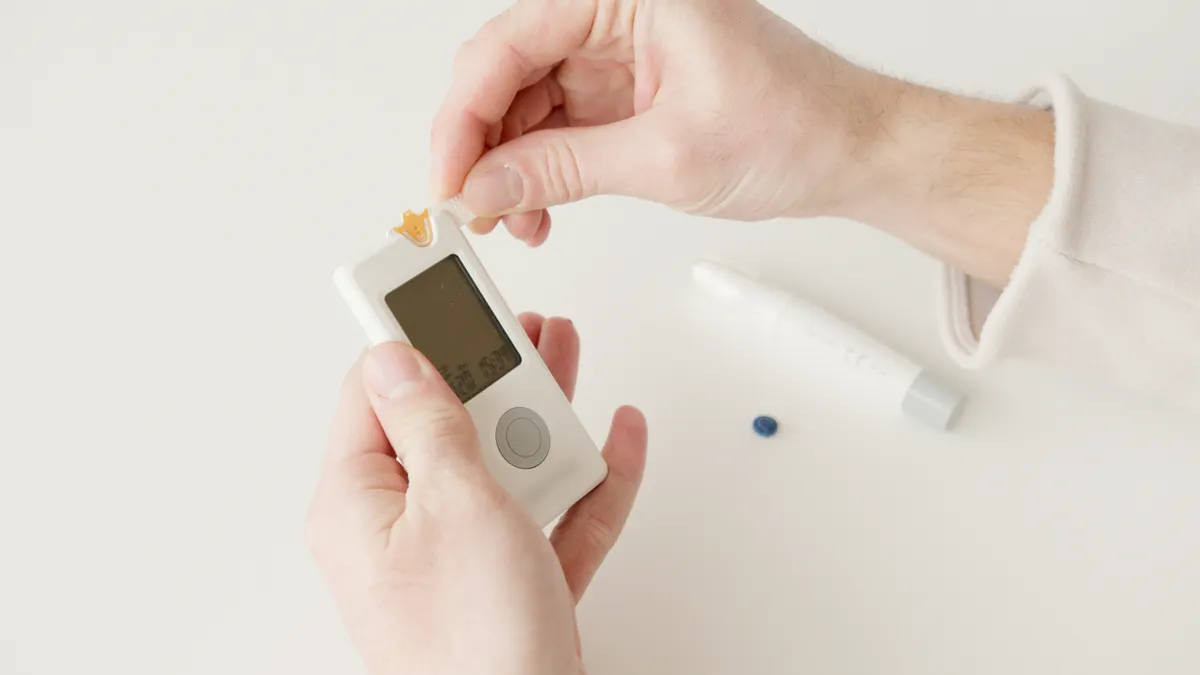
This schedule is for someone working a night shift or a rotating shift while living with gestational diabetes and trying to keep meal timing predictable. It assumes you already know your usual meal pattern, have access to a meter or CGM if your care team uses one, and can take food on break.
The right plan also depends on your work rules, sleep window, and any advice already given by your obstetric or diabetes team. The page on the hub, gestational diabetes meal timing, covers the broader timing rules; this article narrows that to overnight work.
For a broader evidence base, the CDC and ACOG both advise individualized nutrition planning in pregnancy, and ADA guidance also stresses timing meals to match glucose goals. PubMed shows 2,188 records for this query from 2016–2026, and the 100 most relevant records were read and summarized on 2026-11-06 using the method described here: gestational[Title/Abstract] AND diabetes[Title/Abstract] AND fasting[Title/Abstract] AND humans[MeSH Terms], with PubMed filtered to 2016–2026 and sorted by relevance. ClinicalTrials.gov lists 6 trials for the same term, and the first 6 were read the same day.
That matters because the literature is mixed. In the 100 PubMed records, 16 were reviews, 11 were systematic reviews, 10 were meta-analyses, and 6 were randomized controlled trials, which tells you there is research here but not one neat universal rule. Use that as a reminder to fit the schedule to your own pattern, not the other way around.
How do I eat with gestational diabetes on a night shift?
You do best with a planned meal schedule that treats your work hours like a shifted day: one meal before work, one meal during the shift if your hours are long enough, then a small snack or meal after work only if it fits your sleep plan. The aim is steadier intake, not constant grazing. If you are unsure how to set it up, ask a qualified clinician or diabetes dietitian to help tailor it to your glucose readings.
Picture this: you start at 11 p.m., get a break at 1:30 a.m., and leave at 7 a.m. You need food that matches those hours, not the clock in the kitchen at home. A night shift eating schedule works when it gives you a clear anchor before work, a break-time option, and a way to avoid a big, heavy meal right before sleep.
- Eat a balanced pre-shift meal 1 to 3 hours before work. Include protein, fiber, and a controlled carb portion, then verify you are not starting the shift hungry or overfull. A problem is a meal so large or greasy that it makes you sluggish or sends you to work with a blood sugar spike.
- Pack one work-break meal or substantial snack. Put it in the bag before you leave, and check that it will still be safe to eat after several hours. If the only option is vending-machine candy, the plan may need more backup food.
- Use a break to eat at a predictable point in the shift. Many people do better when food comes after the first few hours of work, not at random. If you keep missing the break, the schedule is too complicated for real life.
- Choose a smaller second snack if the shift is long. Keep it simple: protein plus fiber, not a meal that feels like lunch at 4 a.m. If you feel uncomfortably full before finishing the shift, the portion is too big.
- Decide in advance whether you need food after work. Some people need a small bite before sleep; others do better going straight to bed. Verify that post-shift eating does not push sleep later or leave you waking up to high numbers.
- Keep liquids steady and sugar-free when possible. Water is the default. If you depend on sweet drinks to stay awake, that often works against your meal timing plan.
- Check patterns, not one-off guesses. If your glucose runs high after the same work-break meal more than once, that meal may need changes. A single odd reading after a stressful night does not prove the whole schedule is wrong.
The most useful check is simple: you should be able to point to the exact time you ate, the exact food you brought, and the exact reason it fits the shift. If you cannot do that, the schedule is probably too loose.
On the research side, the median publication year in the PubMed sample was 2022, the median study duration figure stated in abstracts was 26 weeks, and the median dose figure appearing in abstract text was 125 mg; those numbers show how varied the underlying literature is, but they are not meal targets. For practical planning, the bigger issue is consistency across your actual work block.
What should my night shift meal timing look like?

A workable pattern is before work, during work, and after work only if needed. That structure usually fits overnight work better than trying to copy a daytime routine hour for hour.
Picture this: your body wants dinner at 6 p.m., but your shift starts at 10 p.m. and your sleep is after sunrise. The trick is not to force a normal day onto a night schedule. It is to keep meals tied to waking hours, work breaks, and sleep so you do not stack food too close together or leave the shift underfueled.
A simple timing pattern
- Pre-shift meal: eat before you leave home, often the closest thing to dinner.
- Mid-shift meal or snack: use a break in the middle of the shift.
- Post-shift food: keep it small if you need it at all, especially if sleep comes soon after.
If your shift is short, you may only need a pre-shift meal and one snack. If your shift is long or physically demanding, you may need a second break-time bite. The schedule should match your work block, not a perfect theory.
A practical cue is sleep. Food too near sleep can be uncomfortable and can make the transition to rest harder. On the flip side, going too many hours without food may leave you shaky, ravenous, or tempted to overeat when the shift ends. The better answer is usually a planned snack rather than improvising at 5 a.m.
How do I plan snacks for rotating shifts?
Rotating shifts call for repeatable snack rules, not a different menu every day. The best snack is usually one you can pack, eat quickly, and use on both night and day shifts without guessing.
Picture this: this week you work overnight, next week you are on an early shift, and your breaks keep changing. If you build a snack system that only works at one time of day, it will fail the first time your roster changes. A rotating-shift plan needs food you can move from one schedule to another.
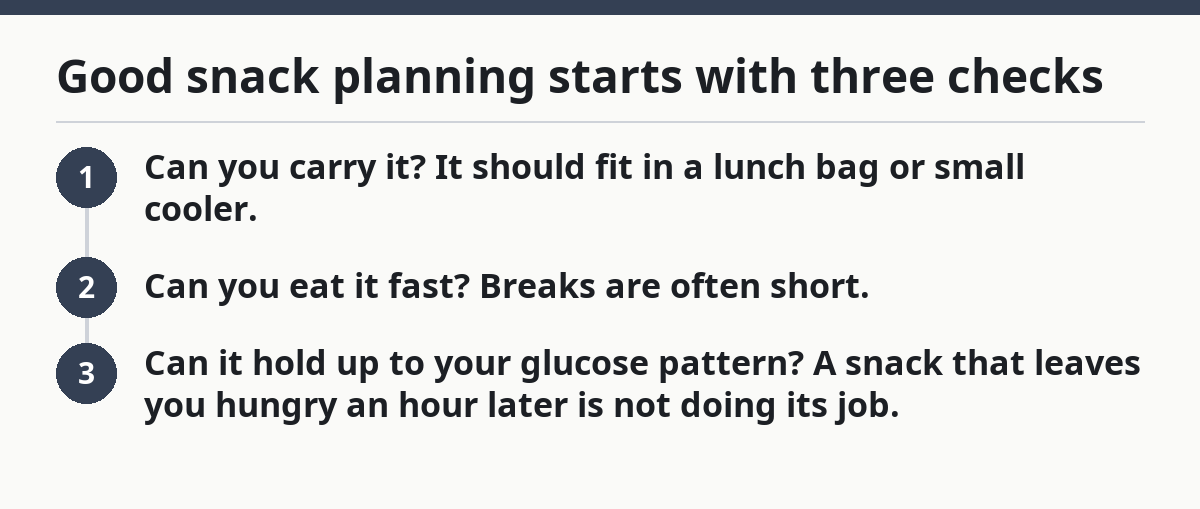
Good snack planning starts with three checks
- Can you carry it? It should fit in a lunch bag or small cooler.
- Can you eat it fast? Breaks are often short.
- Can it hold up to your glucose pattern? A snack that leaves you hungry an hour later is not doing its job.
Use snacks to bridge a gap, not to replace every meal. If a snack is acting like a full dinner, it probably needs more protein or more total food. If it spikes your blood sugar, it may have too much quick carbohydrate for your pattern.
A few ways people commonly build snacks
- Protein plus carb with fiber
- Fruit plus a protein food
- A small meal left over from home
- A snack that is easy to portion and repeat
The same approach can also work on a day shift. That is why rotating schedules are easier when the snack logic stays the same even if the clock does not.
What gets in the way during overnight work?
The biggest problem is usually not the food itself. It is the mismatch between work break timing, fatigue, and what is actually available at 2 a.m.
Picture this: your break is late, you are tired, and the only food around is from a machine or drive-through. At that point, even a decent plan can fall apart if it was built around perfect conditions instead of a real break. The schedule has to survive the shift you actually work.
Here are the mistakes that come up most often:
- Skipping the pre-shift meal. The consequence is arriving at work hungry and making a fast, poor food choice. The fix is a meal before leaving, even if it is smaller than dinner.
- Saving all food for after work. The consequence is a long stretch without fuel and a bigger chance of overeating at dawn. The fix is a true work-break meal or snack.
- Choosing mostly sweet snacks. The consequence is a faster rise and fall in glucose. The fix is a snack with protein and fiber, not just sugar.
- Eating a large meal right before sleep. The consequence is discomfort and a harder transition to rest. The fix is a smaller post-shift option or no food at all if you are not hungry.
- Changing the schedule every day without a pattern. The consequence is that you cannot tell what is helping or hurting. The fix is a repeatable rhythm tied to your shift type.
- Ignoring repeated glucose patterns. The consequence is the same unhelpful meal keeps showing up on the chart. The fix is to bring the pattern to your care team and adjust the timing or food mix.
One more thing: if your job has unpredictable breaks, a rigid schedule can fail. In that case, the plan may need more portable food and less dependence on one exact minute.
When does the standard schedule not fit?
The standard schedule does not fit every overnight job, every pregnancy, or every sleep pattern. That is where people get into trouble by copying a one-size-fits-all meal chart.
Picture this: you work in a unit where breaks get pushed, or you drive for a living and cannot stop at the same time every shift. Or you switch from days to nights every few days. The usual “eat at this hour” advice stops being useful fast. The better question is what timing can survive your actual week.
Breaks are unpredictable: this means your planned mid-shift meal may keep getting delayed — pack foods that can be eaten in pieces, and get individual timing advice from your care team if you keep missing meals.
You feel nauseated at night: this means a large meal may be the wrong tool — try a smaller snack-sized option and ask for guidance if nausea keeps you from eating enough.
You sleep soon after work: this means a heavy post-shift meal can crowd out rest — keep the last food small or skip it if you are not hungry.
Your blood sugar is repeatedly high after the same meal: this means the timing or food mix is not working — bring the pattern to a qualified clinician rather than guessing at the fix.
You are on rotating shifts every few days: this means you may need two versions of the same schedule — one for nights, one for days — instead of forcing one routine onto both.
If your pattern keeps breaking down, the answer is not to push harder. It is to tighten the plan with professional input so your meals fit the shift instead of fighting it.
What good timing looks like in real life
Good timing looks boring, and that is the point. You can name the meal before work, the food on break, and the reason you did or did not eat after the shift. That predictability is more useful than chasing a perfect chart.
Picture this: you finish a night shift, go home, and know exactly whether you are eating a small bite or going straight to sleep. There is no scramble, no vending-machine backup plan, and no guesswork about why your glucose changed. That is what a useful night shift eating schedule gives you.
The signs of a better schedule are practical:
- fewer emergency food choices,
- less hunger that drives overeating,
- easier pack-and-go planning,
- and a clearer link between meals and glucose readings.
If you need a quick check, ask three questions after a few shifts: Did I eat before work? Did I have a real break-time option? Did I eat too close to sleep? If the answer keeps being no, no, yes, the timing likely needs adjustment.
The schedule does not have to be perfect to be useful. It just has to be stable enough that your body can predict what comes next.
How do I eat with gestational diabetes on a night shift?
You eat by anchoring food to your shift, not to daytime habits. A pre-shift meal, one planned work-break snack or meal, and a small or skipped post-shift bite are the usual building blocks. The exact pattern should match your glucose readings and the advice of your qualified pregnancy care team.
Can I keep the same meal timing on overnight work?
You can keep the same structure even when the clock changes. The structure is meal before work, food during work if the shift is long, and a cautious approach to food before sleep. The exact hours may need to move when your shift changes, especially if you rotate between nights and days.
How do I plan snacks for rotating shifts?
You plan snacks that travel well, are easy to eat on short breaks, and do not depend on a fixed hour. The same snack logic should work on both night and day shifts so you are not rebuilding the plan every week. If your glucose pattern changes with each roster, bring that pattern to your care team.
Drafted with AI; not yet reviewed by a person.