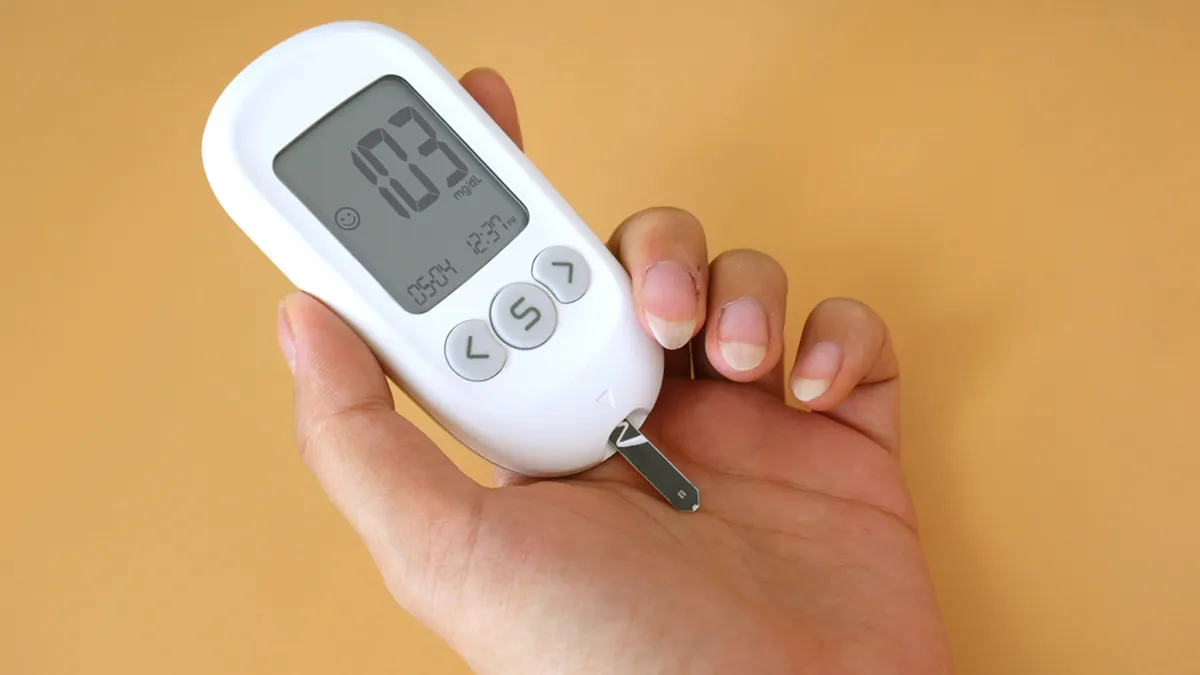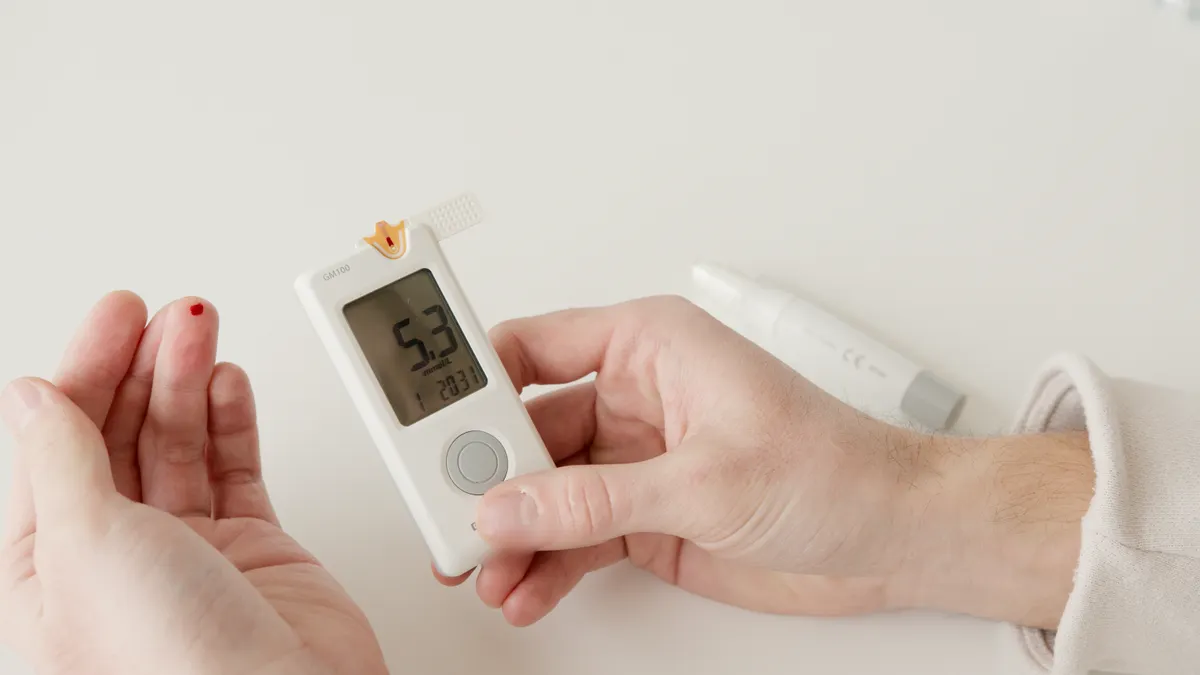
Last updated: November 19, 2026
Key Takeaways
- A pre-exercise check can show your starting point more clearly.
- Exercise can shift a glucose reading enough that timing matters.
- The right time depends on the question; pre-exercise is a cleaner baseline, post-exercise a useful follow-up.
- Stop the plan and contact a qualified professional when the reading, the symptoms, or the timing no longer make sense.
Gestational Diabetes Testing Before or After Exercise: Which Timing Is Best is the question this page answers, and the short answer is that a pre-exercise check is often the cleaner reading while a post-exercise check can show how movement changed the number.** Speak with a qualified clinician about your own pattern before you change how you test. The sections below sort out what to check before a walk, what to check after, and when timing can mislead you.
What this timing question is really asking
This page is for someone with gestational diabetes who already has a glucose meter and wants to know whether an exercise-related glucose check should happen before or after movement. It assumes you already follow a meal plan, know your usual testing points, and want to avoid a reading that looks “off” because of a walk, a workout, or a long gap after eating. If you’re unsure how to monitor blood sugar with gestational diabetes, start with the site’s main blood sugar testing guide for the bigger routine.
The reason timing matters is simple: exercise can shift glucose around quickly, and the effect varies by the type, length, and intensity of activity. A gentle 10- to 20-minute walk after a meal may affect a reading very differently than a harder workout, even though both count as exercise.
Here’s the catch:
- A pre-workout check tells you what your level was before activity changed it.
- A post-workout check tells you what exercise did to the number, but not what it was before you moved.
- A meal-related check can be distorted if you walk first and test later.
The most useful question is not “Which is better, before or after?” It is “What do I need this reading to show?” That answer decides the timing.
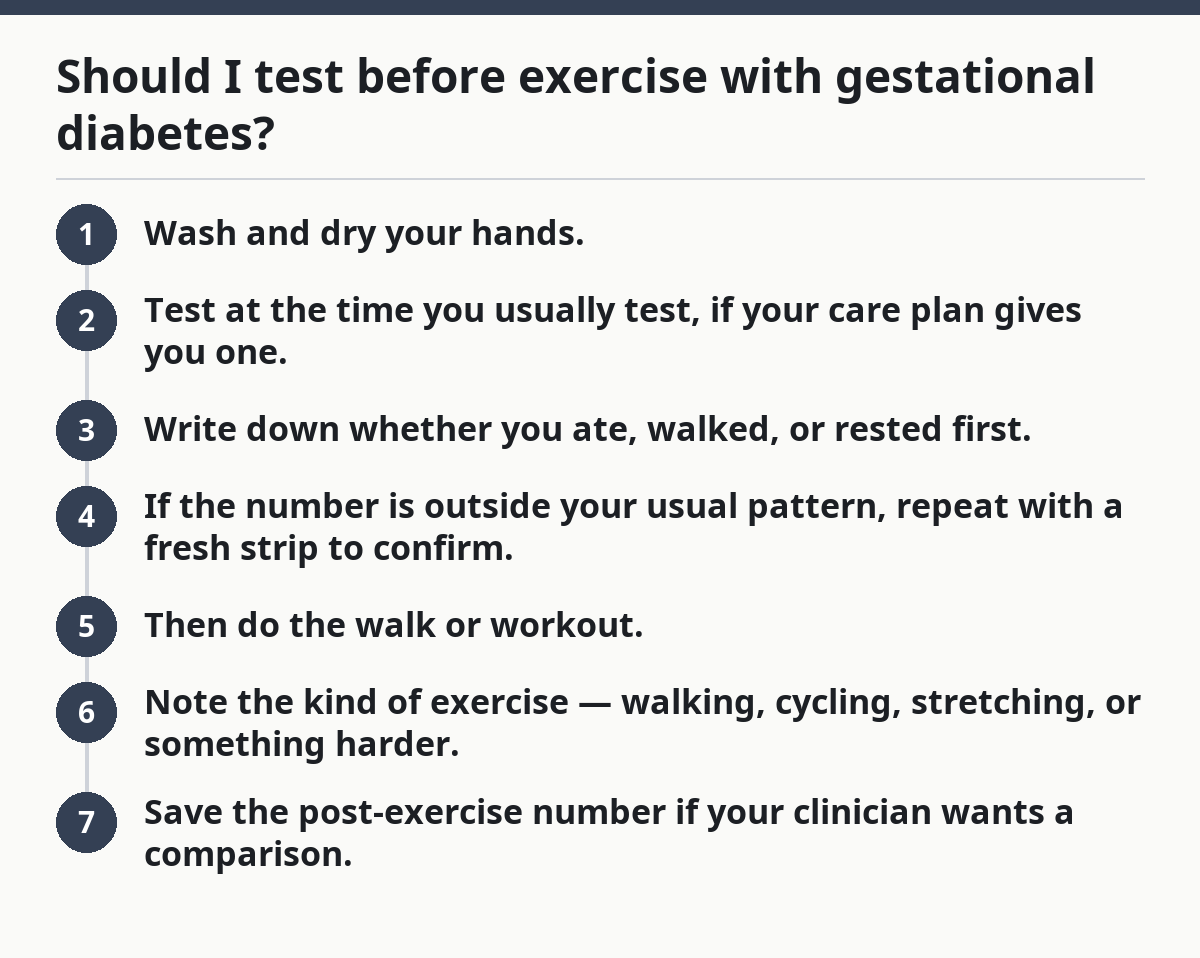
Should I test before exercise with gestational diabetes?
A before-exercise check is often the clearest way to see your starting point. It gives you a clean baseline, which matters if you are trying to understand whether a walk changed the result or whether the number was already high or low before you moved.
Picture this: you’ve eaten, your meal plan calls for a walk, and you want the reading to mean something. If you test before the walk, the meter gives you a number with less noise from movement, sweat, or a fast drop after activity. That matters most when you are comparing one day to the next.
Use a simple sequence:
- Wash and dry your hands.
- Test at the time you usually test, if your care plan gives you one.
- Write down whether you ate, walked, or rested first.
- If the number is outside your usual pattern, repeat with a fresh strip to confirm.
- Then do the walk or workout.
- Note the kind of exercise — walking, cycling, stretching, or something harder.
- Save the post-exercise number if your clinician wants a comparison.
A starting reading is especially useful if your workout is more intense than a stroll. A brisk 20-minute walk may nudge glucose one way; stairs or interval work may do something else. The problem with skipping the pre-check is that you lose the comparison point. Then the post-workout result can look mysterious when it is just a changed baseline.
Can exercise change my blood sugar reading?
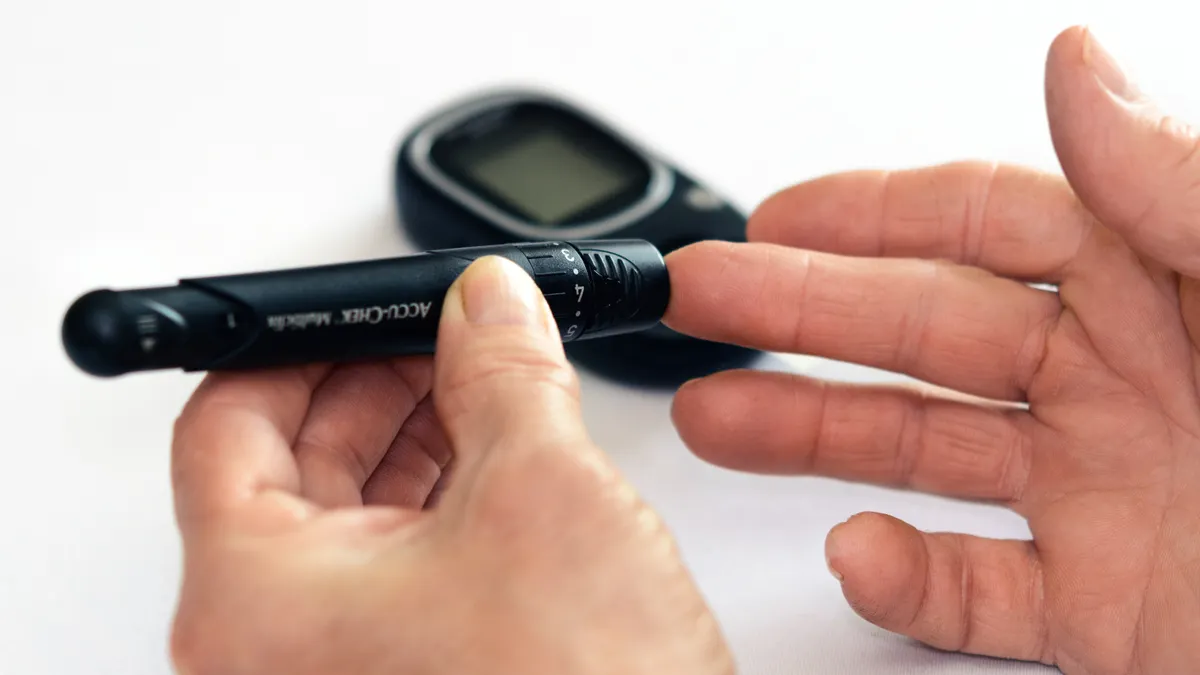
Yes, exercise can change a glucose meter reading, sometimes enough that timing becomes the main factor. The direction of change depends on the workout, the time since your last meal, and your own response, which can vary from one day to the next.
A gentle walk after eating is one of the most common reasons people see a different reading later. The effect may show up within minutes, not hours. A harder effort can sometimes cause a short rise before a later drop, which is why a single post-workout number does not always tell the whole story.
The truth is, the meter only shows one moment:
- If you test right before exercise, you see the pre-activity value.
- If you test right after, you may catch a temporary shift from movement.
- If you test 30 minutes later, you may see a different trend again.
That is why the timing choice should match your goal. If you want to know whether your meal plan and walk worked together, a before-and-after pair can be useful. If you only want the number that will guide your next step, the pre-exercise value is usually easier to interpret.
On the flip side, a post-exercise check can be useful if your care team wants to see how your body responds to a specific type of movement. However, don’t treat that single reading as if it were the whole pattern. One number is a snapshot, not the full movie.
What is the best time to test around a workout?
The best time is the one that matches the question, but a before-exercise check is often the most reliable baseline and a post-exercise check is a useful follow-up. If you’re walking after a meal, testing before the walk keeps the reading tied to food alone, while testing after the walk shows the effect of movement.
Picture this: you finish dinner and want to know whether a 15- to 20-minute walk changed anything. If you test only after the walk, you may not know what the number would have been without it. If you test only before, you miss the exercise effect. The answer is often to choose one as your main point and use the other when your clinician wants a comparison.
A practical pattern looks like this:
- Test at your usual scheduled time if you have one.
- If you plan to exercise soon, record that the test is pre-workout.
- Do the walk or workout.
- If your care plan asks for it, repeat the check after exercise.
- Keep the note simple: time, food, exercise type, and reading.
- If the post-workout number seems very different, confirm that your hands were clean and the strip was in date.
- Bring the pattern to your appointment instead of reacting to one odd result.
The best part? You do not need a complicated system. A clear note beside the number often matters more than extra testing. What makes a reading useful is context: meal, movement, and timing. Without those three, the meter can’t tell you much.
What should I check before I walk?
Check your timing, your symptoms, and whether the reading makes sense for the moment. Before a walk, the useful question is not just “What is the number?” It is “Does this number fit with how I feel and what I just did?”
Picture this: you’re standing by the door, shoes on, and you want to know if the walk can wait. A pre-walk check can help you avoid chasing a number that is already shifting because of food or movement. If you feel shaky, unusually weak, dizzy, or unwell, that is a different situation from a normal pre-exercise reading.
A good pre-walk check includes:
- A clean hand and a fresh strip.
- A note of how long it has been since the last meal.
- A quick look at whether you are due for a scheduled check.
- A check for symptoms that do not fit your usual day.
- A plan for what to do if the number is clearly unusual for you.
The point is not to turn every walk into a lab visit. It is to keep exercise from hiding what the number really means. A walking check before the first step can keep the rest of the day easier to interpret.
When should I stop and ask for help?
Stop the plan and contact a qualified professional when the reading, the symptoms, or the timing no longer make sense. Gestational diabetes is not a place for guesswork, and a weird number after exercise can sometimes mean something more than “the walk changed it.”
A reading that is very different from your usual pattern: It may reflect more than exercise alone — follow your care plan and ask what the number means in your case.
You feel shaky, faint, confused, or suddenly unwell: Those symptoms matter even if the meter seems “fine” — stop exercising and get help promptly.
You just changed your meal plan or activity level: The old timing may no longer fit — ask whether your testing schedule should be adjusted.
Your post-workout reading is hard to interpret several times in a row: The pattern may need a different testing time — bring the log to a clinician rather than guessing.
You are unsure whether to test before, after, or both: That means the goal of the test is unclear — get a specific plan from a qualified professional.
A timing rule only works when it matches your real day. If your workouts vary, your meals vary, or your readings keep jumping around, the standard approach may not fit well enough. That is the moment to ask for a personalized plan, not to test harder.
Common mistakes with exercise-related glucose checks
The biggest mistake is treating every reading like it means the same thing, no matter when it was taken. A number before exercise and a number after exercise can both be valid, but they answer different questions.
Picture this: you walk for 20 minutes, test later, and decide the number “proved” the walk was good or bad. That is a shortcut. The reading may reflect the meal, the walk, the timing, or all three.
Common errors include:
- Testing only after exercise — you lose the baseline, so the post-workout number is easy to misread. The better alternative is a pre-exercise check when you want a clean starting point.
- Forgetting to label the timing — a number without “before” or “after” is easy to confuse later. The fix is to write the time and context next to every reading.
- Using one odd result to judge the whole pattern — a single reading can be noisy. The better choice is to look for repeated timing-related trends.
- Assuming a walk and a harder workout act the same — they often do not. The fix is to note the type of exercise, not just “worked out.”
- Ignoring clean-hands technique — food on the fingers can distort the result. Wash and dry hands before the check.
How walking after meals fits into the timing choice
Walking after meals often makes timing more important, not less. If you are using a meal plan that includes a post-meal walk, the pre-walk reading can tell you what the meal did on its own, while the post-walk reading tells you what the walk added to the picture.
Picture this: dinner is over, and you plan to walk before sitting down again. If you test right away, you are mostly seeing the meal effect. If you test after the walk, you are seeing the combined effect of food plus movement. That can be helpful, but only if you know which one you are looking at.
This is where many people get tripped up:
- A post-meal walk can make the number look better than the meal alone would have looked.
- A later check can show a different value than an immediate one.
- The same walk at a different time of day may not produce the same reading.
If your main question is whether the meal plan itself is working, test before the walk. If your main question is whether a post-meal walk changes the reading, test again after. The choice depends on the story you want the meter to tell.
For readers who want the broader routine, the main hub on gestational diabetes blood sugar testing covers the full home-testing setup. This page stays with the timing question only, because that is the part exercise changes the most.
What if my numbers still look odd?
If your numbers stay odd, the problem may be timing, technique, or a pattern that needs a closer look. Exercise is only one variable, and a reading that keeps surprising you may need a different plan rather than more random checks.
Because you have tested before and after a few walks, the next step is not to guess harder. It is to check whether the same factor keeps changing — the meal, the walk length, the time of day, or the test method.
A simple review can help:
- Check whether your hands were clean each time.
- Compare only readings taken at the same point relative to exercise.
- Look for the same meal-plus-walk pattern over several days.
- Bring the notes to your clinician if the pattern is still confusing.
- Ask whether your care team wants a different timing rule for pre-workout or post-workout checks.
The honest limit here is that a glucose meter is a snapshot tool. It does not explain every rise or drop by itself. That is why a professional review matters when the pattern keeps changing. A timing plan should make your life simpler, not more confusing.
Should I test before exercise with gestational diabetes?
Often, yes, if you want a clean starting point. A pre-exercise reading shows what your level was before movement changed it. That can be the more useful number when you are comparing days or trying to understand the effect of a walk versus the effect of food.
Can exercise change my blood sugar reading?
Yes, exercise can change it. A walk, a longer workout, or a harder effort may shift the number enough that a post-exercise reading does not match the pre-exercise one. That is why the timing needs to be written down with the reading.
When is the best time to test around a workout?
The best time is before exercise if you want the baseline, and after exercise if you want the effect of movement. If you are walking after meals, the best choice depends on whether you are checking the meal alone or the meal-plus-walk combination.
Drafted with AI; not yet reviewed by a person.