Last updated: November 19, 2026
A gestational diabetes diagnosis appointment is usually a review visit: the clinician goes over the glucose test result, explains what it means, and lays out the next steps. If you are looking for what to expect during a gestational diabetes diagnosis appointment, tell a qualified professional about your own situation, because what happens next can change with your pregnancy history, the test used, and whether you have already seen an obstetrician or midwife.
Who this appointment is for, and what it assumes you already know
This appointment is for someone who has had a positive glucose test result or has been told that gestational diabetes is suspected and needs follow-up. It assumes you already had the screening or diagnostic test, and now you need help making sense of the result, the timing, and the care plan discussion.
The visit is not the place to self-interpret the numbers in isolation. A value on a lab report matters in the context of the test type, the gestational age, and your overall pregnancy care. The obstetrician or midwife may also be the person who coordinates the next steps, but the exact setup varies by clinic, hospital, and country.
This guide focuses on the appointment itself: how the conversation usually flows, what questions are likely to come up, and what follow-up may be discussed. It does not replace testing guidance, treatment details, or medication decisions, which should be discussed with a qualified professional and are covered in clinical guidance from the American Diabetes Association and the U.S. Preventive Services Task Force. For context, the topic is a major research area: 2,522 PubMed records match this query for 2016–2026, and the 100 most relevant were read; every median, range, and share below is computed across those records, with the data computed on 2026-10-21, according to PubMed (NCBI). On ClinicalTrials.gov, 740 trials are registered for this term, and the first 100 were read.
That breadth matters because the appointment is not one fixed script. A person with a borderline result, a clear diagnosis, or a second pregnancy may hear different language and see different next steps. The common thread is simple: the visit is meant to turn a lab result into a plan you can follow.
What happens during the gestational diabetes diagnosis appointment?
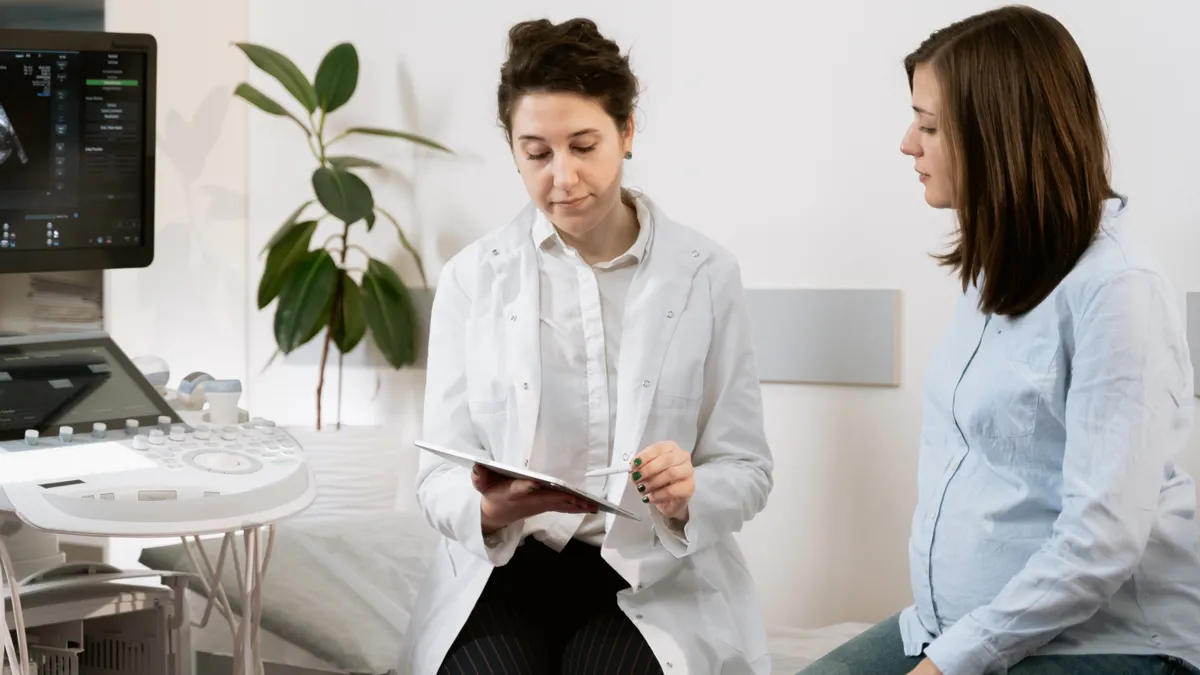
The appointment usually starts with a result review, then moves into a brief history, a care plan discussion, and clear next steps. In plain language, the clinician explains why the test is considered positive, what follow-up is needed, and which team member will help next.
Most visits follow a practical sequence. The clinician may first verify the exact glucose test result and confirm which test was used. That matters because a screening test and a diagnostic test are not the same thing, and the numbers are not interpreted the same way. If you have a blood sugar log already, it may be reviewed, even if it is only a few days of readings or a notebook started after the test.
Here is the usual flow:
-
Check-in and chart review. The office confirms your pregnancy stage, the test date, and the lab result.
Verify: the result matches your name, date of birth, and the correct gestational age.
Problem sign: the clinician cannot find the result or the numbers look inconsistent with the test date. -
Explain the result in context. The obstetrician or midwife describes what the glucose test result means for pregnancy care.
Verify: you hear whether this is a screening result, a diagnostic result, or a repeat test.
Problem sign: the result is presented without saying which test it came from. -
Review risk factors and symptoms. Expect questions about prior gestational diabetes, family history, earlier baby size, and any symptoms you have noticed.
Verify: the history matches what is in your chart.
Problem sign: key details are missing, such as a prior pregnancy diagnosis or another condition that affects pregnancy care. -
Discuss immediate next steps. The clinician may outline a nutrition referral, home glucose monitoring, or another follow-up visit.
Verify: you know who will contact you, what happens first, and when.
Problem sign: the plan is vague, with no name, date, or responsible clinic. -
Get instructions for a blood sugar log, if needed. You may be shown how to record readings, timing, and meals.
Verify: you understand what to write down and how often to bring the log.
Problem sign: you leave without a clear recording method. -
Ask about referrals. Some clinics arrange a nutrition referral the same day; others send it later.
Verify: the referral has actually been placed, not just discussed.
Problem sign: you are told “someone will call” but nothing is ordered. -
Leave with a written plan. The visit should end with the next appointment, contact instructions, and warning signs to report.
Verify: you know what comes next in the pregnancy timeline.
Problem sign: you are unsure whether you need another appointment, a call, or immediate follow-up.
A generic article often skips the part that matters most: the diagnosis visit is less about a dramatic announcement and more about clarifying the type of result, deciding who follows you, and making the next 1 to 2 weeks predictable. That predictability is the value of the appointment.
How will the result be explained to me?
The result should be explained in plain language, not just read off a lab sheet. A good explanation links the number to the specific test and the reason the clinic is changing the plan.
You may hear terms such as screening test and diagnostic test. Screening means the test is used to find people who may need more evaluation; diagnostic means the test is used to confirm the condition. The exact thresholds vary by test and by practice guideline, so the same lab value can mean different things depending on which test you had.
A careful explanation usually covers three points:
- what the number was,
- which test produced it,
- why the clinic considers it positive or concerning.
That conversation should also make room for uncertainty. Sometimes the result is clear-cut; sometimes the clinician says the numbers are close to a cutoff, or that the pattern suggests the need for closer follow-up. Research summaries on pregnancy glucose testing and diagnosis, including peer-reviewed reviews indexed in PubMed, show that practice is not perfectly uniform, which is one reason the appointment matters.
If you brought a blood sugar log from home, ask how the clinic wants it used. Some people assume the log is secondary to the lab result, but it can shape the discussion if there are repeated high or normal readings. A 2-page notebook, a phone app, or a printed sheet all serve the same basic purpose if the team can read it easily.
This is also the moment to ask what the diagnosis does not mean. It is reasonable to ask whether the result changes delivery planning, whether another appointment is expected within days or weeks, and who will coordinate care. The goal is not reassurance by platitude; it is a clear map.
What should I bring and ask at the visit?

You should bring the test paperwork, a medication list, and a short list of questions that cover the plan for the next 1 to 4 weeks. A diagnosis appointment goes better when you arrive with the exact glucose test result, any home readings, and the name of the clinician you want to speak with again.
A practical checklist helps:
- the lab printout or patient portal result,
- your prenatal record if you have one,
- a current medication or supplement list,
- notes on prior pregnancies, if relevant,
- a blood sugar log, if you already started one,
- a pen or phone note for instructions.
Good questions are concrete. Ask who will place the nutrition referral, whether you need to record blood sugar readings before or after meals, how often you should report back, and what happens if the clinic wants another appointment before your next routine prenatal visit. If you have already been seeing an obstetrician or midwife, ask whether that person stays involved or whether another clinician takes over part of the follow-up.
You can also ask:
- What part of my result made this a diagnosis rather than a borderline finding?
- What should I do today, before the next appointment?
- Who reviews my blood sugar log?
- What signs mean I should call the office sooner?
Rather than expecting every question to be answered in one visit, ask, “What happens next, in what order?” That keeps the plan in a timeline you can follow. A diagnosis appointment that ends with “we’ll see you later” is incomplete.
When is this visit not enough by itself?
This visit is not enough by itself when the result is unclear, the pregnancy is medically complex, or the follow-up plan has not been made concrete. In those situations, the appointment should trigger more coordination, not less.
Specific situations that need extra attention include:
- The result was positive, but no test type is documented: This means the number cannot be interpreted cleanly — ask for clarification before assuming the diagnosis is settled.
- You have a blood sugar log with repeated high readings already: This suggests the appointment may need to move quickly into a fuller care discussion — bring the log and make sure it is reviewed.
- You have multiple pregnancy complications already: This can change how the obstetrician or midwife frames follow-up — expect more coordination, not a one-size-fits-all plan.
- No nutrition referral is offered when one is mentioned in the plan: This means the plan is incomplete — ask who is responsible for placing it and when it will happen.
- The clinician gives no timeline for the next contact: This leaves the diagnosis hanging — ask for a date, a call window, or the next scheduled appointment.
- You leave without knowing who to call about symptoms or new results: This is a gap in the care plan — get the contact route before you leave.
A standard approach works best when the result is straightforward and the clinic has a clear pathway. It is the wrong tool when you need a specialist discussion, a second review, or a more detailed explanation of the numbers. That is not alarmist; it is how diagnosis visits stay useful instead of confusing.
Common mistakes people make after a positive glucose test
The most common mistake is treating the appointment as a verdict instead of a planning visit. That usually leads to missed questions, unclear next steps, and avoidable delay.
Here are the errors I see most often in how people approach the visit:
-
Not bringing the actual result.
Consequence: the conversation stays abstract, and the exact test may be misremembered.
Better alternative: bring the printed result or portal screenshot. -
Assuming every positive result means the same thing.
Consequence: people compare their number to someone else’s and get confused.
Better alternative: ask which test was used and how the clinic interprets it. -
Leaving without a written next step.
Consequence: referrals, logs, and follow-up calls get delayed.
Better alternative: leave with a name, a date, or a clear action item. -
Waiting for the clinic to volunteer every detail.
Consequence: key instructions are omitted, especially about the nutrition referral or blood sugar log.
Better alternative: ask directly what happens in the next 7 days. -
Ignoring the role of the obstetrician or midwife.
Consequence: patients do not know who is coordinating the plan.
Better alternative: confirm who is the main contact for the diagnosis phase. -
Thinking the visit should answer treatment in full.
Consequence: the patient leaves frustrated if medication decisions are not made that day.
Better alternative: focus the appointment on result review and immediate planning, then follow the path for management.
The trade-off is simple: the more organized you are, the more likely the visit becomes useful. But the appointment still has limits. It is meant to start coordination, not solve every downstream question in one sitting.
What happens after the appointment?
After the appointment, you usually move into the next phase of pregnancy care, which may include tracking, referral follow-up, or another review visit within days or weeks. The exact sequence depends on your result, your pregnancy timeline, and what the clinician decides is needed next.
In many clinics, the immediate next step is practical rather than dramatic. That may mean a nutrition referral, a home blood sugar log, or instructions for the next check-in. If a care plan was discussed, read it again the same day while the details are still fresh. This is the point where people often lose the thread: they heard the diagnosis, but not the order of operations.
If you were given written instructions, compare them with what you remember from the visit. If something is missing — the name of the clinician, the phone number, the date of the next appointment — contact the office rather than guessing. Pregnancy care works best when the handoff is specific.
The diagnosis appointment is also the right time to notice what the clinic does well and what it leaves vague. A useful visit gives you a result, a next contact, and a way to document your readings. If those three pieces are present, the appointment did its job. If one is missing, follow up promptly.
For broader context on testing and diagnosis, the hub on gestational diabetes testing and diagnosis is the right place to start before or after this visit, depending on where you are in the process.
Key takeaways
- The appointment is usually a result-review visit, not a full treatment session.
- You should leave knowing which test was positive, who is coordinating care, and what happens next.
- A blood sugar log and any paperwork from the lab can make the conversation much clearer.
- A nutrition referral or follow-up plan may be discussed, but it should be specific enough to act on.
- If the plan feels vague, ask for the next step in writing before you leave.
What happens at the appointment after a positive glucose test?
The appointment usually focuses on explaining the glucose test result and turning it into a next step. A clinician such as an obstetrician or midwife may review the number, explain what test it came from, and discuss follow-up such as a nutrition referral or a blood sugar log.
What questions should I ask after a gestational diabetes diagnosis?
Ask who is coordinating your care, what happens next, and how you should track blood sugar readings if the clinic wants them. It is also reasonable to ask, with your qualified professional, whether you need another appointment before your next routine prenatal visit.
Drafted with AI; not yet reviewed by a person.