
Last updated: November 05, 2026
Key Takeaways
- Choose the plan that matches your goal, schedule, and medical limits.
- The right approach depends on how much structure, restriction, or flexibility you need.
- Build defaults so you do not rely on willpower at every meal.
- Use condition-specific guidance, because food changes can help one problem and worsen another.
Food and diet management is the problem of matching what you eat to a real goal: better energy, steadier blood sugar, weight change, symptom control, performance, or simply fewer chaotic meals. For Food and diet management: The Complete Guide, the quick answer is that the best plan is the one you can follow consistently: for many people that means a simple, repeatable system, while anyone with a medical condition, medicines, pregnancy, a history of disordered eating, or unexplained weight change should speak with a qualified health professional before changing their diet.
The evidence base is broad but lopsided. In a PubMed search for food[Title/Abstract] AND diet[Title/Abstract] AND management[Title/Abstract] AND humans[MeSH Terms] for 2016–2026, 2,302 records matched; the 100 most relevant were read and the shares below were computed across those records on 2026-10-24, alongside 3,707 registered ClinicalTrials.gov studies for the same term, with the first 100 read and the figures below computed across them.
What actually determines the right food and diet plan?
The right plan is the one that fits your goal, your schedule, and your medical constraints, not the trendiest diet label. If your goal is fat loss, blood sugar control, GI symptom reduction, or athletic fuel, the best plan changes; if you have diabetes, kidney disease, food allergies, IBS, pregnancy, or a past eating disorder, the answer changes again.
The generic advice that fails most often is “just eat healthy.” That phrase hides the real variables: calorie density, protein adequacy, fiber tolerance, sodium, meal timing, appetite, and how predictable your day is. In the literature sample, most of the 100 most relevant PubMed records were review articles rather than direct trials, which matters because synthesis is not the same as a single definitive experiment.
If the goal is general health, a diet pattern built around minimally processed foods, regular meals, and enough protein and fiber is usually easier to maintain than a highly restrictive plan. If the goal is symptom management, the food list gets narrower fast. A low-FODMAP approach, for example, is usually used as a short-term elimination-and-rechallenge strategy, not a forever diet; a renal diet may need limits on potassium, phosphorus, sodium, or protein depending on the clinical picture; and a diabetes meal plan may need carbohydrate consistency rather than blanket avoidance. See the Academy of Nutrition and Dietetics, the National Institute of Diabetes and Digestive and Kidney Diseases, and the NHS for condition-specific guidance on these patterns.
A practical way to choose is to ask four questions:
- What am I trying to change?
- What must I protect first: blood sugar, kidney function, GI comfort, recovery, weight, or sanity?
- What foods can I actually repeat 5 or 6 days a week?
- What plan can I follow when I am tired, travelling, or eating with other people?
The hard part is not knowing that vegetables are “good.” The hard part is building a system around your real life. A plan that only works on a quiet Sunday fails the rest of the week.
Quick check: if your current plan sounds impressive but collapses on workdays, you need a simpler structure, not more rules.
Which food and diet management path fits your situation?
Because needs vary so much, the right path depends on whether you need structure, restriction, or flexibility. If you are trying to lose weight or stabilize energy, one path may work better than another; if you are reacting to a diagnosis, a different path often makes more sense, and a clinician can help you choose safely. The wrong path usually fails because it ignores one constraint that matters more than calories, such as nausea, budget, food access, or a 12-hour work shift.
| Situation | Best Path | Why Other Options Fail |
|---|---|---|
| You want steadier day-to-day eating | Build 3 repeatable meals and 1 backup snack | Fancy meal plans break under time pressure |
| You need symptom management | Use a short trial of one change at a time | Changing 6 variables hides the cause |
| You need weight change | Focus on portions, satiety, and routine | “Clean eating” rules are too vague |
| You have a medical condition | Use a clinician-guided plan | Generic internet advice may conflict with treatment |
| You travel, eat out, or work shifts | Design a portable food system | Perfection-based plans collapse off schedule |
If you are in the first row, the goal is repetition, not novelty. If you are in the second, the goal is observation, not willpower. If you are in the fourth, the goal is safety first, because some diet changes can clash with medicines, lab values, or growth needs. For related planning help, see meal planning, weight management, and healthy eating.
A useful food-management system often starts with a template:
- 1 protein anchor
- 1 high-fiber plant food
- 1 energy source you tolerate well
- 1 fat source or flavor source that makes the meal sustainable
This is not glamorous, but it works because it lowers decision fatigue. In the ClinicalTrials.gov sample, the median planned enrollment was 90 participants, and 38 of the first 100 trials were completed while 22 were recruiting, 15 were unknown, and 10 were terminated. Diet management in real life behaves a lot like that trial mix: some plans succeed, some stall, and some never reach an answer because the setup is too ambitious.
If your situation is stable and your goal is prevention or maintenance, a flexible pattern is usually better than a strict elimination diet. If your situation is unstable, flexible can mean sloppy. That is when a tighter plan, monitored by a professional, is the safer choice.
Quick check: if you cannot explain your diet in one sentence without mentioning a trend, you probably need a simpler path.
How do you manage food and diet without making it your whole life?
Since the goal is consistency, you manage it by building defaults, not by trying to be disciplined at every meal. If you wait to “feel motivated,” then the plan will fail on the first busy day. If you set up a few automatic choices, then the plan survives stress, hunger, and decision fatigue.
Start with a 5-step system:
- Pick one goal. Choose the main target: weight, blood sugar, GI comfort, energy, blood pressure support, or simpler meal timing. Do not combine everything at once.
- Write your non-negotiables. These may be 3 meals a day, no skipped breakfast, a protein source at each meal, or a low-sodium target if advised by a clinician. The number matters because vague rules fail.
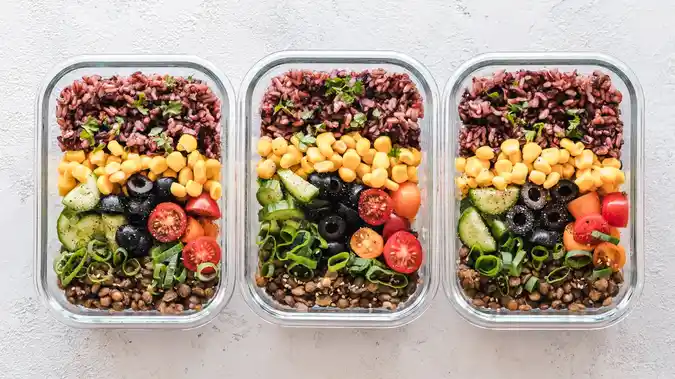
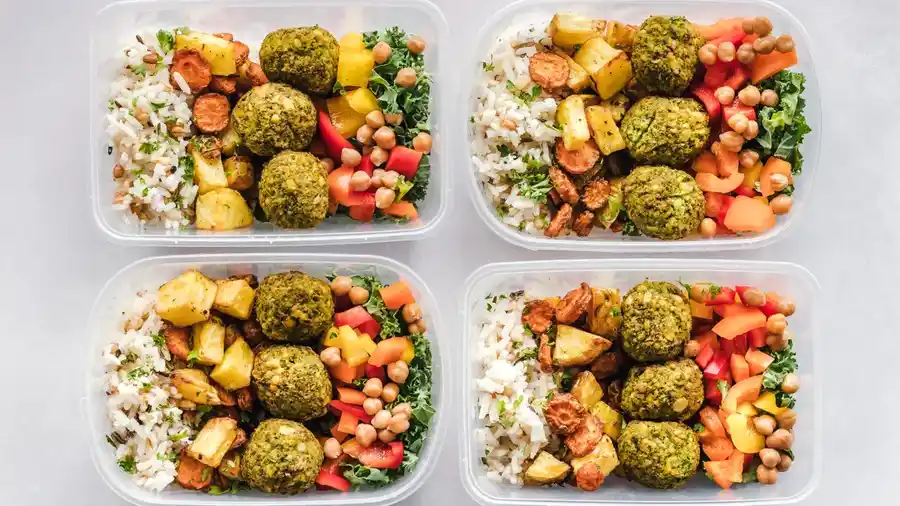
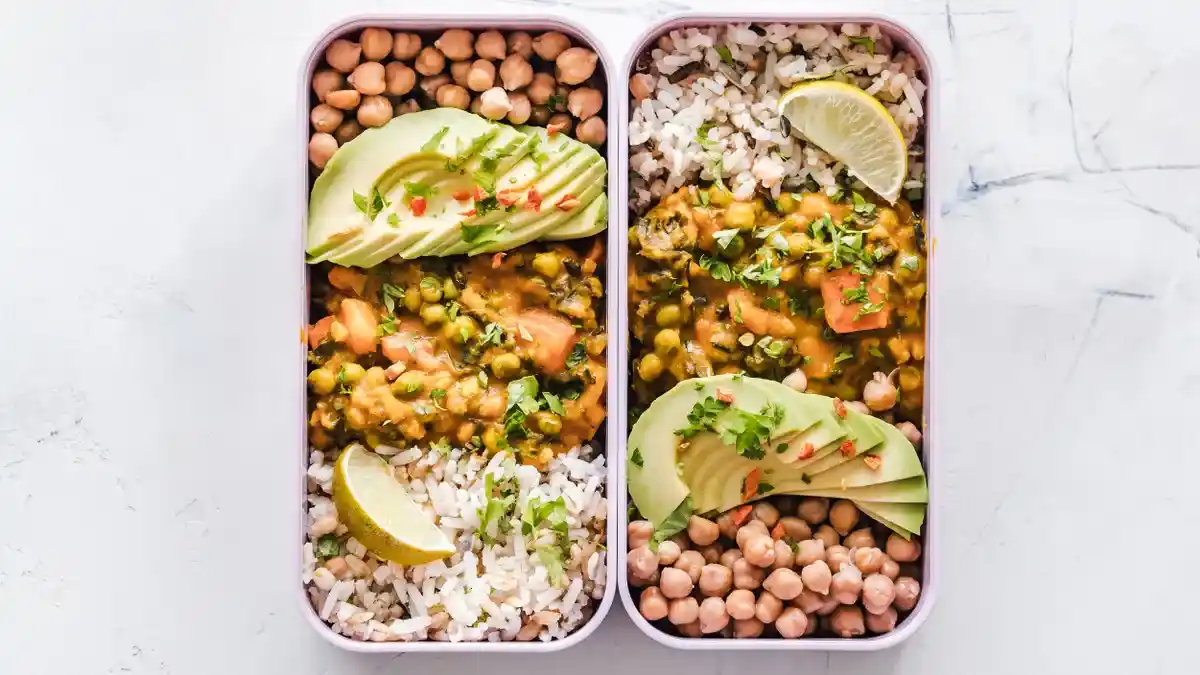
- Build 6 to 10 repeat meals. Examples include oats with yogurt and fruit, eggs with toast and vegetables, rice bowls with chicken and beans, or lentil soup with bread. Repetition is a feature.
- Create a shopping list from the meals. If the list is not tied to the menu, the cart fills with extras and the plan drifts.
- Set a review point in 2 weeks. If the plan is too hard to repeat, change the structure rather than judging yourself.
A useful benchmark is whether you can feed yourself on a normal weekday with no special shopping trip. If the answer is no, the plan is too fragile. In the published literature sample, median study duration in the abstracts was 43 weeks across 8 figures stated in abstract text, but most real-world diets do not fail because of biology alone; they fail because the system is awkward.
Use tools that reduce friction:
- A paper meal template on the fridge
- A recurring grocery list in your phone
- A container set for leftovers
- A kitchen scale if you need portion feedback
- A blood glucose meter or CGM only if a clinician has told you to monitor and interpret the data
What fails most often is “all or nothing” eating. One takeaway meal or missed workout does not ruin a diet. What ruins it is the story that one off day means the week is lost.
Quick check: if your diet only works when you cook every meal from scratch, it is not a system yet.
What should you do if you have a medical condition?
You should use condition-specific guidance, because food changes can help one problem and worsen another. If you have diabetes, kidney disease, celiac disease, IBS, hypertension, gout, fatty liver, pregnancy, or a history of eating disorder behavior, then generic advice can be misleading or unsafe. For the underlying clinical standards, see the diabetes, kidney disease, and celiac disease pages.
This is where people get into trouble:
- A high-fiber plan may help one person but aggravate another person’s bloating.
- A low-carb plan may simplify meals for some people but complicate energy and food variety for others.
- A salt-cutting plan may fit blood pressure goals but be too broad if the real issue is dehydration or medication side effects.
- A “healthy” smoothie habit may be fine for one person and unhelpful for another if it crowds out meals or becomes a sugar-heavy liquid diet.
The right move is to ask for a plan that answers the clinical question, not just the food question. For example, if a clinician is trying to understand blood sugar patterns, the relevant variables may be carbohydrate distribution, meal timing, and treatment changes. If the issue is kidney disease, the relevant variables may include protein, sodium, potassium, phosphorus, and fluid guidance. If the issue is celiac disease, the non-negotiable standard is strict gluten avoidance under professional guidance.
Do not let a general wellness article outrank a diagnosis. If a condition is present, the diet has to be built around it. That is why the best meal plan for a healthy runner can be the wrong plan for someone with reflux, anemia, or chronic constipation.
The safer decision process is:
- List the diagnosis or symptom you are actually managing.
- Check whether food is part of treatment, symptom relief, or both.
- Ask which nutrients, foods, or meal patterns matter most for your case.
- Look for a registered dietitian, physician, or other qualified clinician familiar with that condition.
- Track what changes in symptoms, labs, energy, or appetite after any adjustment.
A plain rule helps here: if the diet advice would change your medication, supplements, or lab monitoring, do not improvise alone.
Quick check: if your diet question comes with a diagnosis label, the food plan should be professional-led, not influencer-led.
What does the evidence say, and what does it not say?
The evidence says diet can matter a lot, but it does not say one universal plan solves every problem. If a headline sounds like “eat this, fix everything,” the claim is almost certainly too broad. If a review summarizes many studies, that helps, but it still may not settle the question for your body, your diagnosis, or your schedule.
The research mix matters. In the 100 most relevant PubMed records, 72 were Reviews, 3 were Systematic Reviews, 2 were Meta-Analyses, 1 was an Observational Study, and 1 was a Randomized Controlled Trial. In other words, the topic is dominated by synthesis and broad discussion, not by large numbers of direct experiments. That does not make the field weak; it means the reader should expect nuance, not a single dramatic answer.
ClinicalTrials.gov shows a similar picture of in-progress uncertainty. Of the first 100 registered trials read for this term, 38 were completed, 22 were recruiting, 15 had unknown status, and 10 were terminated. The field is active, but active is not the same as settled.
That is why the honest interpretation is:
- Diet patterns can support goals.
- The best pattern depends on the condition.
- Adherence and tolerability matter as much as theory.
- Short-term success does not guarantee long-term fit.
A generic article often overstates certainty by speaking as if food rules are universal law. They are not. A diet that looks excellent on paper can fail because it costs too much, takes too long, clashes with family meals, or leaves the person hungry by 3 p.m. A plan that looks modest can work because it is boring, repeatable, and calm.
If you want to use research wisely, ask:
- Was this a review or a direct trial?
- Was the population similar to mine?
- Was the intervention realistic for daily life?
- What trade-offs were accepted?
- Was the outcome symptom relief, lab change, or something else?
The moment the answer to those questions is “I do not know,” the safe move is to slow down and get more specific.
Quick check: if the advice sounds absolute but does not mention who it is for, assume the fit is poor.
What breaks the standard advice?
Standard advice breaks when the person, the food environment, or the medical context is unusual. If any of the following apply, the usual “balanced plate” script needs revision.
-
Shift work or night work
What changes: meal timing becomes a circadian problem, not just a hunger problem.
What to do instead: build a 24-hour eating window that matches your sleep block and keep one meal stable for the hardest shift. A 2 a.m. snack plan may matter more than breakfast. -
Food insecurity or a very tight budget
What changes: the issue is access, not knowledge.
What to do instead: anchor the plan around shelf-stable basics such as oats, beans, lentils, rice, peanut butter, eggs, frozen vegetables, and canned fish if tolerated. Fancy recipes fail when the pantry is thin. -
Pregnancy or lactation
What changes: nutrient needs, nausea, appetite, and food safety all shift.
What to do instead: ask a clinician about prenatal guidance and avoid improvising with restrictive diets unless medically indicated. -
A history of disordered eating
What changes: calorie counting, food rules, and weigh-ins can become harmful.
What to do instead: prioritize regular meals, neutrality around food, and professional support if restriction, bingeing, or fear of eating is part of the picture. -
Multiple overlapping conditions
What changes: one food rule can collide with another.
What to do instead: rank the problems. For example, a person may need to protect kidney function before chasing a trendy eating style. -
Very high training load
What changes: under-fueling becomes the bigger risk than overeating.
What to do instead: make sure meal timing and carbohydrate availability match the workload instead of cutting calories aggressively.
These edge cases are where generic guidance becomes dangerous or useless. The fix is not more discipline; it is more specificity.
Quick check: if your situation does not fit the “healthy adult with a normal schedule” template, the standard advice needs editing.
Which tools, habits, and benchmarks make diet management easier?
The easiest tools are the ones that answer a question you keep asking every day. If your main issue is “What do I eat?”, then a meal template helps. If your issue is “How much?”, then portion cues or a scale help. If your issue is “Why am I inconsistent?”, then tracking patterns helps more than tracking calories alone.
Useful tools include:
- A grocery list built from 6 to 10 repeat meals
- A 1-week meal rotation
- A 24-hour food log if a clinician wants pattern review
- Food labels for sodium, fiber, protein, and serving size
- A kitchen scale if portion uncertainty is the main problem
- A blood pressure cuff or glucose monitor only when clinically relevant
Useful benchmarks are practical, not perfect. A plan is probably working if:
- You can repeat it without dread
- You are not constantly thinking about the next meal
- Your symptoms or energy are trending in the direction you want
- Your shopping and cooking time are lower, not higher
- You can handle one off-plan meal without the whole pattern collapsing
The trade-off is clear: more structure usually means less flexibility, and more flexibility usually means more decision-making. A person who needs high precision may need more structure. A person who needs sustainability may need less.
One honest limitation: food and diet management is never just nutrition. It is routine, family habits, money, access, culture, taste, and health status all at once. A perfect nutrient profile that nobody will follow is not a good plan.
If you want a useful benchmark rather than a motivational slogan, use this: a good diet plan should survive a busy Tuesday, not just a prepared Sunday.
Quick check: if your current “healthy eating” plan depends on mood, that is not a benchmarked system yet.
The bottom line on food and diet management
The right answer is usually not a new diet label; it is a better-fitting system. If your goal is general health, keep the plan simple and repeatable. If your goal is symptom management or care for a diagnosis, get condition-specific guidance. If your goal is weight change, build around satiety and routine rather than punishment. If your goal is to stop food chaos, use fewer decisions, not more rules.
The biggest mistake is treating every diet question as if it has one answer. It does not. Your best plan depends on the condition, the constraint, and the level of support you have. That is why a real food plan is part nutrition, part logistics, and part honesty about what you can keep doing in 3 months, not just 3 days.
A useful final test: if the plan cannot be explained clearly, repeated consistently, and adjusted without panic, it is not ready yet.
Quick check: if you still need a “perfect” plan before you begin, the plan is already too complicated.
Drafted with AI; not yet reviewed by a person.
