Last updated: November 19, 2026
Quick answer: tell the lab before the 60-minute blood draw starts, and ask for a phlebotomist who is used to needle anxiety. In Gestational Diabetes Screening When You Have a Fear of Blood Draws, a simple plan—saying you may need to lie down in the lab chair, asking for pauses, and bringing a support person if the lab allows it—can make the appointment feel more manageable during gestational diabetes screening.
Key takeaways
- Say the fear out loud before the needle comes out; silence makes it harder to adapt.
- Ask for a phlebotomist, a chair that can recline, and a plan for breaks if you feel faint.
- Keep the request practical: one blood draw appointment, one clear warning, one backup plan.
- If fainting, panic, or a past bad draw is part of the picture, get qualified advice about your own situation.
- This matters because gestational diabetes screening is common in pregnancy, and many people do it between 24 and 28 weeks, according to Nebraska Medicine.
Who should tell the lab ahead of time?
This applies to anyone who has needle anxiety before a gestational diabetes blood draw appointment, especially if past blood draws have led to panic, dizziness, or fainting. It also applies if you need to lie down, need extra time, or want a support person with you during the 60-minute wait.
It does not replace medical advice for your own pregnancy. If you have a history of fainting, a severe anxiety response, or a medical issue that could change how the lab should handle the draw, speak with a qualified professional about your situation before the appointment. Gestational diabetes affects between 5% and 10% of expectant mothers, according to Nebraska Medicine, and the screening often happens between 24 and 28 weeks in pregnancy, so this is a routine lab task, not a place for guesswork.
The search on this topic is heavy on practical help, not abstract reassurance. PubMed includes a mix of review articles and clinical studies on needle fear and blood-draw anxiety, and ClinicalTrials.gov includes registered studies related to these concerns. The practical question is still the same: how to get through the blood draw safely when fear is part of the picture.
What should I tell the lab?
Tell the lab that you have needle anxiety and may need a slower, more careful blood draw. The most useful words are plain: “I’m nervous about blood draws,” “I may need to lie down,” or “I might need a break.”
Use the same sentence to mention anything that changes the setup. A phlebotomist draws blood from a vein in your arm 60 minutes after you drink the glucose solution, according to Cleveland Clinic, so the staff need to know before that point if you are likely to faint or need extra support. If you have a support person with you, say so when you check in.
How do I handle the blood draw appointment?
You handle the blood draw appointment by making the setup clear before the needle starts and by asking for one accommodation at a time. The aim is not to make the visit perfect; it is to lower the chance of panic, a sudden stand-up, or a missed draw.
- Tell the front desk about needle anxiety before the wait begins so the phlebotomist hears it early.
- Ask for a lab chair that can recline if sitting upright makes you feel faint.
- Request a pause before the needle is placed if you need one extra minute to breathe.
- Name the trigger that bothers you most, such as seeing the needle, watching blood, or feeling trapped.
- Bring a support person if the lab allows it and if that person helps you stay still and calm.
- Use a distraction technique, such as looking away, counting slowly, or focusing on one object in the room.
- Say if you feel dizzy, hot, sweaty, or shaky before the draw is finished.
- Confirm that the sample was taken and that you can stay seated a moment before standing.
The problem to watch for is not fear alone; it is fear that changes your body. If your hands shake, your vision narrows, or you feel close to fainting, the staff need to know right away so the draw can be finished safely or paused.
Can I lie down during the blood draw?
Yes, many labs can use a reclined lab chair or a flat position if lying down helps with fainting or severe needle anxiety. This is a practical request, not a sign that anything is “wrong” with you.
Say it directly when you arrive, before the phlebotomist prepares the needle. If the lab cannot use a full lie-down position, ask whether the chair can recline. The key is to reduce the chance of standing up too soon after the 60-minute draw, especially if past blood draws have made you dizzy.
What helps if blood draws make me faint?
Because fainting is the bigger risk, the safest approach is to warn the lab, stay seated or reclined, and ask for extra time before standing. Fainting is not just discomfort; it can lead to a fall if you try to leave too quickly.
A support person can help by keeping you talking, reminding you to keep your head down, or helping you sit still after the draw. Distraction helps some people more than deep focus does, so a simple count or a fixed point on the wall may work better than trying to “relax” on command. If fainting has happened before, talk with a qualified professional about your own risk before the appointment.
What are the common mistakes?
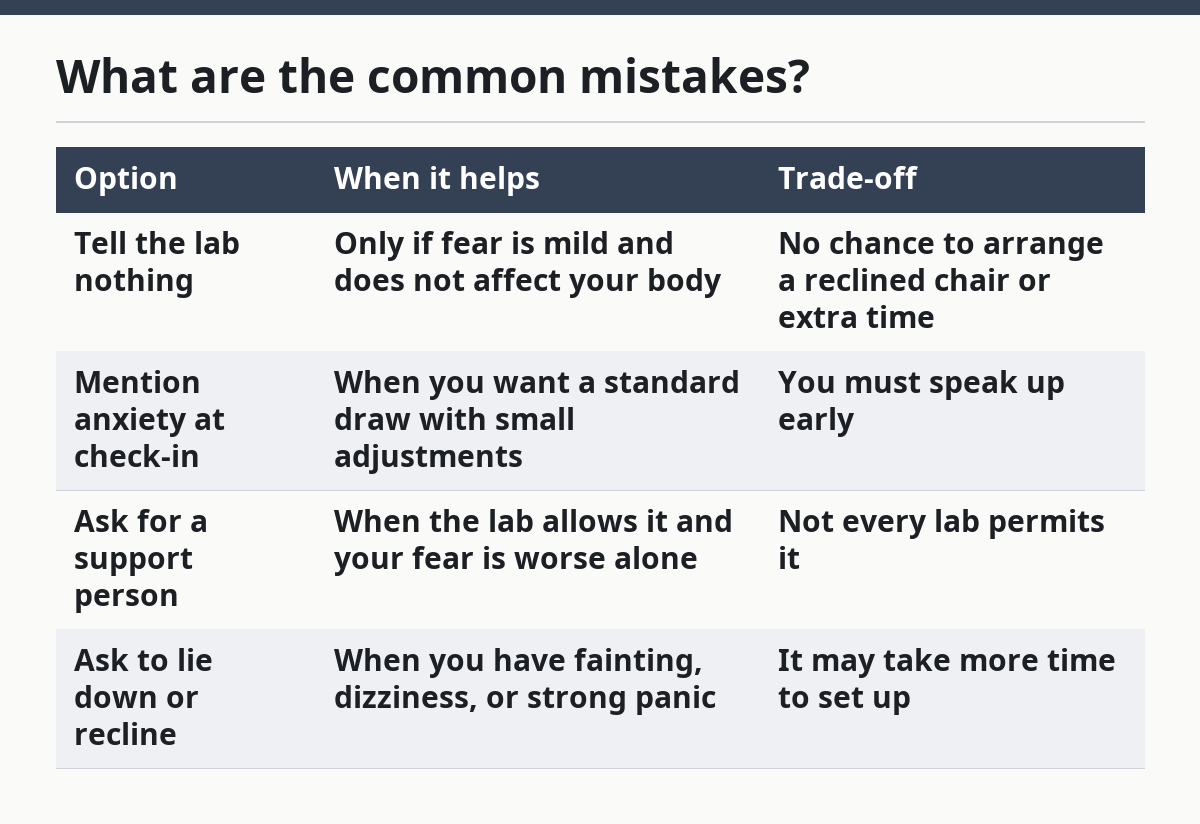
The most common mistake is waiting until the needle is already out before mentioning anxiety. That leaves no time for a reclined chair, a slower start, or a support person, and the draw can become harder than it needs to be.
Another mistake is saying only “I’m fine” when you are not. That can lead to standing up too soon, which is a problem if you feel faint after the 60-minute blood draw. A third mistake is watching the needle when you know that sight makes the fear worse; looking away is often the better choice. A fourth is skipping the warning because you think the staff already know what to do. A phlebotomist can draw blood skillfully, but they cannot guess what your body does under stress.
| Option | When it helps | Trade-off |
|---|---|---|
| Tell the lab nothing | Only if fear is mild and does not affect your body | No chance to arrange a reclined chair or extra time |
| Mention anxiety at check-in | When you want a standard draw with small adjustments | You must speak up early |
| Ask for a support person | When the lab allows it and your fear is worse alone | Not every lab permits it |
| Ask to lie down or recline | When you have fainting, dizziness, or strong panic | It may take more time to set up |
When should I stop and ask for qualified help?
You should stop the usual plan and get qualified help when the fear is bigger than a lab-room problem. The point is not to push through at any cost.
Past fainting during blood draws: That raises the chance of another episode — ask a qualified professional what precautions fit your pregnancy.
Panic that makes you unable to stay seated: That can make a routine draw unsafe — tell the lab and ask for medical guidance before the appointment.
Needle fear so strong that you might leave before the draw ends: That can leave the screening incomplete — speak up before check-in moves to the chair.
Any medical issue that changes how you respond to standing, dizziness, or stress: That can change the setup — do not rely on a generic plan.
Strong fear plus a past bad experience with medical tests: That can make the lab visit harder to predict — ask for individualized advice rather than guessing.
This is especially worth doing if your anxiety has already affected care. The goal is a safe blood draw, not a perfect show of toughness.
What does a good lab visit look like?
A good visit looks calm enough that the staff can do the draw once, without surprise. You say you have needle anxiety, the phlebotomist knows it before the needle is ready, and the chair is adjusted if needed.
You may still feel nervous. That does not mean the plan failed. The better sign is that you can stay still, speak up if you feel faint, and finish the appointment without rushing out. Since gestational diabetes screening often happens in the 24 to 28 week window, according to Nebraska Medicine, having this plan ready ahead of time can save stress on the day itself.
The broader evidence base is active but not huge. PubMed includes a substantial share of review articles and clinical studies on related topics, and ClinicalTrials.gov shows ongoing interest in this area. That mix suggests the topic is studied, but the practical question here is still the same: how to get through the blood draw safely when fear is part of the picture.
Does the glucose test itself change the plan?
The glucose test changes the timing, not the need to speak up. Cleveland Clinic notes that the blood sample is taken 60 minutes after you drink the glucose solution, and that a higher-than-normal glucose level at 60 minutes does not by itself mean you have gestational diabetes.
That means the lab visit has two stress points: the drink, then the blood draw. If fear of needles is the main issue, the most useful move is still to tell the lab early so the phlebotomist can plan the chair position, the pace, and the safest way to finish the sample.
Can I warn the lab about needle anxiety?
Yes. Tell the lab when you check in, and say the words “needle anxiety” if that is the clearest way to describe it. The staff can only adjust the setup if they know the problem before the 60-minute draw starts.
What helps if blood draws make me faint?
A reclined or lying-down position, a slower pace, and a warning before the needle goes in are the main practical steps. If fainting has happened before, speak with a qualified professional about your own situation rather than trying to manage it alone.
Can someone stay with me during the test?
Sometimes, if the lab allows it. A support person can help you stay calm, keep your focus off the needle, and make it easier to say when you feel dizzy or need a break.
Sources
- Nebraska Medicine, What to expect during a gestational diabetes screening – Nebraska Medicine Omaha, NE (checked 19 Nov 2026)
- Cleveland Clinic, Oral Glucose Tolerance Test In Pregnancy: What To Expect (checked 19 Nov 2026)
- Cleveland Clinic, Pregnancy: Gestation, Trimesters & What To Expect (checked 19 Nov 2026)
Drafted with AI; not yet reviewed by a person.