
Last updated: October 12, 2026
- You are usually not choosing between “good” and “bad.” You are choosing between two ways of lowering glucose, and each one asks for a different compromise.
- For gestational diabetes , I would give the effectiveness edge to insulin .
- I do not need to pretend that injections are a small thing.
- In metformin vs insulin gestational diabetes , insulin is often favored because of its long-standing use in pregnancy care .
Quick answer: For metformin vs insulin gestational diabetes, insulin usually makes more sense when blood sugar needs tighter control. Metformin can still be a reasonable oral option for some people, though, if a clinician says it fits their pregnancy and glucose pattern. Please talk with your obstetric clinician or diabetes specialist about your own situation.
Verdict box: If you want the clearest, most established option for gestational diabetes, insulin usually wins because it does not cross the placenta in the same way oral medicines do, and it is the treatment many clinicians still rely on when blood sugar needs tighter control. Metformin can be a reasonable alternative for some people, especially when injections are a barrier, but it is not the default choice for everyone. Please talk with your obstetric clinician or diabetes specialist about your own situation. (Source: ACOG, ADA Standards of Care)
FTC disclosure: This article is informational, not medical advice. If you buy medications or supplies through retailers, links or recommendations may earn a commission on qualifying purchases at no extra cost to you.
Because treatment choice in metformin vs insulin gestational diabetes depends on the pregnancy, I write about health topics like this because I spend my time comparing how real treatment choices differ in practice, not just on paper. The question most readers have is blunt: for gestational diabetes, is metformin better than insulin, or is insulin still the safer pick? Please discuss that with a qualified professional. NHS
The short answer is that it depends on what you mean by “better.” Insulin is the more established option. Metformin is often easier to take, but it may not be enough by itself for everyone. That trade-off is what matters. In one review, 20% to 45% of people started on metformin still needed insulin added later. NIH review
Metformin vs insulin for gestational diabetes: the one question that matters
You are usually not choosing between “good” and “bad.” You are choosing between two ways of lowering glucose, and each one asks for a different compromise.
Insulin is a hormone replacement. In gestational diabetes, clinicians often use it when diet changes alone are not enough and when they want a treatment with a long track record in pregnancy care. Please ask your obstetric clinician whether insulin is appropriate for your glucose targets. (Source: ACOG)
Metformin is an oral medicine. It comes up often because it is simple to take and does not require injections. Studies and guideline discussions suggest it can work for some pregnant patients, but many clinicians still consider it a second-line or alternative option rather than the first answer for every case. The American College of Obstetricians and Gynecologists (ACOG) and the American Diabetes Association (ADA) both discuss insulin as a standard option in gestational diabetes care, while metformin may be considered in selected situations. Please confirm the choice with a clinician. (Source: ACOG, ADA Standards of Care)
If you want the most practical answer: insulin usually wins on flexibility and confidence; metformin often wins on convenience.
Quick comparison: metformin vs insulin

| Decision factor | Metformin | Insulin |
|---|---|---|
| How it is taken | Oral tablet | Injection |
| Convenience | Easier for many people | Less convenient, especially at first |
| Track record in gestational diabetes | Used, but not the classic default | Long-standing standard option |
| Titration and adjustment | Less direct control | More adjustable to blood sugar patterns |
| Main drawback | May not control blood sugar well enough alone | Injections, monitoring, and added complexity |
| Best fit | Some people who want an oral option and are appropriate candidates | People who need tighter control or a more established approach |
What I would call the winner on effectiveness
For gestational diabetes, I would give the effectiveness edge to insulin.
Why? Because insulin can be adjusted more precisely when blood sugar readings stay high at specific times of day. That matters in pregnancy, where treatment decisions are often made from patterns, not from a single lab result. With metformin, clinicians may still need to add insulin later if glucose targets are not reached. Please review patterns with your care team before changing treatment. (Source: ADA Standards of Care)
That does not mean metformin “doesn’t work.” It means the job is harder. Some people do well on it, while others need something stronger or more adjustable. Research summaries and clinical guidelines generally describe metformin as a possible option, but not a universal substitute. That’s the catch.
Who insulin wins for: people whose blood sugars stay outside target ranges despite diet changes, people who need a more adjustable treatment, and people whose care team wants the most established pregnancy option.
Who metformin wins for: people who strongly prefer a pill over injections and whose clinician thinks an oral option is reasonable.
Convenience and day-to-day life: metformin wins
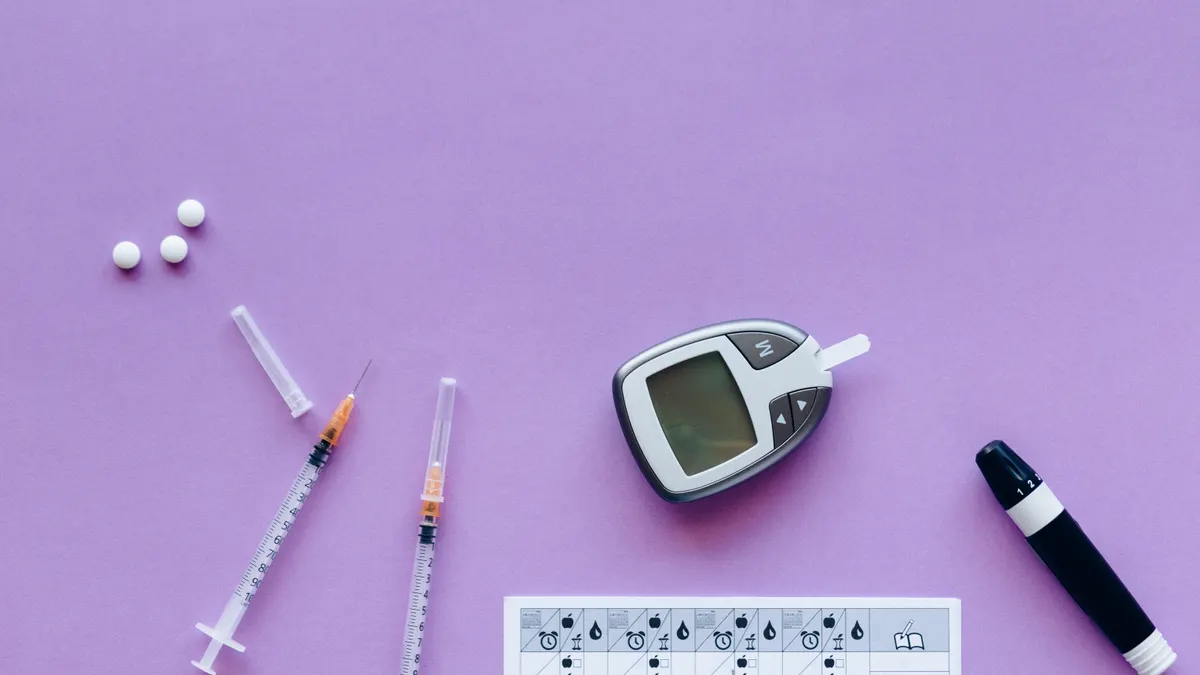
Here, metformin has the clear advantage.
I do not need to pretend that injections are a small thing. For many pregnant patients, adding insulin means learning a new routine, storing supplies, checking glucose more often, and managing timing around meals. That is a lot to absorb when pregnancy already feels like a part-time job.
Metformin is simpler in the obvious way: it is taken by mouth. For some people, that simplicity makes a treatment plan more realistic. If a plan is too burdensome, it is harder to follow consistently, and that can undermine blood sugar control.
But convenience is not the same as suitability. A pill is easier. A pill is not automatically enough.
Metformin drawback: gastrointestinal side effects are a common reason people struggle with it, and that can be especially unpleasant during pregnancy, when nausea may already be an issue.
Insulin drawback: it is more work, and the work is real.
Safety and pregnancy concerns: insulin usually has the cleaner profile
This is the section readers care about most, and the answer needs to be careful.
In metformin vs insulin gestational diabetes, insulin is often favored because of its long-standing use in pregnancy care. It is not a casual treatment choice, but it is familiar to obstetric and diabetes teams. Because it is a hormone the body already uses, clinicians often feel more confident about its role when glucose control needs to be tightened. Please ask a professional which option fits your case. NHS
Metformin is different. It has been studied in pregnancy, and those studies suggest it can be used in some cases. But it also comes with a different discussion because it crosses the placenta to some degree, and that makes some clinicians more cautious. The long-term implications are still discussed in medical literature, which is why many care teams do not treat metformin as the automatic first choice for every pregnant patient with gestational diabetes.
This is where a generic article often goes wrong: it pretends the decision is only about convenience. It is not. Pregnancy treatment choices carry two sets of considerations, one for the parent and one for the baby, and the threshold for comfort is understandably higher.
My bottom line here: if safety confidence is your main concern, insulin usually has the edge. If avoiding injections is the main barrier and your clinician thinks metformin is appropriate, metformin may still be part of the conversation.
For authoritative guidance, I would look at the ACOG Practice Bulletin on gestational diabetes and the American Diabetes Association Standards of Care. If you want a public-facing overview, the NHS and Mayo Clinic both have patient-oriented explanations of gestational diabetes treatment options. ACOG, ADA Standards of Care, NHS, Mayo Clinic
Ease of adjusting treatment: insulin wins again
This is where insulin separates itself from metformin in practice.
Blood sugar in pregnancy can change quickly with meals, sleep, activity, nausea, and the natural insulin resistance of pregnancy. Insulin can be adjusted more directly when those readings change. That makes it the better fit when a clinician wants fine control.
Metformin is less granular. It can help some people, but it is not as nimble when numbers are stubbornly high. If a person starts metformin and readings remain above target, the next step often becomes insulin anyway. That is not a failure; it is just part of the treatment pathway.
A lot of comparison articles skip this part and make the decision sound like a lifestyle preference. In reality, the question is often: Which treatment can actually match this person’s glucose pattern?
Winner for adjustability: insulin.
Honest weakness of each option
I think a useful comparison has to say what each one is bad at.
Metformin weakness
Metformin’s biggest weakness is that it may not be enough on its own. Some people do well, but some will still need insulin added later. It can also cause stomach upset, which can be a dealbreaker in pregnancy.
Insulin weakness
Insulin’s biggest weakness is the burden. It can be intimidating, and it requires more hands-on management. For some people, that alone affects whether the plan is realistic.
Neither weakness is trivial. In real life, the “best” option is often the one a person can actually use correctly, consistently, and comfortably enough to keep blood sugar where the care team wants it.
Who should get metformin?
Metformin may be the better fit for a pregnant patient with gestational diabetes when:
- a clinician thinks an oral option is appropriate
- injections are a major barrier
- the person prefers a simpler routine
- the blood sugar problem appears suitable for an oral medicine, not a more intensive approach
I would not frame metformin as “lighter” in a casual sense. It is still a real medication choice, and it still needs medical oversight. If the glucose pattern is hard to control, the conversation may move beyond metformin pretty quickly.
Who should get insulin?
Insulin may be the better fit when:
- blood sugar targets are not being met with lifestyle changes alone
- a care team wants the most established pregnancy option
- tighter, more flexible adjustment is needed
- metformin is not tolerated or does not work well enough
If I had to summarize the clinical logic in one line, I would say this: metformin is often the convenience option, insulin is often the control option.
Where people get tripped up
A lot of readers assume the decision is about which medication is “stronger.” That is not the right frame.
The better question is:
- Can this treatment bring blood sugar into the range your clinician wants?
- Can you realistically follow it every day?
- Does your care team consider it appropriate in pregnancy?
That third question matters more than people think. Gestational diabetes is not the place to self-select a medicine based on internet summaries. The right choice depends on your readings, your pregnancy, your medical history, and how your care team is monitoring you.
If you are trying to compare options right now, I would keep the discussion grounded in those practical points rather than in general praise for one drug or the other.
Real-world buying context: what this comparison means day to day
This is not a shopping decision in the usual sense, but there is still a “how do I get this?” reality.
- Metformin is usually easier to obtain as a prescription medicine at major pharmacies, and it is commonly listed through large retailers such as Amazon Pharmacy and Walmart Pharmacy, subject to prescription rules and availability.
- Insulin is also available through major pharmacy channels, including Amazon Pharmacy and Walmart Pharmacy, but it can involve more storage and supply planning.
I am intentionally not naming a current price, because those change and I do not want to mislead you. If you are comparing out-of-pocket cost, check the current price at the pharmacy you actually use and ask whether your insurance coverage changes the answer.
FAQ
Is metformin or insulin better for gestational diabetes?
Insulin is usually the more established option, especially when tighter control is needed. Metformin can be appropriate for some people, but it is not the universal first choice. Please ask your clinician which fits your pregnancy. (Source: ACOG)
Does metformin work for everyone with gestational diabetes?
No. Studies suggest it can help some patients, but others still need insulin to reach glucose targets. In practice, about 20% to 45% may need insulin added. NIH review
Why do some doctors prefer insulin?
Because it is more established in pregnancy care and easier to adjust when glucose readings stay high or vary a lot.
Is metformin unsafe in pregnancy?
I would not call it unsafe in a blanket way. It has been studied and is used in some cases, but its role in gestational diabetes is more selective than insulin’s, and that is why your clinician’s judgment matters.
Can I choose the pill instead of injections?
Sometimes, yes — but only if your clinician thinks it is appropriate for your specific blood sugar pattern and pregnancy situation.
Final verdict
If your question is metformin vs insulin for gestational diabetes, my answer is this: insulin usually wins overall because it is the more established, more adjustable option for pregnancy blood sugar control. Metformin wins when the main problem is practicality and your clinician thinks an oral medicine is a good fit.
The one condition that flips the answer is simple: if injections are a major barrier and your care team says an oral option is reasonable, metformin may be the more workable choice. If blood sugar control is the bigger concern, insulin is usually the stronger pick.
Please discuss the decision with a qualified obstetric or diabetes professional, because the right choice depends on your readings and your pregnancy, not just the label on the medicine.
Drafted with AI; not yet reviewed by a person.