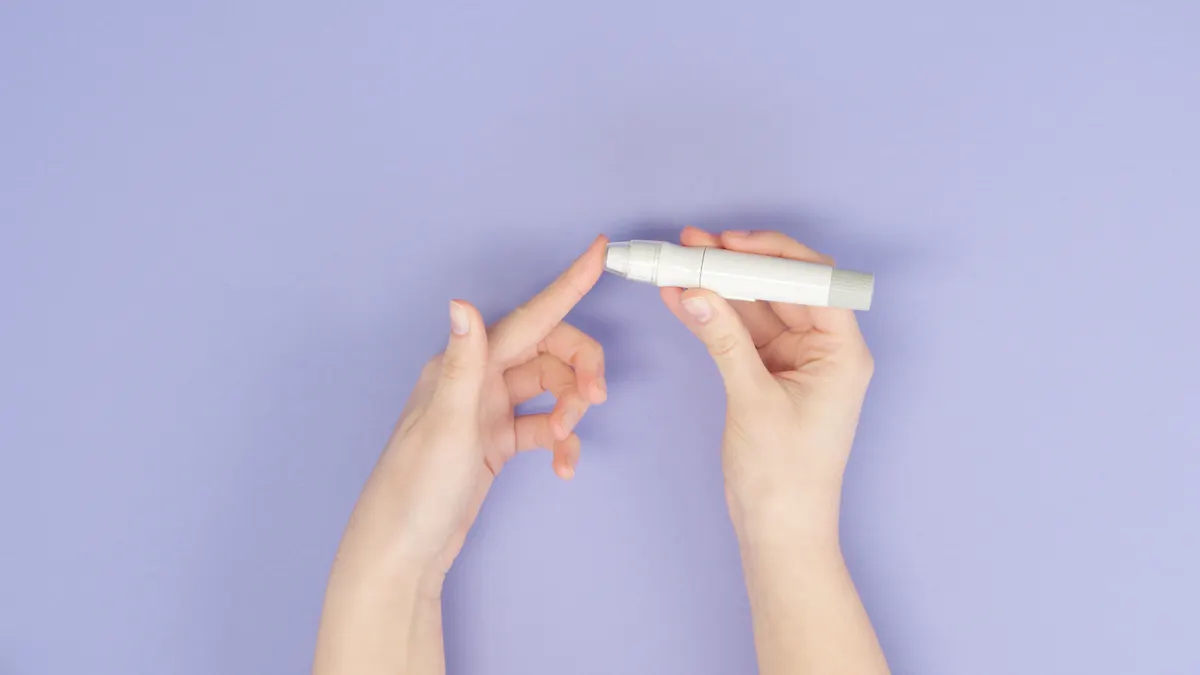
Last updated: November 20, 2026
Quick answer: start at the shallowest lancet depth, usually 1, and move up one setting at a time only if you cannot get a blood drop that fills the strip without hard squeezing. For gestational diabetes lancet depth settings, that is usually the safest practical starting point, and it should be checked against your meter instructions and a qualified clinician’s advice.
For gestational diabetes lancet depth settings: how to choose the right puncture depth, the safest starting point is usually the shallowest setting that still gives a blood drop that reaches the test strip without squeezing hard. Choose the depth by skin thickness, not by guesswork, and ask a qualified clinician about your own meter, finger skin, and bleeding pattern. For general home-testing technique, see the NHS guidance on blood glucose testing and the CDC overview of diabetes testing.
PubMed shows 1,207 matching human records for 2016–2026 for this topic; the 100 most relevant were read, and the medians, ranges, and shares below were computed across those records, using PubMed (NCBI), computed on 2026-11-10. ClinicalTrials.gov lists 39 registered trials for this term; the first 39 were read, and the shares below were computed across them.
Key takeaways
- Start with the shallowest usable puncture depth, then change only one setting at a time.
- Thicker finger skin usually needs a deeper lancet setting; thin or sensitive skin usually does better with a shallower one.
- A good setting makes enough blood with little pain and little need to milk the finger.
- Too deep often means extra bleeding and soreness, not better glucose data.
- If your finger keeps bleeding heavily or gives too little blood at any setting, the problem may be the device, the lancet, or your technique, not your glucose meter.
Who should use this approach?

This approach fits someone using a lancing device with a disposable lancet to get a small capillary blood sample for a glucose test strip, and who wants help choosing the puncture depth before trial and error starts. It assumes the reader already has a meter, strips, clean hands, and a device with numbered depth settings, often from about 1 to 5 or similar.
It does not fit every situation. If the finger is bruised, infected, numb, very callused, or bleeding unusually after a prick, the right next step is to ask a qualified clinician or diabetes educator how to adjust the device and whether the testing plan itself needs review. The same advice applies if a different lancing device model uses a different numbering system, because one brand’s “3” may not feel like another brand’s “3”.
Because the research base is broad but uneven, the practical advice here leans on device guidance and clinical practice more than on any one universal rule. The review-heavy mix of PubMed records is one reason the safest advice is still to start shallow and adjust carefully rather than assume one number fits every finger.
For a wider home-testing overview, the hub on gestational diabetes monitoring at home can sit beside this page as the parent guide.
What does the depth number actually control?
The depth number controls how far the lancet tip travels into the skin, not how hard the device “hits.” A lower number generally means a shallower puncture and less tissue disruption; a higher number means a deeper puncture and more chance of reaching capillary blood through thicker skin.
That matters because finger skin is not the same from person to person or even from finger to finger. The side of a fingertip may need less depth than a rougher pad, while cold skin, dry skin, or a callused area may need more. A generic “always use 3” rule is weak advice and can cause either pain or a tiny sample that will not fill the strip well.
The literature also suggests that practical questions about device use are still handled in mixed ways across studies and trials. ClinicalTrials.gov shows 18 (46%) completed trials, 9 (23%) recruiting, 5 (12%) unknown, and 3 (7%) active not recruiting among the 39 read, with 29 of 39 at Phase 2 or higher phase categories recorded in the registry. That does not tell a reader what number to choose, but it does show why device instructions and personal adjustment still matter.
How do I choose the right puncture depth?
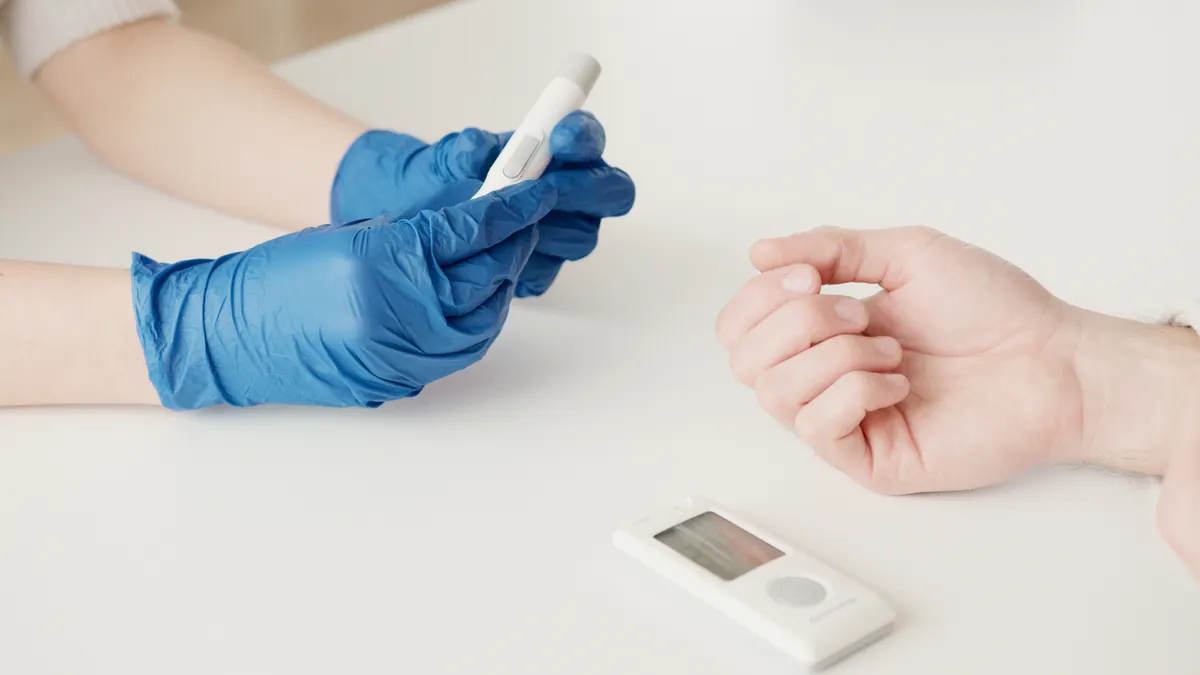
Choose the right puncture depth by starting shallow, testing one setting at a time, and stopping at the first setting that gives a usable drop without extra squeezing. A good choice is the shallowest setting that lets blood form naturally and enter the strip within the device’s normal sample requirements.
- Set the lancing device to the shallowest depth available, often the lowest number on the dial, then check that the lancet is seated and the cap is locked.
- Warm the finger for a brief moment before use, then verify the skin feels warm rather than cold; cold skin often gives a poor drop and can make the next step look “too shallow.”
- Lance the side of the fingertip at the chosen setting, not the center pad, then check whether a round drop forms without immediate squeezing.
- Compare the drop to the test strip and confirm that it fills the strip in the meter’s usual way; a drop that smears or stalls is too small for that setting.
- Increase the depth one step if the sample is too small, then repeat the same finger area on the next attempt only after using a fresh lancet.
- Watch for excess bleeding and note whether blood keeps flowing after the strip fills; that usually means the setting is deeper than needed.
- Record the successful setting for future tests, along with the finger used, so you can repeat the same pattern and avoid random changes.
The main rule is simple: do not jump several settings at once. One-step changes make it possible to see whether the problem is depth, skin thickness, or a dull lancet. If the setting works on one finger but not another, that points to skin differences, not failure of the meter.
A median figure from the abstract data was 140 mg across 42 figures stated in abstract text, and a median study-duration figure was 20 weeks across 51 figures. Those numbers are not recommended doses or intervals for lancet use; they simply show that the literature uses many different measurements and that a precise depth rule is not buried in a single standard number.
How do skin thickness and pain change the setting?
Thicker skin usually needs a deeper setting, while thin or sensitive skin usually needs a shallower one. That is the basic trade-off: go deeper if the drop is too small, and shallower if the prick feels sharp, bleeds too much, or leaves a sore spot.
Skin thickness is not just about body size. Repeated use of the same finger, dry skin, and callus-like roughness can make a shallow setting fail. The opposite problem is common with very tender skin, where a deep setting creates pain with no real gain in sample quality.
The right goal is not “least pain at any cost” and not “deep enough to guarantee blood.” The right goal is a usable sample with the least tissue trauma that still works. On paper, that sounds small; on a fingertip used several times a day, over 7 days or longer, it is the difference between a tolerable routine and a finger that stays irritated.
A lot of generic advice misses this trade-off. If a guide tells a reader to simply “turn it up until it works,” that can create bruising and make later pricks hurt more. If it says to “keep it as low as possible” with no mention of sample quality, the meter may keep reading errors or empty-strip failures.
What are the signs the depth is wrong?
The depth is wrong when the finger bleeds either too little or too much for the job. Too little means the strip cannot fill cleanly; too much means the puncture is deeper than needed and the blood may keep flowing after the test.
A shallow setting that is too low often shows up as repeated squeezing, multiple pricks, or a drop that beads and disappears before reaching the strip. That is not a meter problem in itself. It usually means the lancet did not reach enough capillary blood for that finger on that day.
A deep setting that is too high usually shows up as lingering bleeding, extra soreness, or a puncture that feels harsher than needed. The risk here is not just discomfort. Repeated deep pricks can make the area more tender, which can push the next test toward even more pain and more squeezing.
| Setting choice | Likely result | What it suggests | Better next move |
|---|---|---|---|
| Too shallow | Tiny drop, repeated squeezing | Skin resistance is higher than the setting | Increase one step |
| Just right | Single clean drop, strip fills, little pain | Setting matches the finger | Keep that setting |
| Too deep | Heavy bleeding, soreness, lingering pain | Setting is beyond what the finger needs | Decrease one step |

The median planned enrolment across the 38 trials with counts available was 122 participants. That figure is not a depth target, but it does remind the reader that device and technique questions are usually studied across groups, not reduced to one universal finger rule.
When should you stop adjusting and get help?
Stop adjusting when the finger shows a pattern that the setting alone does not explain. That includes bleeding that is hard to stop, repeated failed samples across several settings, or pain that is out of proportion to a standard fingertip prick.
Bleeding keeps going after the strip is filled: that suggests the puncture may be too deep or the finger is being squeezed hard — lower the setting and ask a clinician if the bleeding pattern is unusual.
You cannot get enough blood at three different settings: that suggests the issue may be the device, a dull lancet, or unusual skin resistance — switch to a fresh lancet and seek device-specific guidance.
The finger becomes very sore, red, or swollen: that can point to irritation or a local skin problem — stop using that spot and get qualified advice before testing there again.
The skin is thickened, cracked, or visibly callused: that often needs a different setting and sometimes a different finger — do not keep increasing depth without guidance.
Numbness or poor sensation is present: that makes it harder to judge pain and depth — get a professional review rather than relying on trial and error.
One honest limitation belongs here: depth setting is only one part of getting a good sample. If the lancet is old, the spring is weak, or the strip needs a larger sample than the drop provides, changing the number may not solve the problem. A qualified professional can help sort out whether the device, the lancet, or the testing routine is the real issue.
What mistakes do people make with depth settings?
People most often make the mistake of changing too many things at once. They change the depth, switch fingers, and squeeze harder in the same test, then cannot tell which change helped or hurt. The fix is to change one variable at a time and keep the rest the same for at least a few tries.
Another mistake is staying at the same deep setting because it “always works.” It may work, but it can also cause more soreness and more bleeding than needed. The better alternative is to try the next shallower setting once a usable drop has been found.
A third mistake is assuming that pain means accuracy. Pain is not a good measure of sample quality. A clean blood drop that fills the strip is what matters, not how dramatic the prick felt.
A fourth mistake is treating every finger the same. Because finger skin varies by location, use, and thickness, a setting that works on one finger may not be right for another. If the skin is changing, or if there is numbness or poor sensation, a clinician should review the plan instead of relying on trial and error.
A fifth mistake is ignoring a dull lancet. A blunt lancet can make a shallow setting fail and can make a deep setting feel worse. Replacing the lancet before changing the depth is often the more sensible first move.
The final mistake is using depth as a substitute for technique. If the finger is cold, dry, or heavily squeezed, the sample can fail even at a higher number. That is why this page focuses on puncture depth alone and not on finger placement or the rest of the testing method.
How do you make the setting work day to day?
Make the setting work day to day by keeping the same device, the same lancet type, and the same starting number unless the result changes. A simple note on the meter box or phone can help track which setting produced the least pain and the best drop over a week of testing.
The useful routine is boring on purpose. Start shallow, adjust by one step, and remember the final setting that gave a good drop on a normal day. If your fingers are drier in winter or more tender after several days of testing, the setting may need a small change, but the change should still be gradual.
ClinicalTrials.gov reports a median planned enrolment of 122 participants across the 38 trials with counts available, and the registry also shows a wide range from 4 to 2,546. That spread is a reminder that no single device setting can cover every body and every testing pattern. The best result is the one that works on your finger, with your meter, and with the least extra trauma.
If a setting keeps failing after careful adjustment, the right answer is not to keep guessing for another 10 or 20 pricks. It is to get help from a qualified professional who can review the device, the lancet, and the testing routine together.
What depth should I start with?
Start with the shallowest setting on the lancing device. That gives you the least tissue trauma and the easiest way to see whether a lower number already works for your finger skin.
If the drop is too small to fill the test strip, move up by one setting and try again with a fresh lancet. Do not jump several numbers at once, because that makes it hard to know which setting actually helped.
Why is my finger bleeding too much?
Too much bleeding usually means the puncture is deeper than needed or the finger is being squeezed hard after the prick. It can also happen if the lancet is reused or the finger is irritated.
Lower the depth by one step the next time and avoid heavy squeezing. If bleeding is hard to control, or if the finger looks swollen or unusually red, ask a qualified professional to review the device and the skin.
Why am I not getting enough blood?
Not enough blood usually means the depth is too shallow for that finger on that day, the skin is too cold or thick, or the lancet is dull. The problem may also be a mismatch between the device and the strip’s sample needs.
Try one step deeper with a fresh lancet and check whether the drop fills the strip cleanly. If the same problem keeps happening across several settings, the device or the skin condition may need professional review.
Drafted with AI; not yet reviewed by a person.