Last updated: November 20, 2026
Quick Answer: Follow 3 rules for Gestational Diabetes Test Strip Storage: keep strips in the original vial, keep them dry, and keep them at room temperature. Glucose test strips stay most reliable when they are kept in their test strip vial, dry, and at room temperature. Heat, bathroom humidity, and an expired date can all make results less trustworthy, so pregnancy is not the time to guess; ask a qualified clinician or pharmacist about the exact strip brand and meter you use. For general diabetes self-monitoring guidance, see the CDC on blood glucose monitoring and the American Diabetes Association on diabetes technology and self-monitoring.
Who this applies to
This applies to anyone storing glucose test strips for gestational diabetes at home, especially if the strips live near a sink, a car, or a kitchen counter. It assumes you already have a glucose meter, the matching test strip vial, and the strip package insert that came with the box. This guide supports the broader gestational diabetes monitoring at home topic, and it focuses only on storage, not meter replacement, error codes, or calibration checks.
The practical question is simple: keep the strips in the package they came in, keep the container closed, and keep them away from heat and moisture. PubMed shows 1,207 human records from 2016–2026 matching this subject, and the 100 most relevant were read for this guide; that matters because storage advice tends to be discussed alongside monitoring, not as a separate topic, so the wording on labels and inserts still matters most. ClinicalTrials.gov lists 39 registered trials for this term, with 18 completed and 9 recruiting, which is a reminder that the monitoring space changes, but the storage basics are still built around the same strip packaging. For background on pregnancy care and glucose monitoring, the NICE guideline on diabetes in pregnancy is another useful reference.
This is not the page for deciding when to replace a glucose meter or what to do when the device will not read. It also is not the page for interpreting a bad reading. If results seem off, bring the meter, the strip vial, and the packaging to a clinician or pharmacist rather than trying to solve it by guesswork. The NHS guidance on gestational diabetes also advises getting professional help when readings do not make sense.
How do you store glucose test strips?
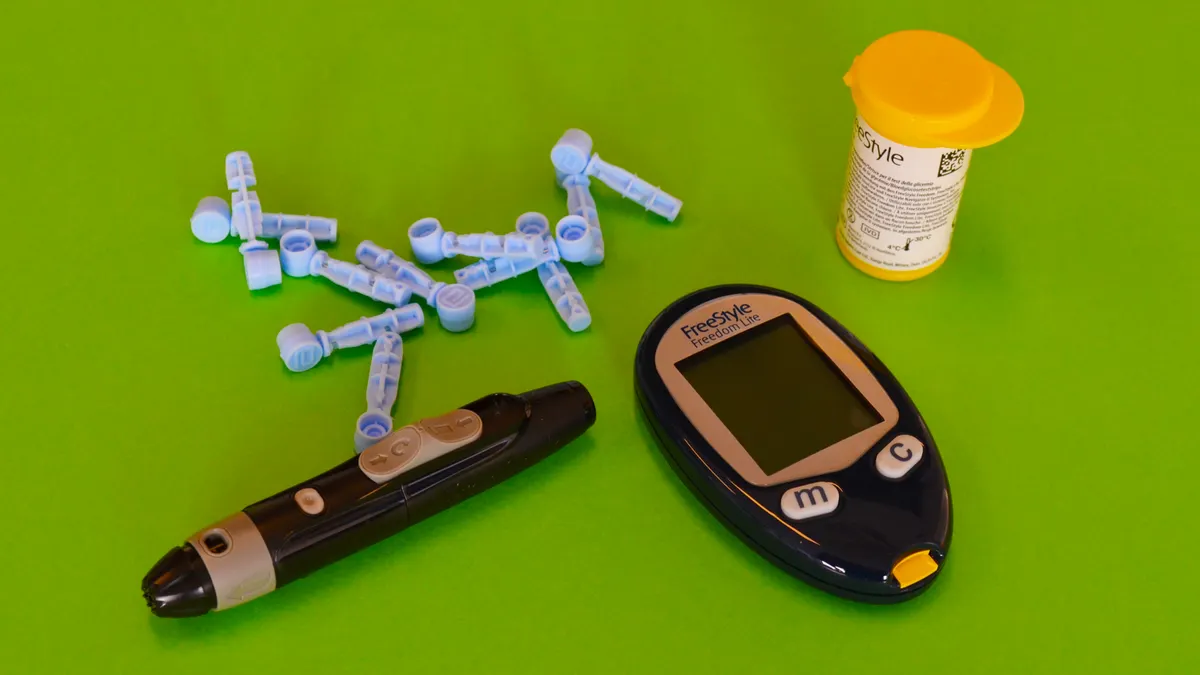
Store glucose test strips in the closed test strip vial, at room temperature, and away from moisture, steam, and direct heat. The job is to protect the chemistry on the strip, not just the plastic tube.
-
Keep the vial closed after every strip. Open it only long enough to take out one strip, then close the cap right away. Verify that the cap seats fully and that no strips sit loose in a purse or pocket; a cap left open is a clear problem because air and humidity get in fast.
-
Leave the desiccant in the vial if the package says to. The desiccant is the small drying packet or insert that helps control moisture inside the container. Verify that it remains inside the vial and dry; if it is missing, wet, or damaged, the strip environment is no longer what the manufacturer intended.
-
Store the vial at room temperature. Room temperature means a normal indoor setting, not a hot car or a steamy bathroom. Verify that the vial is not sitting beside a stove, window, radiator, or sunlit shelf; heat can shift the strip chemistry and make the reading less dependable.
-
Keep the vial out of bathroom humidity. Bathrooms can fill with steam from showers, and that moisture can reach the strips even when the cap is on. Verify that the container is stored in a dry room instead; damp air is a problem if the vial lives near the shower, sink, or toilet.
-
Check the expiration date before each new box or vial. Expiration dates matter because strip performance is tied to the date printed on the package, not only to whether the strips “look fine.” Verify the box date and the vial date if both are printed; an expired strip is a problem even when the strip still looks unused.
-
Use the strips from the opened vial within the timeframe on the label. Some brands allow use only for a limited period after opening, and that period is set by the manufacturer. Verify the package insert for the brand you own; if the opened vial has no readable opening instructions, that is a warning sign to confirm with the pharmacist rather than assume.
-
Keep strips away from cars and luggage trunks. A parked car can become far hotter or colder than a room, even on a short errand. Verify that the strips have not spent time in the glove box, back seat, or trunk; that kind of storage is a problem because the temperature can swing far outside room conditions.
What does heat do to strips?
Heat can ruin glucose test strips by changing how the strip chemistry works, and the risk goes up when strips are left in a car or near a heater. The bad part may not be obvious, so a strip can look normal and still be less reliable.
The common mistake is thinking “it was only for a minute” or “the box still feels sealed.” A closed box is not the same thing as controlled storage, and a 20-minute trip in a hot car can be enough to worry about. If strips have been exposed to obvious heat, the cautious move is to confirm the brand’s storage instructions and ask a clinician or pharmacist before relying on a single reading.
A clinician or pharmacist can help if the strips were left in a car, carried in a warm bag, or stored near a microwave or cooktop. Heat damage is not always something you can see, and there is no reliable home check for “looks okay.” That is why this page stays on storage rather than trying to diagnose meter problems.
Is the bathroom a bad place for strips?

Yes, the bathroom is usually a poor place for glucose test strips because humidity from showers and sinks can shorten strip reliability. The moisture problem is often bigger than people expect, even when the vial cap stays on.
A bathroom cabinet may seem convenient, but it is a bad trade if the room gets steamy every day. Humidity can sneak into the vial each time the cap opens, and repeated exposure is the problem, not just one shower. If the only available storage spot is a bathroom, choose the driest, coolest cabinet you can find and keep it as far from the sink and shower as possible, but a bedroom drawer or kitchen cupboard away from heat is usually safer.
This is one of the few storage issues where habit matters more than memory. If strips are used several times a day, the vial gets opened several times a day too, and that means the room’s air matters every time. When in doubt, move the vial to a dry room that stays close to room temperature instead of a room that turns into a steam box.
What mistakes shorten strip life?
The most common mistakes are heat, humidity, open caps, expired dates, and mixing strips into other containers. Each one can change how a glucose meter reads, even if the strip still looks new.
| Mistake | What it can lead to | Better choice |
|---|---|---|
| Leaving the vial open | Moist air gets inside and can affect strip performance | Close the cap immediately after removing one strip |
| Storing in a bathroom | Repeated humidity exposure | Keep the vial in a dry room at room temperature |
| Leaving strips in a car | Heat or cold swings outside normal storage conditions | Carry only the strips you need for that day |
| Using expired strips | Less trustworthy readings | Check the date on the box and vial before use |
| Moving strips to another container | Loss of desiccant protection and label instructions | Keep strips in the original test strip vial |

A subtle mistake is mixing “not expired yet” with “still stored correctly.” Those are separate issues. A strip can be within date and still be damaged by a hot glove compartment, just as a strip can be kept indoors and still be past the printed expiration date. If both happened, the strip is even less dependable.
When should you stop using the strips as stored?
You should stop relying on the stored strips whenever the storage condition clearly fell outside the label instructions or the vial was compromised. This is the point where storage guidance ends and clinical advice starts.
Heat exposure in a parked car: The strips may no longer be dependable — Ask a pharmacist or clinician whether that brand should still be used, and do not trust a reading that looks unusual.
Bathroom steam reached the vial repeatedly: The strips may have taken on moisture — Move the vial to a dry room and confirm the package instructions before using more strips.
The expiration date has passed: The strip chemistry is no longer guaranteed by the manufacturer — Replace the box or vial according to the label and ask about the brand-specific rules.
The desiccant is missing, wet, or thrown away when the label said to keep it: The vial has lost part of its moisture control — Treat the strips as potentially compromised and check with a pharmacist or clinician.
The vial cap no longer closes tightly: Air and humidity can enter too easily — Stop using that container and bring it to a clinician or pharmacist for advice.
The strips were transferred to a pill bottle, bag, or other container: The original protection and instructions are gone — Return to the original test strip vial if it is still valid, or seek a replacement plan.
These are not situations to solve by testing “one more time and seeing.” Storage damage can be uneven, so one normal result does not prove the batch is fine. If pregnancy care depends on the reading, that uncertainty matters.
What does a good storage setup look like?
A good setup is a closed original vial kept indoors at room temperature, away from steam and direct heat, with the date still valid and the desiccant still in place if the label calls for it. The strip container should live somewhere boring, dry, and consistent.
The best setup is usually the least dramatic one: a bedroom drawer, a shelf in a dry hall closet, or another place that stays out of sunlight and away from cooking heat. The vial should not rattle loose in a bag unless the brand’s instructions allow that kind of carry. If the strips are used daily, keep the meter and strips together so you do not open and close the wrong box by habit.
A usable setup also has one check built in: look at the vial before the first strip of the day. That one glance catches open caps, missing desiccant, and date problems before a reading is taken. For a reader who wants the simplest rule, this is it: original vial, dry place, room temperature, valid date.
Key takeaways
- Keep glucose test strips in the original test strip vial, not a loose container.
- Store them at room temperature and away from steam, sun, and car heat.
- The desiccant matters when the brand includes one, because moisture can change strip performance.
- Expiration dates are not decorative; an expired strip is not a safe guess.
- If the storage conditions were poor, ask a qualified professional about the exact brand before trusting the reading.
Can heat ruin test strips?
Yes, heat can ruin test strips or make them less reliable. Leaving them in a hot car, near a stove, or in direct sun is a common problem because the strip chemistry is sensitive to storage conditions. If heat exposure happened, a pharmacist or clinician can help decide whether that brand should still be used.
Do test strips expire after opening?
Yes, some test strips have an opened-vial time limit in addition to the box expiration date. The exact rule depends on the brand, so the package insert matters. If the opened-vial instructions are missing or unclear, check with a pharmacist rather than guessing.
Should strips be kept in the bathroom?
No, the bathroom is usually a poor storage spot because humidity from showers and sinks can affect strip reliability. A dry room at room temperature is a better choice. If the bathroom is the only option, keep the vial as far from steam and water as possible, but that is still a weaker setup than a dry room.
Drafted with AI; not yet reviewed by a person.